Whale Shark Encounters: What Every Diver Should Know
14 เมษายน 2569
Whale shark behavior, encounter ethics, and Thailand's best sites from Richelieu Rock to Sail Rock — a factual guide for responsible divers.
The Gentle Giant: Size, Lifespan, and Character
The whale shark (Rhincodon typus) holds the title of the largest fish on Earth, and it is not particularly close. Adults routinely reach 12 meters (39 feet), with confirmed measurements of individuals exceeding 18 meters (59 feet) and weighing over 20 metric tons. For reference, that is roughly the length of a city bus and the weight of four adult elephants. Despite that mass, whale sharks cruise at around 5 km/h — a leisurely walking pace — and are among the most docile large animals in the ocean.
Whale sharks are long-lived. Age estimates based on vertebral growth bands and carbon-14 dating suggest lifespans of 70 to over 100 years, with some researchers proposing that the oldest individuals may exceed 130 years. They mature slowly, reaching sexual maturity somewhere between 25 and 30 years of age, which is part of what makes their conservation status so precarious. The IUCN Red List classifies whale sharks as Endangered, with global populations estimated to have declined by more than 50% over three generations (approximately 75 years). Every individual matters.
What surprises most divers on a first encounter is the personality. Whale sharks are curious. They will alter course to inspect a diver, circling slowly with one eye tracking you. They are not predatory toward humans — their throat is only about the diameter of a grapefruit — and encounters feel more like being observed than observing. That combination of impossible size and gentle curiosity is what makes whale shark encounters one of the most sought-after experiences in diving.
How Whale Sharks Feed
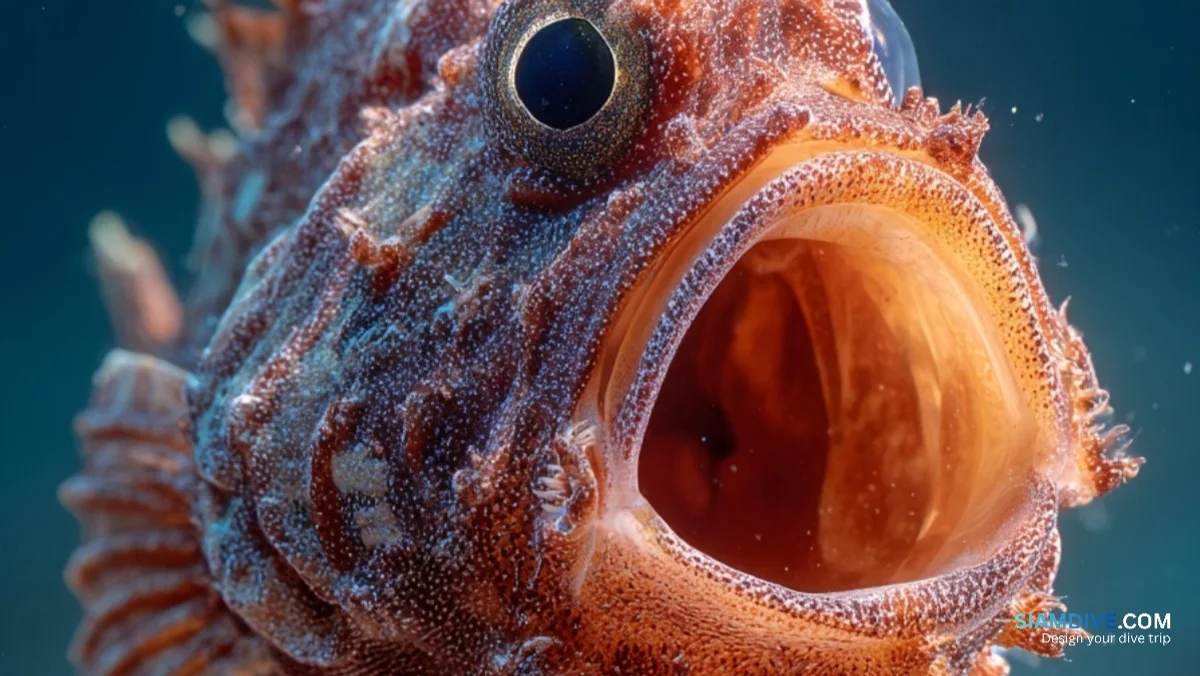
Whale sharks are filter feeders, one of only three shark species that feed this way (the other two being basking sharks and megamouth sharks). Their feeding method is both simple and extraordinary. A whale shark opens its mouth — which can measure up to 1.5 meters (5 feet) wide — and draws in enormous volumes of water. Internal filter pads made of spongy tissue and gill rakers then strain out plankton, krill, fish eggs, small fish, and squid. The water passes out through the gills while the food stays behind.
A large adult whale shark can process over 6,000 liters of water per hour and consume an estimated 900 kilograms of food daily during active feeding periods. They employ several feeding strategies depending on conditions: horizontal surface ram filtering (swimming forward with mouth open), vertical suction feeding (bobbing vertically at the surface to gulp concentrated prey), and bottom feeding when prey settles near the seabed. During mass spawning events of reef fish such as snappers or groupers, whale sharks have been documented congregating in large numbers to feed on the clouds of eggs — events that draw dozens of sharks to a single location.
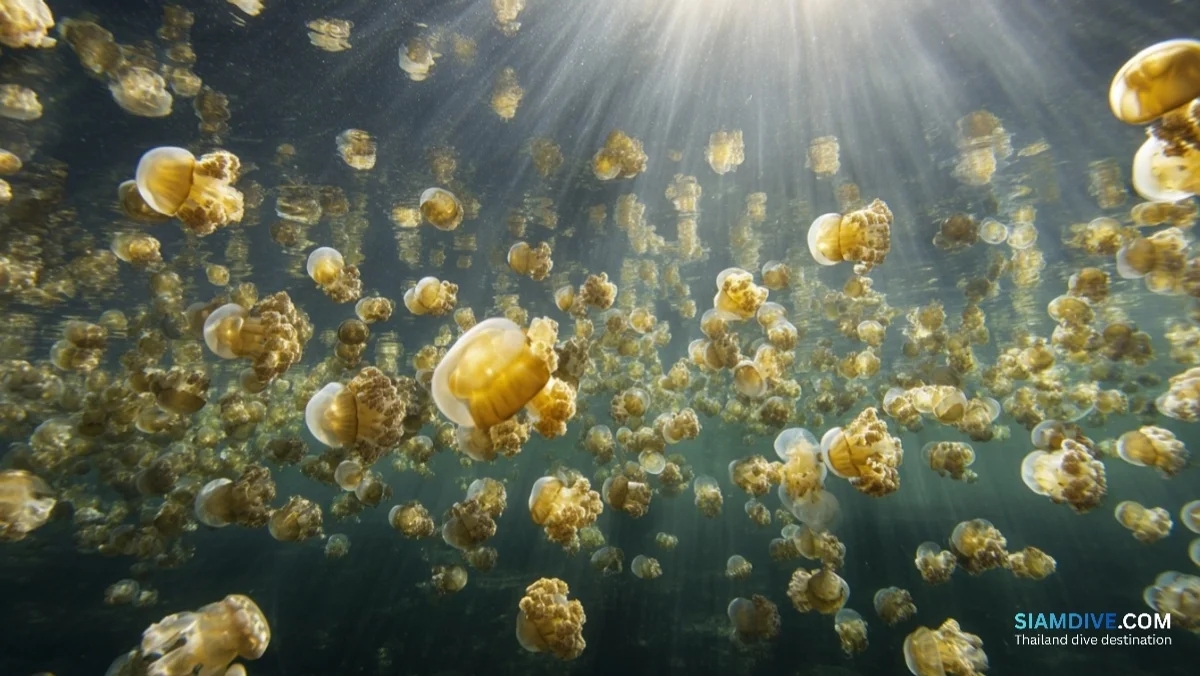
They are also opportunistic feeders on jellyfish and can be found in areas with dense moon jelly aggregations. This dietary flexibility is one reason whale sharks are found across such a wide range of tropical and warm-temperate oceans, essentially following the food wherever it blooms.
Migration and Where They Show Up
Whale sharks are among the ocean's greatest travelers. Satellite tagging studies have tracked individuals covering thousands of kilometers in a single year, crossing ocean basins and international boundaries with no regard for human-drawn maps. One tagged female was recorded traveling over 12,000 kilometers across the Pacific. Their movements are driven primarily by plankton blooms, sea surface temperatures, and possibly lunar cycles that influence prey availability.
The ECOCEAN whale shark photo-identification database, the largest of its kind, has catalogued more than 6,000 individual whale sharks based on their unique spot patterns — no two whale sharks have the same markings, much like human fingerprints. This database has revealed that some individuals return to the same feeding sites year after year, while others appear once and vanish into the blue.
Whale sharks are also deep divers. While most encounters happen at the surface or in shallow water, tagged individuals have been recorded diving to depths of 1,900 meters (6,234 feet) — among the deepest dives recorded for any shark species. Scientists believe these deep dives may be related to thermoregulation, navigation, or accessing deep-water prey layers. The full picture of whale shark migration remains incomplete, which is part of what makes every sighting scientifically valuable.
Whale Shark Encounters in Thailand
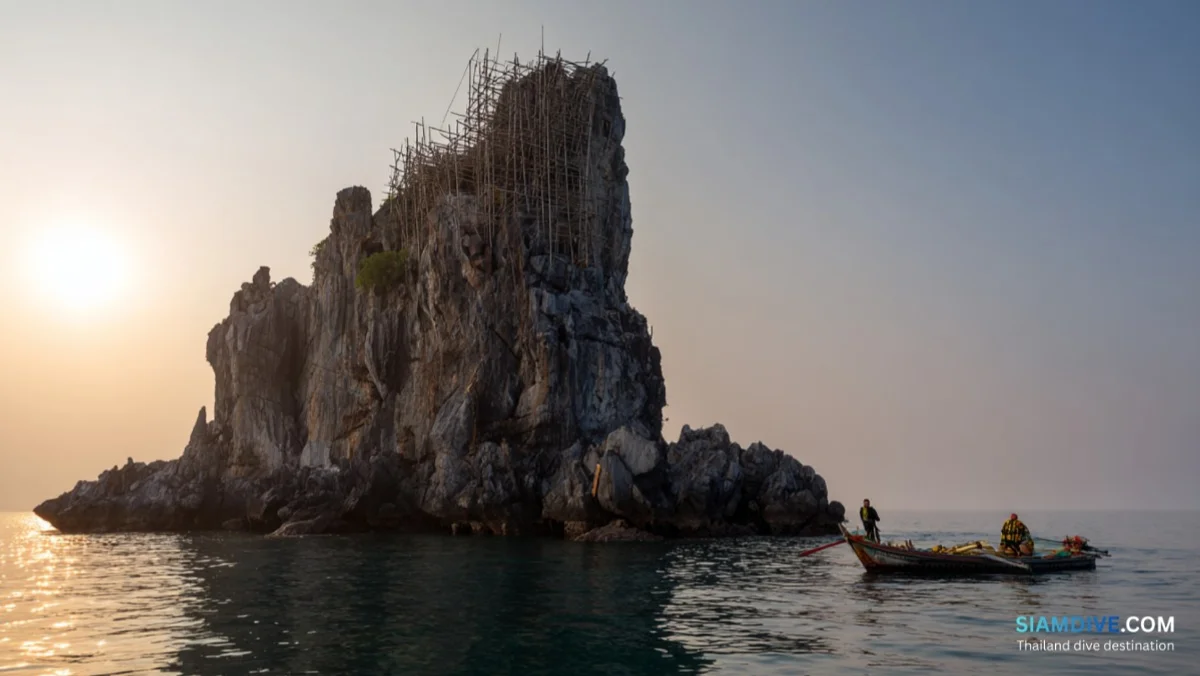
Thailand is one of the most reliable places in Southeast Asia for whale shark encounters, with several sites that produce sightings annually. The undisputed top location is Richelieu Rock in the Similan Islands Marine National Park. This horseshoe-shaped pinnacle rises from 5 to 40 meters depth in the Andaman Sea and is consistently ranked among the world's best dive sites for whale shark encounters. The nutrient-rich waters around Richelieu attract whale sharks during their seasonal migration, typically between February and May, with peak sightings in March and April.
On the Gulf of Thailand side, Sail Rock near Koh Tao produces an estimated 20 to 30 whale shark sightings per year, concentrated between March and May and again in September to November. Chumphon Pinnacle, also near Koh Tao, occasionally delivers whale shark encounters though less predictably. The Similans marine park is open from approximately mid-October to mid-May each year, so timing your trip matters.
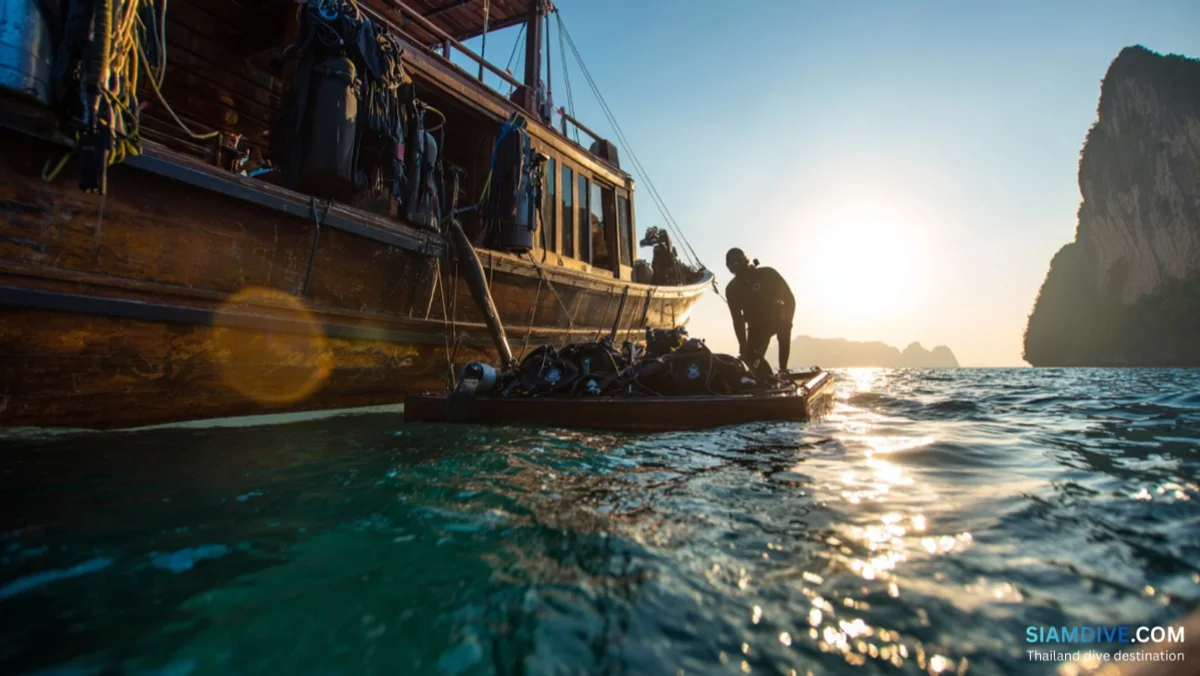
Richelieu Rock is best accessed via liveaboard from Khao Lak or Tab Lamu pier, with trips typically running 2 to 5 nights covering Richelieu and surrounding sites. Day trips from Koh Tao cover Sail Rock and Chumphon Pinnacle. The best overall window for whale shark chances in Thailand is March through May, when both coasts are producing sightings.
Ethical Guidelines: How to Approach Responsibly
Whale shark encounters are a privilege, not a right, and the rules exist because the animals need them. Thailand's Department of Marine and Coastal Resources (DMCR) enforces specific guidelines within marine parks, with fines of up to 100,000 THB for violations. But beyond legal consequences, responsible behavior is about ensuring that whale sharks continue to tolerate human presence rather than learning to avoid it.
The core rules are straightforward. Maintain a minimum distance of 4 meters from the body and 3 meters from the head and tail. Approach from the side, never head-on or from directly behind — head-on approaches trigger avoidance behavior, and the tail can deliver a powerful strike. No more than 4 divers should be in the water with a single shark at any time. Never touch a whale shark. Human skin transfers bacteria that can cause infections on the shark's skin, and physical contact causes measurable stress responses including increased swim speed and dive frequency.
Limit your time to a maximum of 30 minutes per encounter, even if the shark remains in the area. Watch for stress signals: clamped pectoral fins, rapid direction changes, banking sharply away, or sudden deep dives. If you see any of these behaviors, back off immediately and give the animal space. The goal is for the whale shark to choose to stay near you, not for you to chase it until it flees.
Photography Tips for Whale Shark Encounters
Photographing a whale shark is technically straightforward but logistically chaotic. The animal is enormous, it does not stop for you, and the encounter may last 90 seconds or 15 minutes with no way to predict which. Preparation matters more than camera settings.
Use the widest lens you have. A rectilinear 10-17mm fisheye or 14-30mm wide-angle is ideal for capturing the full animal or showing scale with a diver in the frame. Anything longer than 35mm equivalent and you will spend the entire encounter shooting fragments of spotted skin. Set your camera to shutter priority or manual: 1/250 second minimum shutter speed (the shark is moving, you are moving, and water magnifies motion blur), f/5.6 to f/8 for depth of field, and ISO 100 to 400 depending on available light.
Position yourself 5 to 10 meters ahead of the shark's path, perpendicular to its direction of travel, and let it swim toward and past you. This gives you the best angle for a profile or three-quarter shot and avoids the head-on approach that stresses the animal. If you are using a strobe, angle it at 45 degrees outward from the lens to reduce backscatter from particles in the plankton-rich water. One strobe is usually better than two for this reason.
The shot that defines a great whale shark image is not a close-up of the mouth — it is a wide composition showing the full animal with a diver in frame for scale. That contrast between a 12-meter fish and a 1.8-meter human is what communicates the reality of the encounter to anyone who was not there.
Conservation: Why Every Encounter Matters
Whale sharks are listed as Endangered on the IUCN Red List, with population assessments indicating a decline of more than 50% over the past 75 years. They are protected under CITES Appendix II, which regulates international trade, and by national laws in over 30 countries including Thailand. Despite these protections, threats persist: bycatch in commercial fishing nets, illegal finning (whale shark fins are among the most valuable in the trade), boat strikes in shipping lanes, and plastic pollution that contaminates their filter-feeding mechanism.
This is where diving tourism becomes genuinely useful. In countries where whale shark encounters generate significant revenue, local communities have a direct economic incentive to protect the animals and their habitat. A single whale shark in a productive dive tourism area can generate millions of dollars over its lifetime through repeated encounters with paying divers and snorkelers — far more than its one-time value as a catch. Research programs at sites like Richelieu Rock are partially funded by park fees and liveaboard contributions.
Every diver can contribute to conservation data. Photograph the area behind the gill slits on the left side of any whale shark you encounter — this is the identification region used by the ECOCEAN database and the DMCR's Thai whale shark monitoring program. Submit your photos through the DMCR marine wildlife reporting app or directly to ECOCEAN's website. Your holiday photo becomes a data point in a global tracking effort that helps scientists understand population size, movement patterns, and individual survival rates.
Making Your Whale Shark Dream Happen
If a whale shark encounter is on your diving bucket list, Thailand offers some of the best odds in Southeast Asia, but it requires planning and realistic expectations. No operator can guarantee a whale shark sighting — these are wild animals covering thousands of kilometers of open ocean, and they show up on their schedule, not yours.
For the best chances, book a liveaboard trip from Khao Lak that includes Richelieu Rock during March to May. Liveaboard prices typically range from 20,000 to 50,000 THB per person for a 2 to 5 night trip, depending on the boat and cabin class. This gets you multiple dives at Richelieu over consecutive days, which dramatically increases your odds compared to a single day trip. National park permits (currently 500 THB per day for foreign divers) are usually included in the trip price but confirm this when booking.
For Gulf of Thailand options, base yourself on Koh Tao and book day trips to Sail Rock during peak season. Prices are lower (around 3,500 to 5,500 THB per two-tank trip) but whale shark odds per dive are also lower than at Richelieu.
The single most important thing to pack is patience. Some divers see whale sharks on their first dive at Richelieu. Others spend a week there and see none. Both outcomes are normal. The ocean does not owe you a whale shark, but if you put yourself in the right place at the right time with the right attitude, the odds are genuinely in your favor. And when it happens — when that spotted silhouette materializes from the blue — every dive you have ever done will feel like it was leading to that moment.
Ready to plan your whale shark encounter? Browse liveaboard trips to the Similan Islands and Richelieu Rock on siamdive.com and start building your trip around Thailand's most extraordinary marine life experience.