Chumphon Pinnacle Diving Guide: Gulf of Thailand's Granite Tower
7 เมษายน 2569
A complete guide to diving Chumphon Pinnacle off Koh Tao — whale sharks, schools of trevally, the swim-through, depths, currents, and how to book.
Chumphon Pinnacle: Why Divers Cross the Gulf for This Granite Tower
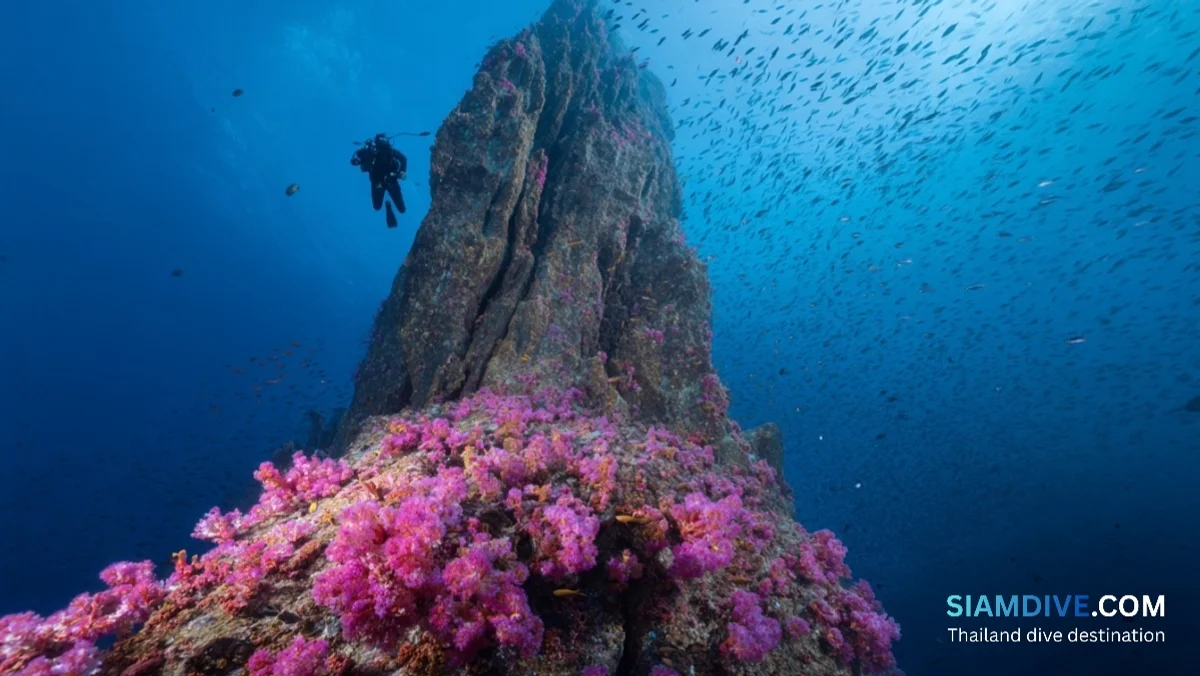
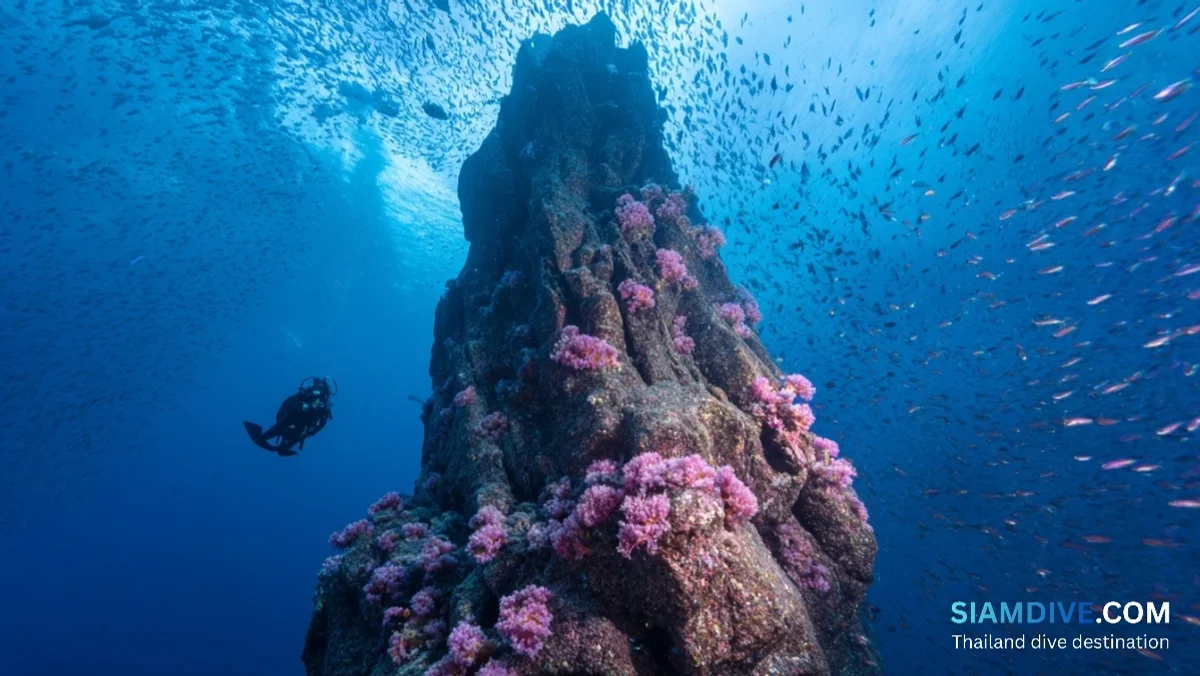
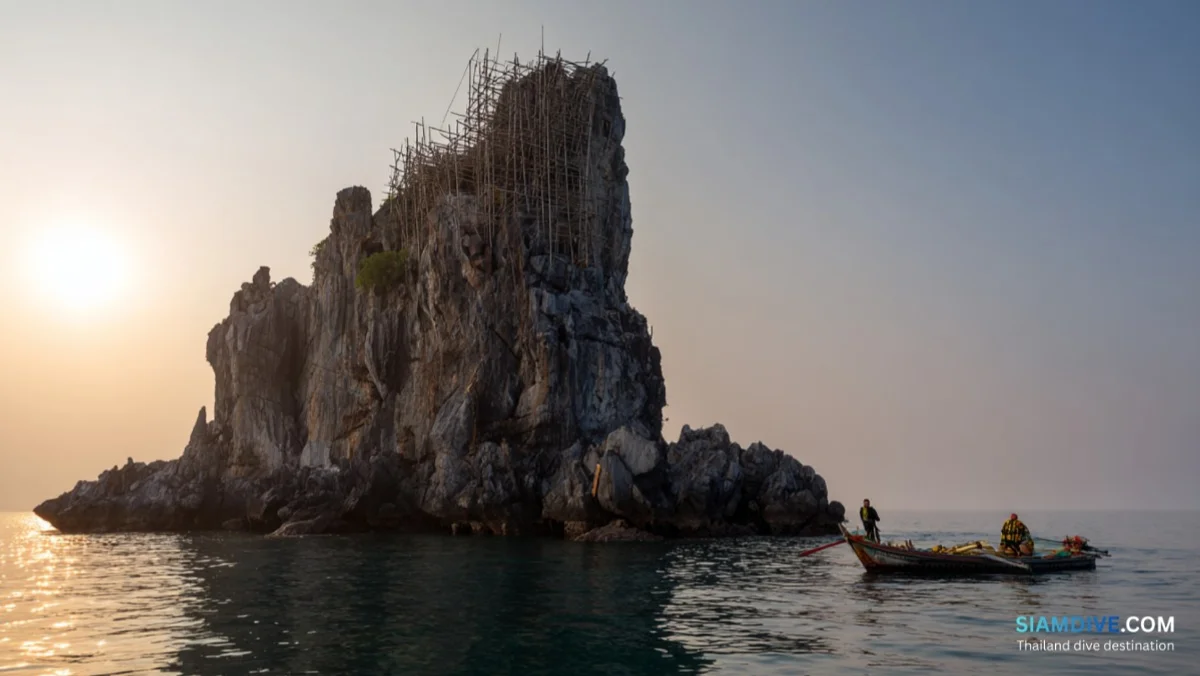
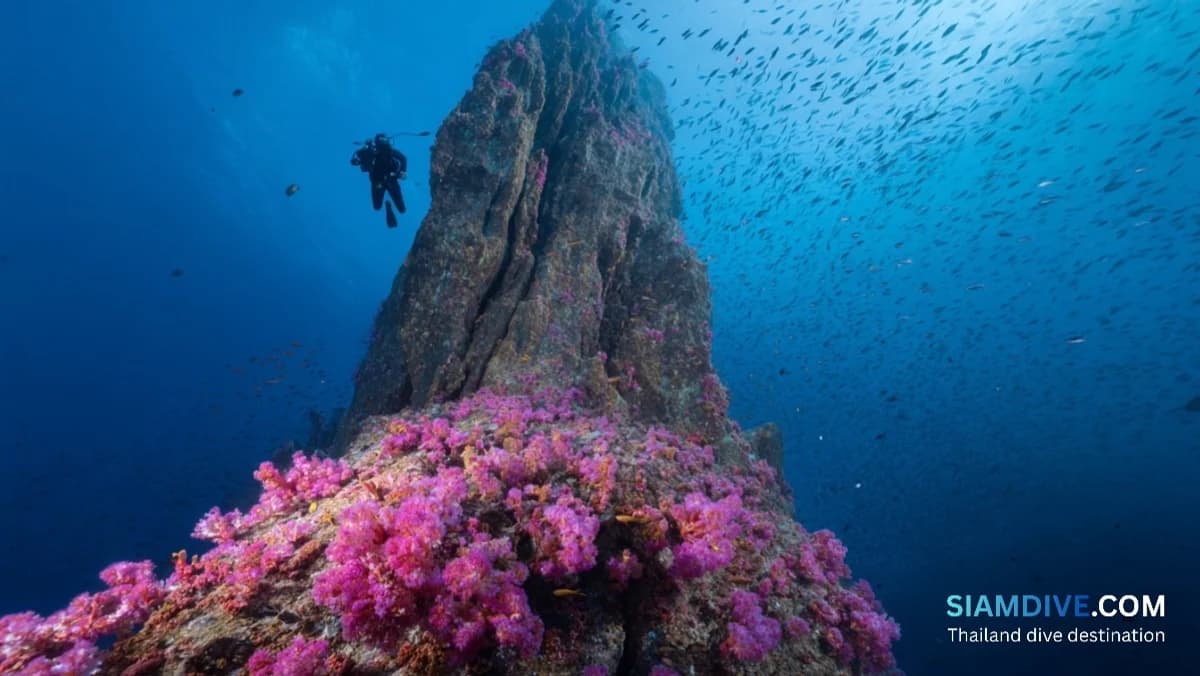
Twelve kilometers off Koh Tao there's a granite seamount that rises out of the deep blue and stops 14 meters short of the surface. That's Chumphon Pinnacle. Whale sharks circle it. Massive schools of trevally swirl over it. And every advanced diver who comes through Koh Tao puts it on their list.
Unlike Sail Rock — its more famous cousin to the north — Chumphon doesn't need a liveaboard or a 3-hour boat ride. A 45-minute speedboat from Mae Haad pier and you're tying onto the mooring line. That accessibility is half the magic. The other half is what's down there.
Why Chumphon Pinnacle is a Must-Visit for Divers
Three things separate Chumphon from a typical reef dive. First, it's a true pinnacle — a single granite tower with no surrounding reef, which means everything dramatic happens in one compact area you can swim around in a single dive. Second, the offshore location pulls in pelagics that never come close to the islands. Third, the topography itself is fun to dive: a fissure splits the southern end like a canyon, a swim-through cuts under the central mooring, and the sloping anemone garden at the top makes one of the best safety stops in Thailand.
If you've only dived the shallow training sites around Koh Tao, Chumphon is your first taste of "real" diving — depth, current, big animals, and the kind of underwater geography you remember years later.
Underwater Geography and Topography
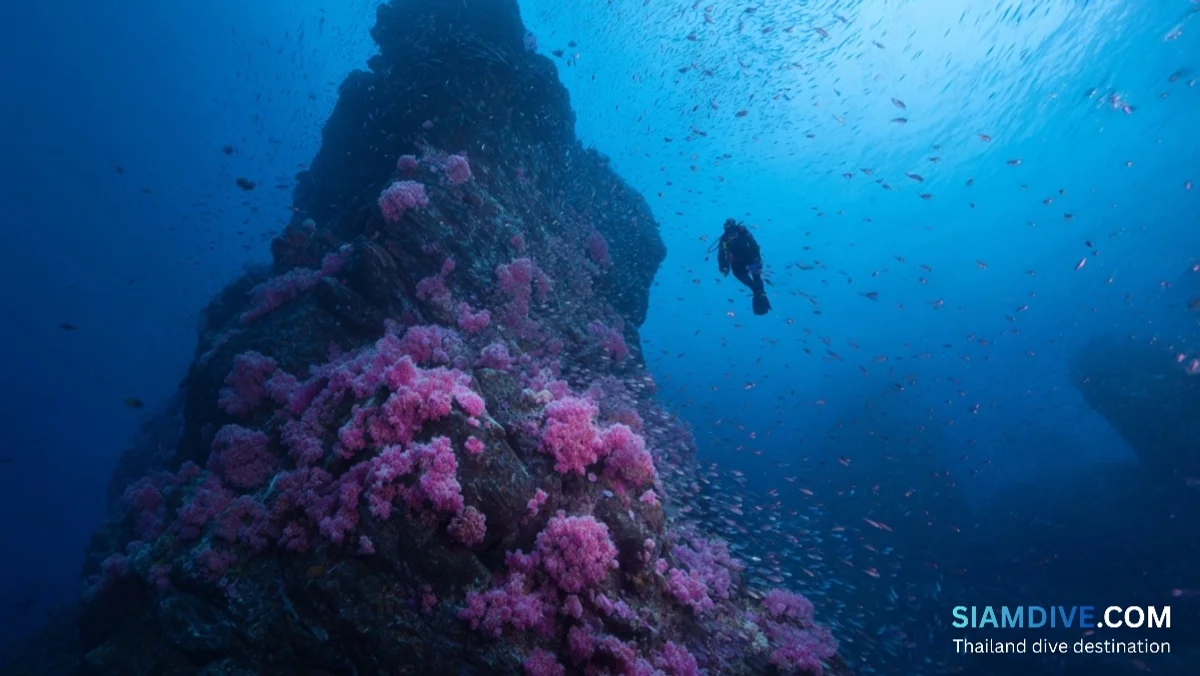
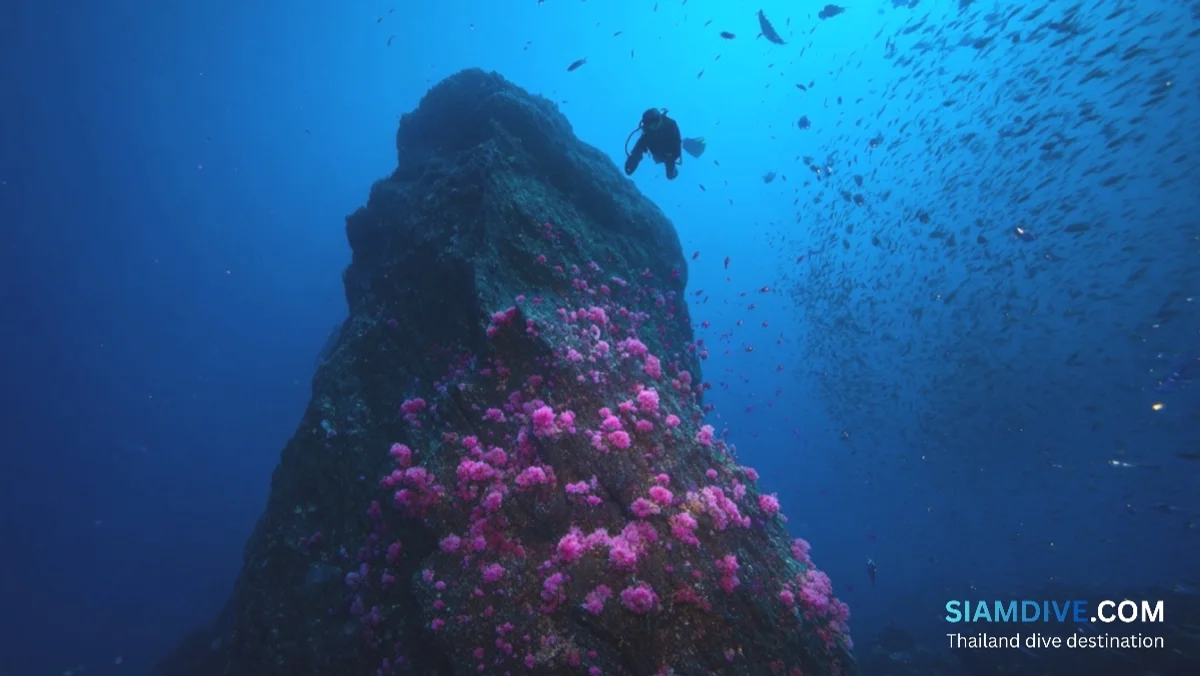
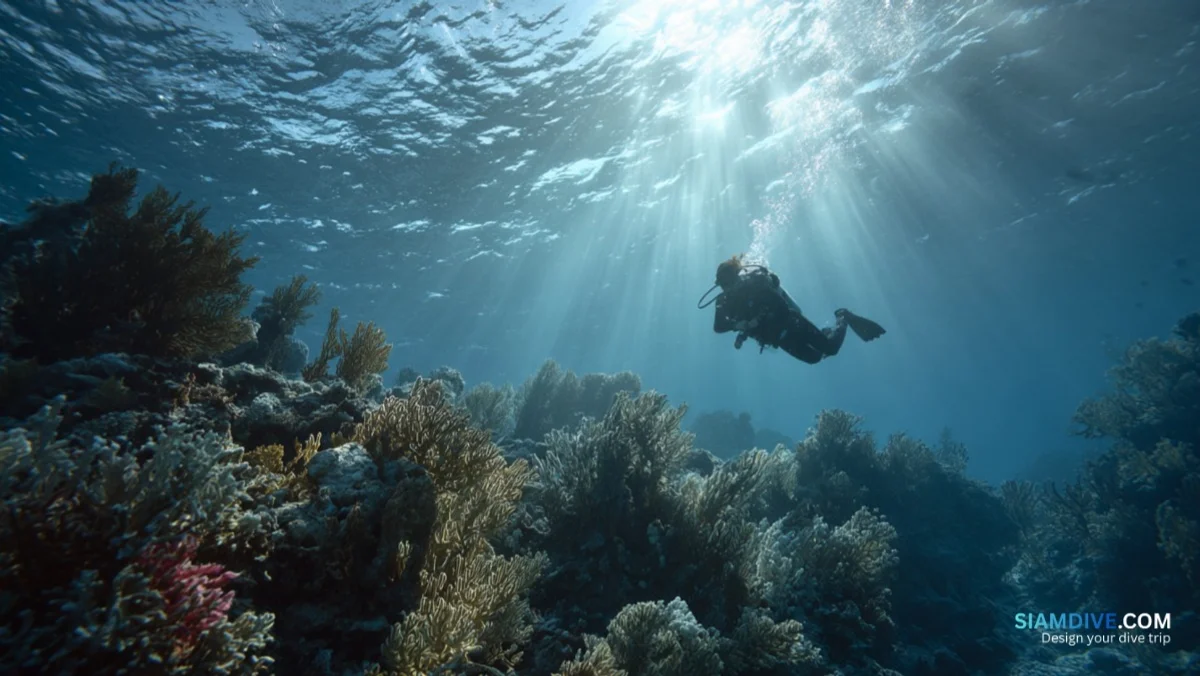
The pinnacle is roughly 40 meters long and rises from a sandy bottom at 30-40 meters to a top at 14-16 meters. Think of it as a granite hill underwater. The structure has multiple features worth knowing about before you splash:
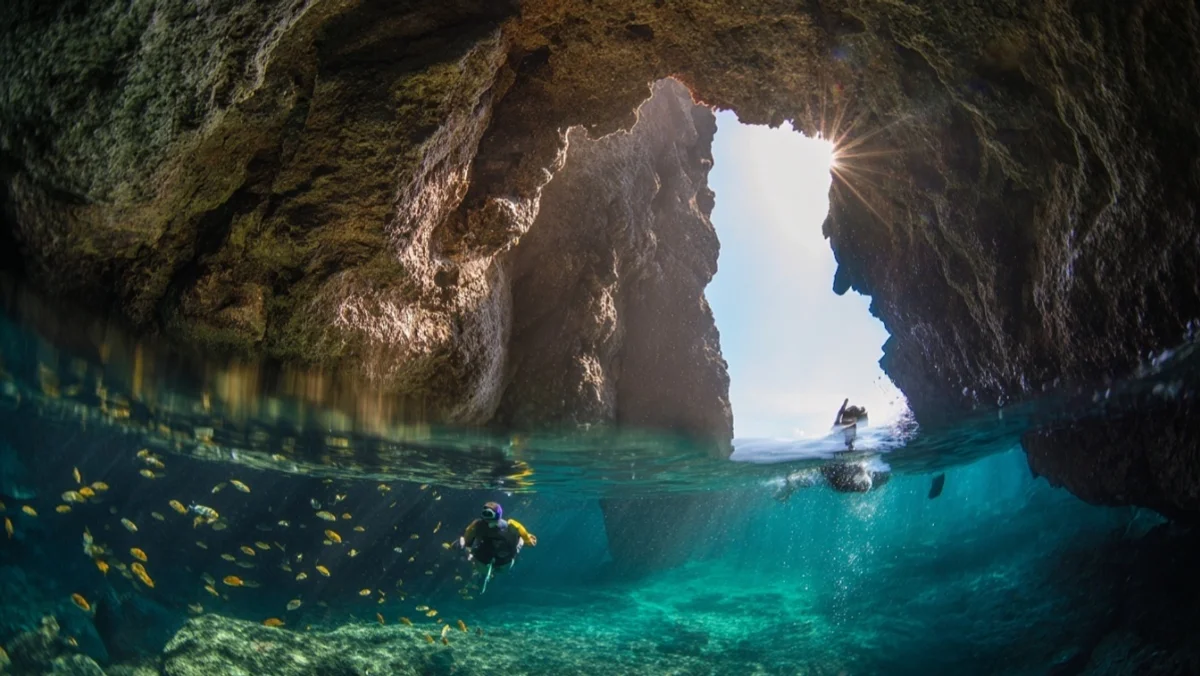
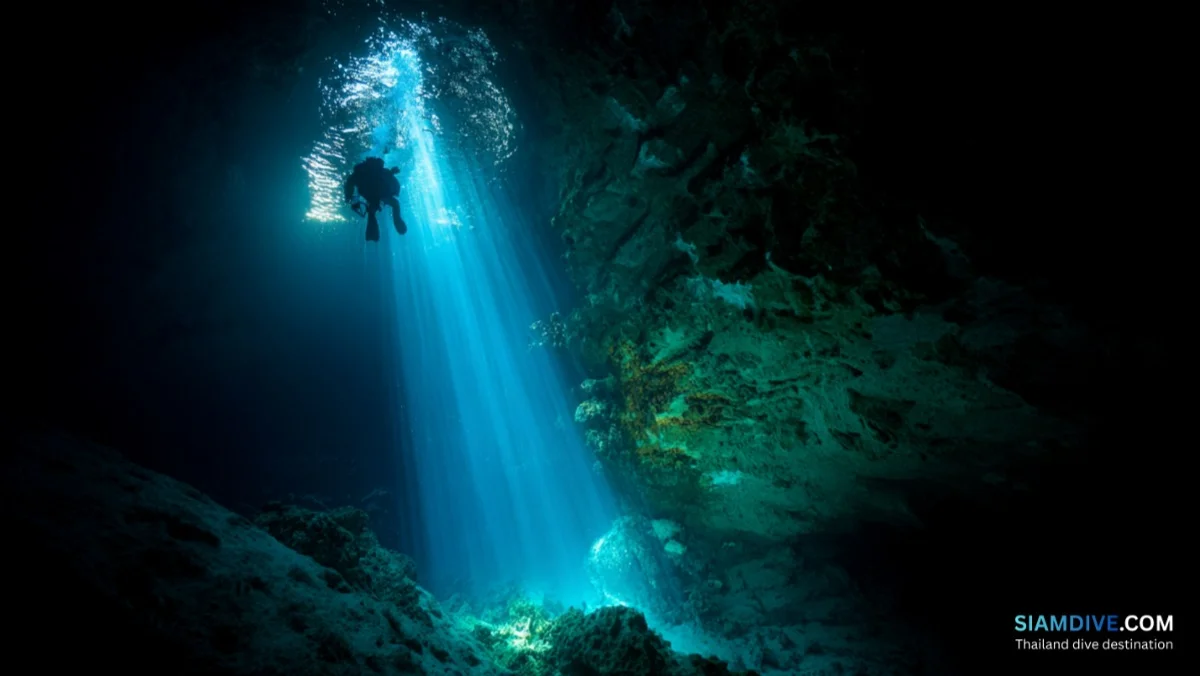
- The swim-through at the base of the central mooring line — a tunnel just wide enough for a single diver, around 18-22 meters deep. Easy and safe in calm conditions, but check with your divemaster on current days.
- The southern fissure — a deep crack splitting the southern wall, big enough to drop into and explore. This is where lobsters and moray eels hide.
- The anemone garden on the top — covering the shallowest part of the pinnacle, this is where dozens of pink anemonefish make their home. Spend your safety stop here and you'll wish it was longer.
- Deep crevices and overhangs on the eastern face — these break up the otherwise smooth granite and create hiding spots for groupers and the occasional banded sea krait.
Marine Life You'll Encounter
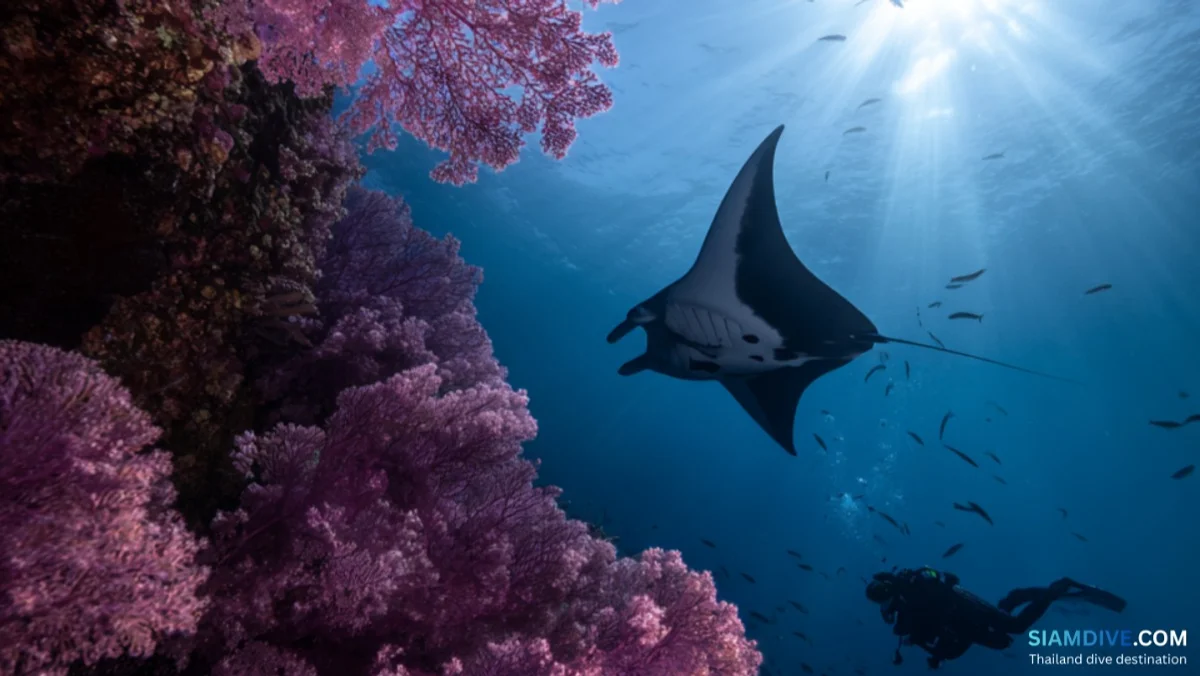
The headline animal is the whale shark. Chumphon Pinnacle is one of two reliable spots in the Gulf (the other being Sail Rock) where these 8-10 meter giants show up regularly. Sightings peak from March through October, often coinciding with plankton blooms that drop visibility but bring the food in. No guarantees — but if you dive Chumphon for a week during whale shark season, your odds are real.
Beyond the whale sharks, this is what you'll typically see:
- Big schools of bigeye trevally and chevron barracuda hovering above the pinnacle — usually visible from the moment you start descending
- Pink anemonefish in dozens of anemones across the top, plus the occasional false clown anemonefish
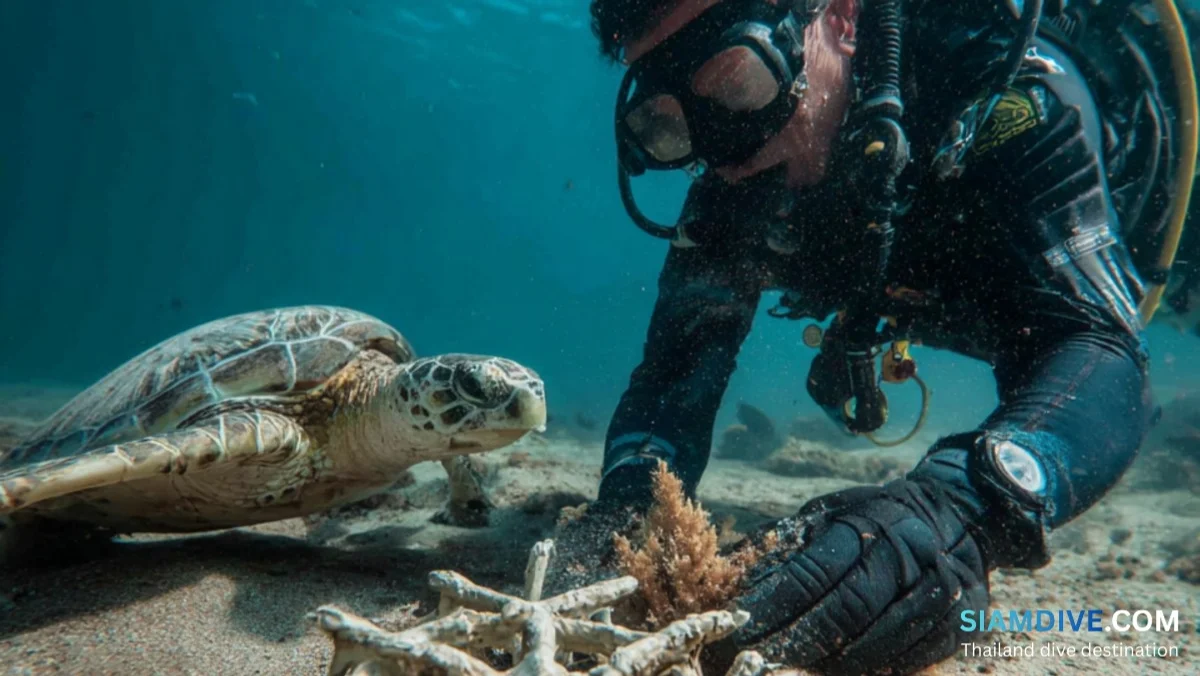
- Green sea turtles grazing on the algae growth, often relaxed enough to let you approach for photos
- Bluefin trevally and giant trevally hunting smaller fish along the edges
- Macro life: banded boxer shrimp, banded pipefish, Jann's pipefish, several nudibranch species, and porcelain crabs in the anemones
- Reef fish in numbers: angelfish, butterflyfish, parrotfish, and large grouper that are surprisingly approachable
Bull sharks have been reported elsewhere in the Gulf, but Chumphon isn't a known bull shark site — don't go expecting them.
Best Time to Dive Chumphon Pinnacle
Koh Tao has two main seasons that affect Chumphon. The dry season runs from January through August, with the calmest conditions and best visibility from February to April — this is when you'll see 25-30 meters of viz on a good day. November and December are the worst months: northeast monsoon brings rain, big swells, and a real chance the boats won't even run.
For whale sharks specifically, March through May and August through October are your best windows. The water is plankton-rich (which means visibility might drop to 15 meters) but the food brings in the big animals. Locals will tell you that when the visibility drops and the water turns slightly green, that's the day to go.
How to Get to Chumphon Pinnacle
You don't book Chumphon directly — you book through any Koh Tao dive shop, and they run two-tank trips to it almost daily during the season. Here's the real flow:
- Get to Koh Tao. Lomprayah catamaran from Chumphon (1.5 hours) or Surat Thani (2.5 hours), or Songserm slow boat if you're saving cash. From Bangkok, the night train + ferry combo is the classic route.
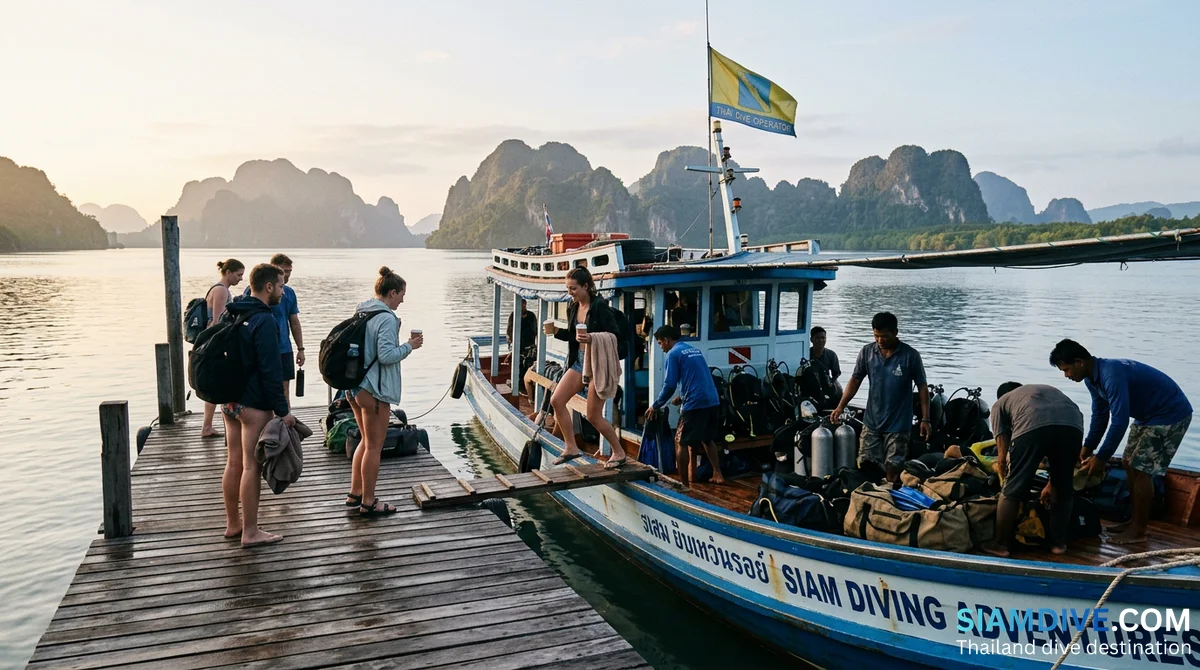
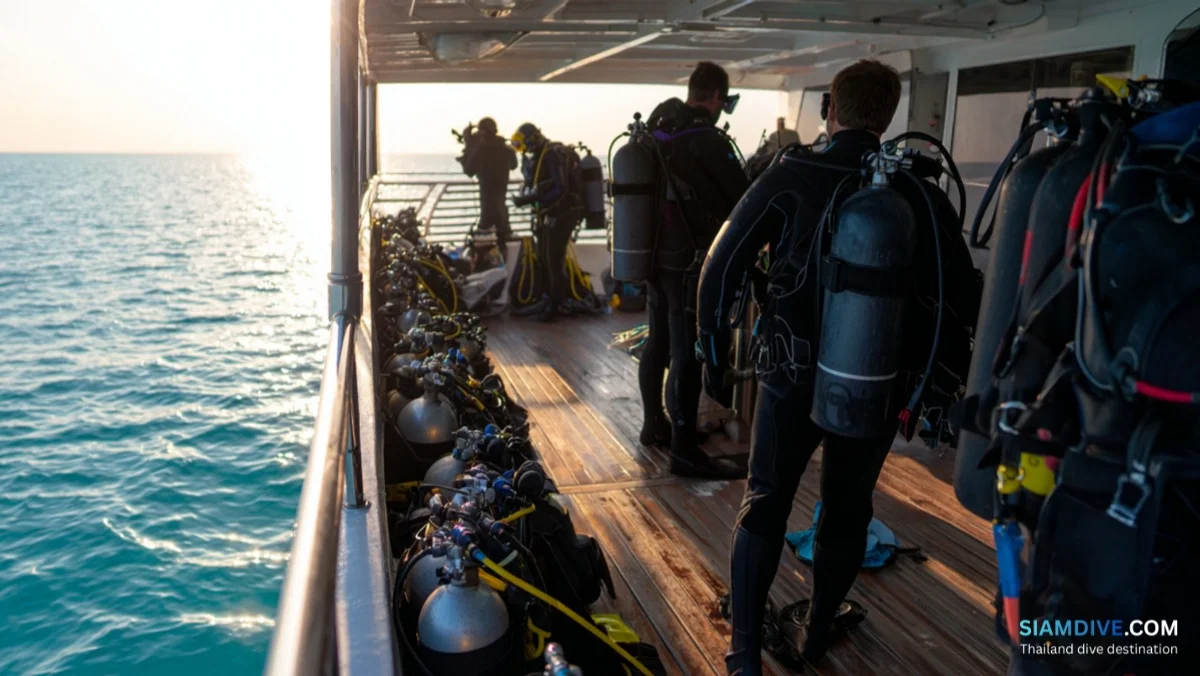
- Book a two-tank morning trip. Most shops leave Mae Haad pier between 7:00-8:00 AM. The boat to Chumphon takes 45 minutes, you do dive 1, surface interval with snacks on the boat, then dive 2 (sometimes at Chumphon, sometimes at a nearby site like Southwest Pinnacle).
- Cost: Roughly 1,800-2,500 THB for a fun dive trip including gear, two tanks, lunch, and divemaster. Cheaper if you're already enrolled in a course.
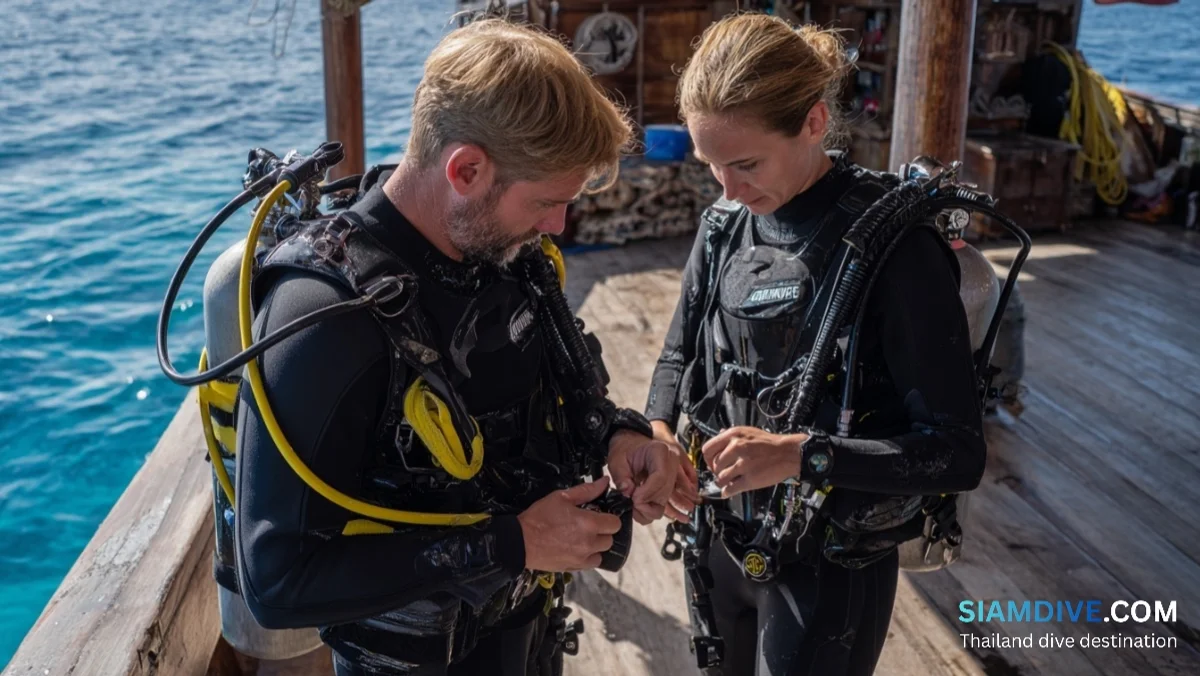
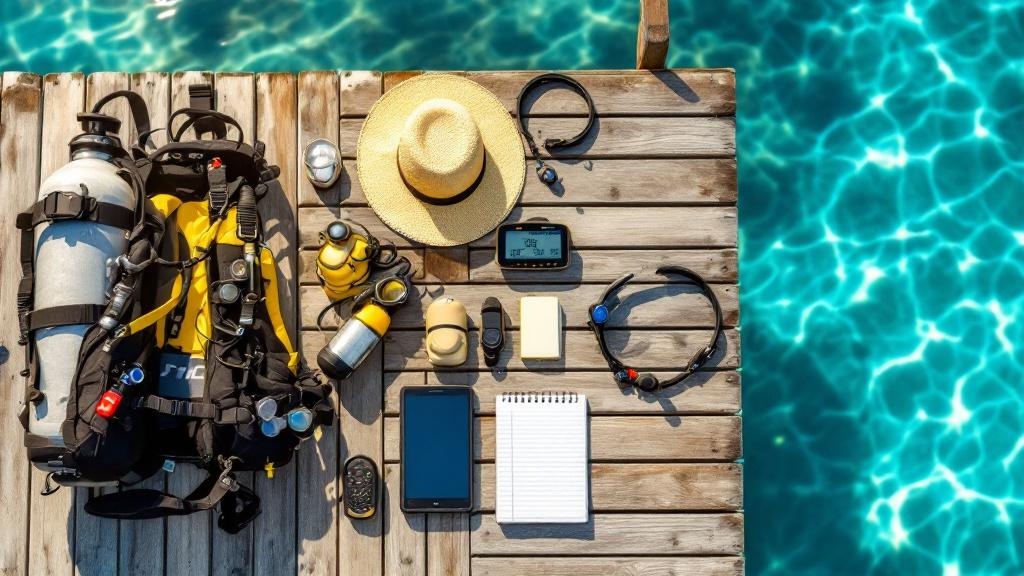
You don't need your own gear. Every Koh Tao shop rents BCDs, regulators, wetsuits, and computers — just bring your certification card.
Tips for Diving Chumphon Pinnacle
- You need Advanced Open Water (or Open Water + Adventure Deep). The depths and current rule out beginners. If you're only Open Water certified, do an Advanced course on Koh Tao first — it's cheap and Chumphon is often one of the four adventure dives.
- Use the mooring line on descent. Even on calm days, the current at Chumphon can pick up suddenly. Going down the line keeps you oriented and lets you save air for the bottom.
- Stay with your divemaster through the swim-through if there's any current. The exit drops you into deeper water — easy to get disoriented if you blow through alone.
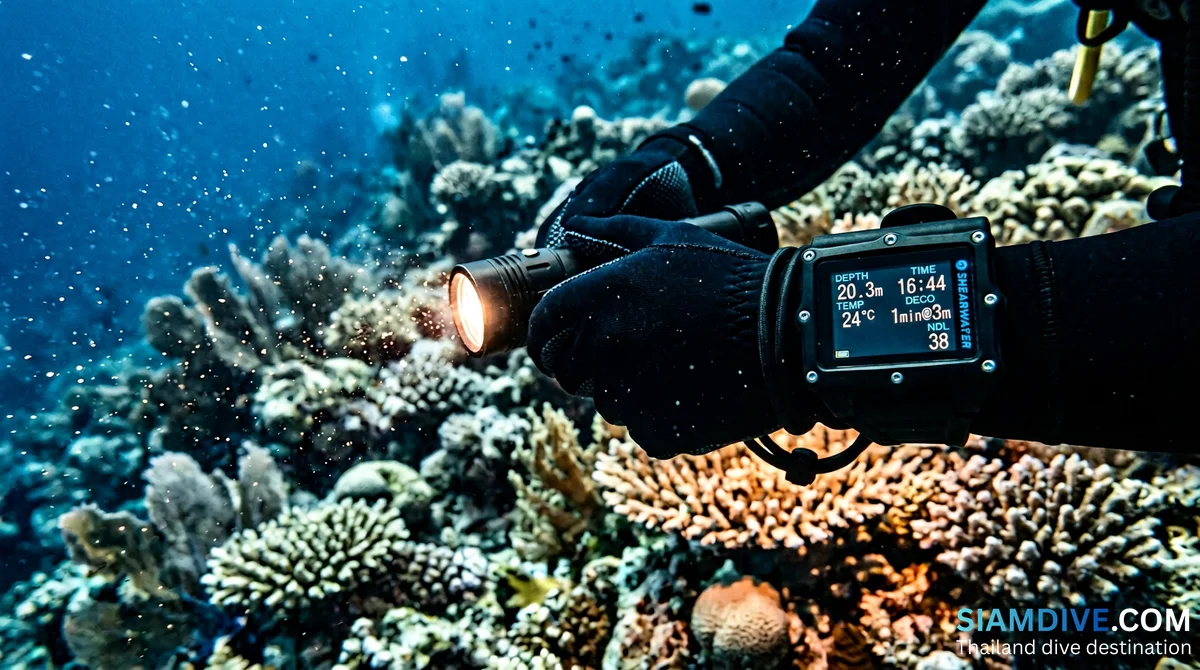
- Watch your depth constantly. The pinnacle drops off to 30-40 meters all around the base. It's easy to creep deeper than you planned while chasing a turtle or a school of trevally.
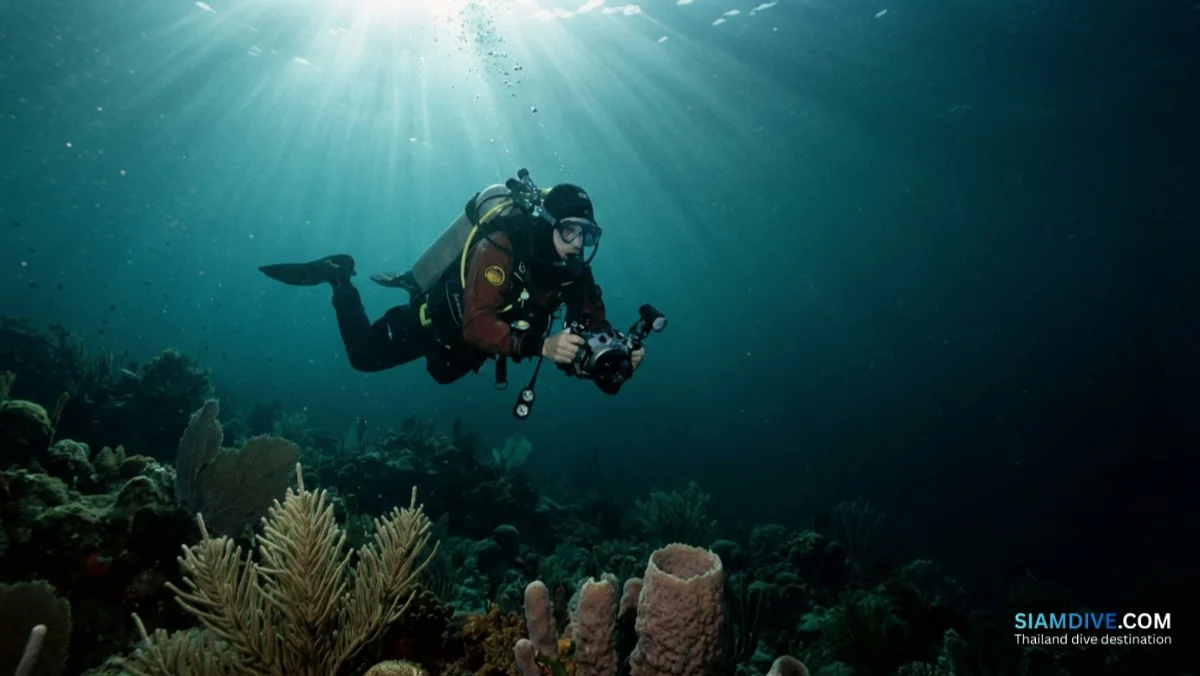
- Bring a camera with a wide-angle lens. The schools of trevally and the anemone garden are made for wide angle. Macro shooters won't be bored either, but you'll regret not having wide on a whale shark day.
- Don't kick the anemones. The garden at the top is fragile and crowded with divers doing safety stops. Maintain neutral buoyancy and finish your stop hovering above, not on top of, the corals.
Final Thoughts
Chumphon Pinnacle is the dive that turns a Koh Tao trip from "where I got certified" into "where I started taking diving seriously." It's deep enough to feel real, the marine life is consistently good, and on the right day you'll surface having seen something you'll talk about for years. It's also one of the few Gulf of Thailand sites where you don't need a multi-day liveaboard to access something genuinely world-class.
Looking to add Chumphon Pinnacle to your next Thailand diving trip? Browse Koh Tao dive operators and day trip packages on SiamDive and book directly with the shops that run there every day.