Same Dive, Different Deco: Why Your Computer Disagrees
25 เมษายน 2569
Two divers share a 30-metre reef. One surfaces clean; the other owes a three-minute stop. The answer lives in the algorithm and two settings most divers never touch.
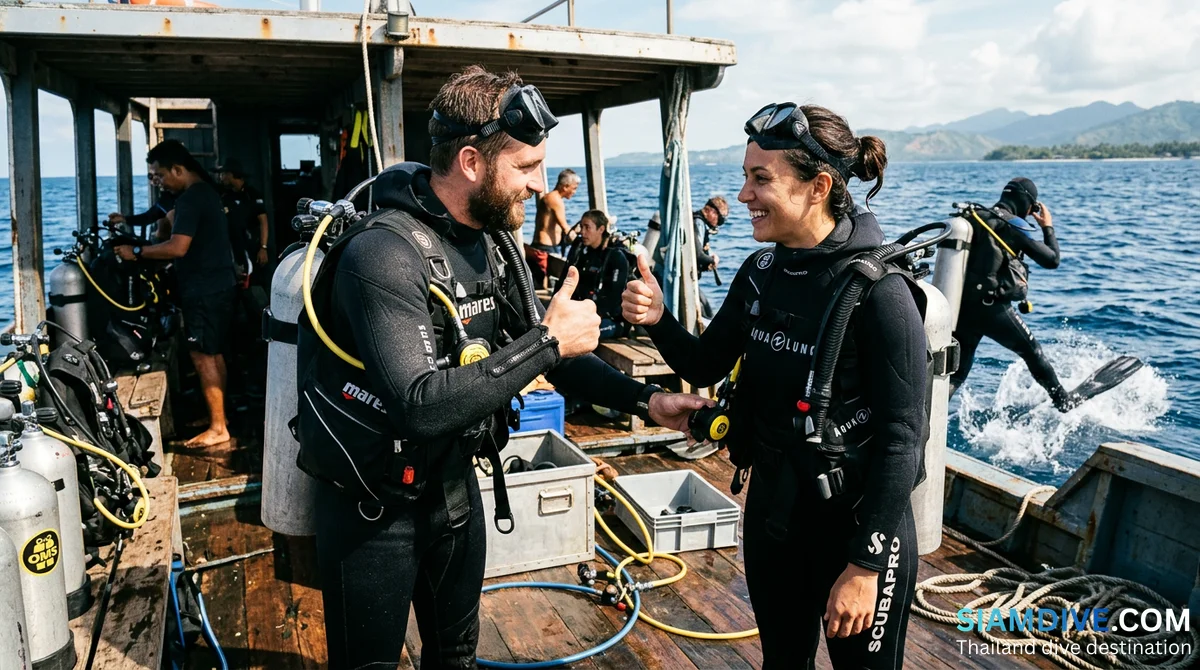
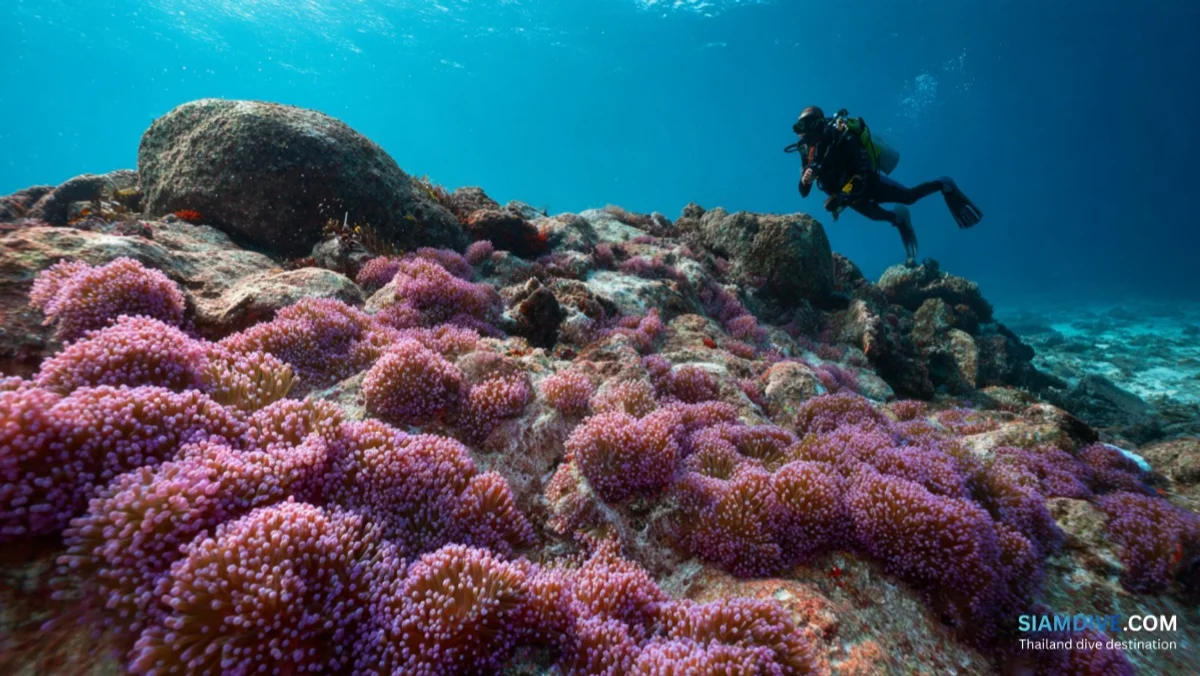
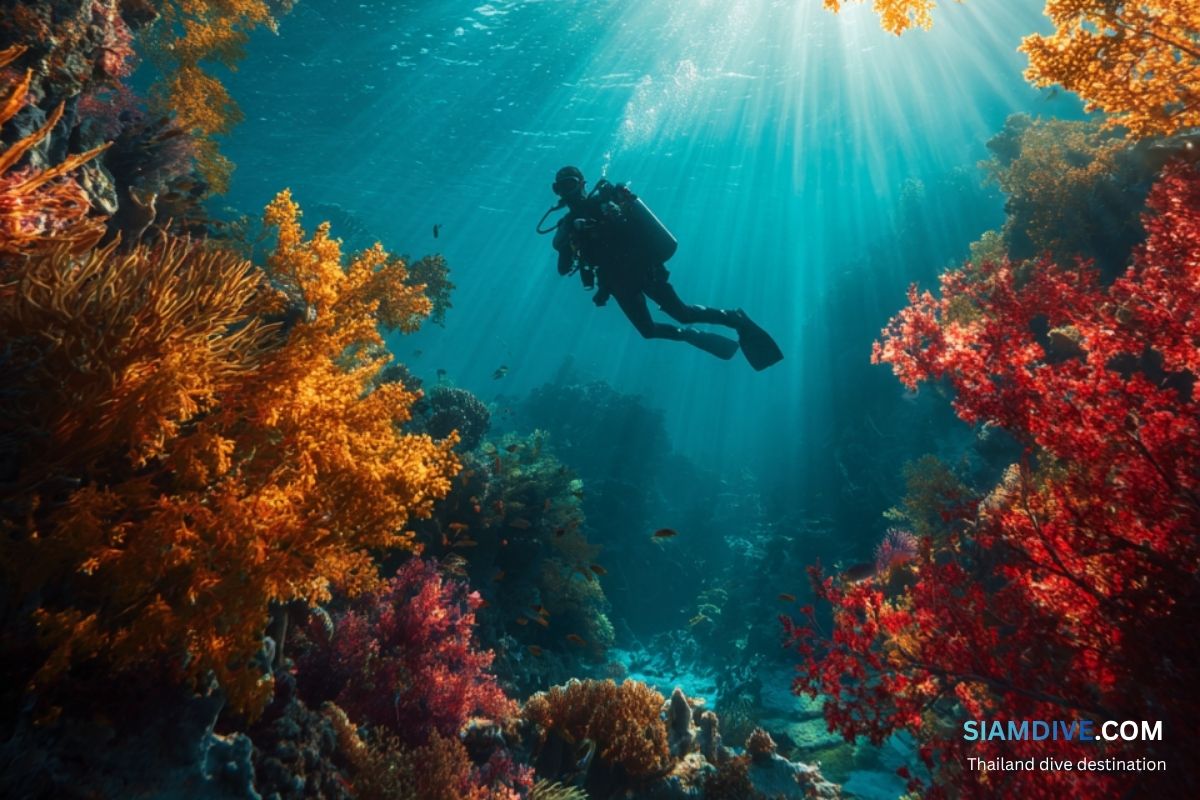
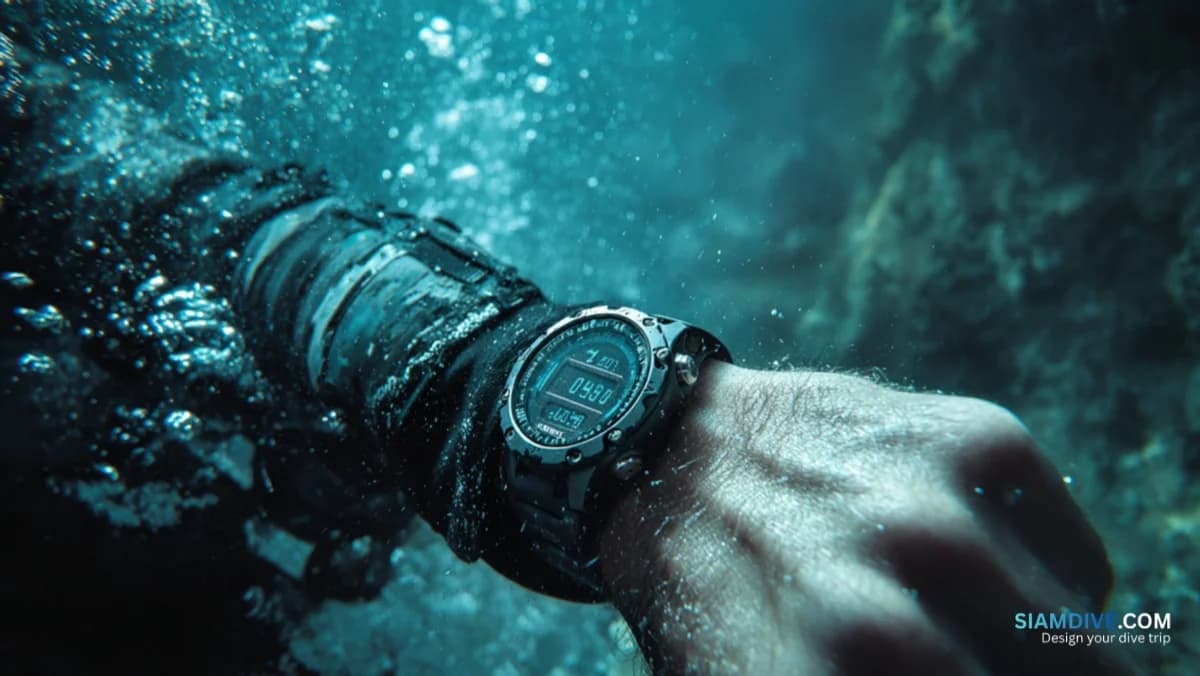
Thirty metres on a granite wall, two divers side by side, same bottom time, same gas. One computer beeps at 6 metres: three-minute deco obligation. The other shows a clean ascent with four minutes of no-decompression time to spare. Neither unit is broken. Both are doing exactly what their firmware told them to do — they just disagree on what "safe" means.
The split comes down to two things: the decompression algorithm running under the screen, and a pair of settings most recreational divers have never opened. Understanding both takes about ten minutes. It could change every dive you plan from here on.
Two Models of the Same Problem
Every dive computer solves the same puzzle: how much dissolved nitrogen can a tissue tolerate before bubbles form and decompression sickness becomes a risk? The disagreement is philosophical, and it dates back decades.
The Bühlmann ZHL-16C algorithm, developed by Albert Bühlmann at the University of Zurich, treats the body as 16 theoretical tissue compartments. Each compartment absorbs and releases nitrogen at a different rate — half-times spanning from 4 minutes (fast compartments modelling blood) to 635 minutes (slow compartments modelling cartilage and bone). The model tracks dissolved gas only. If the calculated tissue tension stays below a threshold called the M-value, the computer says: go up. The practical result is a profile that lets you rise relatively fast and then stacks longer stops in the shallows, where the pressure differential drives off-gassing most efficiently.
The Reduced Gradient Bubble Model (RGBM), championed by physicist Bruce Wienke, works from a different assumption. It presumes microbubbles already exist in the bloodstream before ascent begins, and the algorithm's job is to keep those bubbles small. RGBM calls for deeper stops earlier in the ascent, trades shorter time near the surface, and generally imposes tighter limits on repetitive dives. For recreational profiles, the practical difference is often modest — a minute here, two minutes there. On deep or multi-day schedules, the gap widens.
A 2019 validation study in Diving and Hyperbaric Medicine tested four commercial algorithms against established Navy reference profiles. None passed every test at factory settings. Both Bühlmann ZHL-16C and Suunto's RGBM variant could be tuned to pass — but only after user adjustments. The takeaway: no algorithm is perfect out of the box.
16 Compartments and 635 Minutes
The number "16" in ZHL-16C is not arbitrary, but it is not anatomy either. Bühlmann chose 16 mathematical compartments to give a representative spread of absorption rates across the body — no single compartment maps to a specific organ. A 4-minute half-time roughly mirrors how fast blood equilibrates with breathing gas. A 635-minute half-time models tissues like tendons and bone marrow that load slowly and release even slower.
Half-time means exactly what it sounds like: the time for a compartment to reach 50% of a new pressure equilibrium. After two half-times, 75%. After three, 87.5%. The fast compartments drive your no-deco limits on a 30-metre bounce dive because they load quickly and hit tolerance first. The slow compartments matter on multi-day dive holidays — they accumulate nitrogen across days and take hours to clear, which is why your computer's residual nitrogen reading the morning after a five-dive day is never zero.
RGBM does not use the same compartment structure. It layers a bubble-growth model on top of a dissolved-gas calculation, producing a hybrid that behaves differently on repetitive exposures. Most divers never see the math, but the difference explains why a Cressi Leonardo and a Shearwater Peregrine sitting on the same table after the same dive show different residual times.
The Dial Most Divers Never Open
Bühlmann calculates where danger starts. Gradient Factors let you decide how close you want to fly to that line.
A Gradient Factor is expressed as two numbers — GF Low and GF High — each a percentage of the M-value the computer will permit:
- GF Low sets the depth of the first decompression stop. A lower number pushes the first stop deeper. GF Low 30 triggers a stop well below the surface; GF Low 100 skips deep stops entirely and lets you rise until shallow stops kick in.
- GF High sets the tissue tension allowed at the surface. GF High 70 means the computer holds you underwater until your fastest compartment is at 70% of its M-value. GF High 95 lets you surface closer to the theoretical limit.
The computer draws a straight line between these two points and calculates your ceiling at every depth along the ascent. Change either number and the entire decompression profile reshapes — sometimes by seconds, sometimes by minutes.
- Conservative (GF 30/70)
- Deep first stop, extended shallow stops, shortest bottom time. Factory default on many Shearwater computers.
- Moderate (GF 40/85)
- Balanced profile. A common choice for experienced recreational divers who occasionally brush no-deco limits.
- Liberal (GF 85/95)
- Minimal overhead, maximum bottom time. Rarely used outside technical diving where other safety layers exist.
DAN's explainer on gradient factors makes the point clearly: these numbers let divers customise conservatism to personal risk tolerance, but most recreational divers have no training in what the numbers actually mean — and the factory default ships with a philosophy baked in.
Which Brand Runs What
Five years ago, choosing a dive computer meant choosing an algorithm. The market has since converged — and knowing who switched matters.
- Shearwater (Perdix, Teric, Peregrine) — Bühlmann ZHL-16C with fully adjustable GF. No penalty system: miss a stop or ascend too fast and the computer recalculates in real time without adding punitive extra obligation.
- Garmin (Descent Mk3i, Mk3) — Same Bühlmann ZHL-16C engine with GF access. Wrapped in a smartwatch that tracks heart rate and surface GPS, but the deco math underneath is the open, transparent algorithm technical divers trust.
- Suunto (Ocean, Nautic S) — the biggest shift. Suunto abandoned its proprietary RGBM and moved to Bühlmann ZHL-16C with GF on newer models. The Ocean's April 2026 firmware update pushed 40-plus refinements including cleaner deco-stop visuals. Older Suunto models (Zoop Nova, Vyper) still run RGBM with a penalty system — violate a ceiling or ascend too fast, and the computer tightens your limits for subsequent dives.
- Cressi (Giotto, Leonardo) — RGBM variant with fixed conservatism tiers (Low / Medium / High). No GF granularity.
- Mares (Genius, Quad) — RGBM-based. Adjustable conservatism tiers but no raw GF access.
The result on any dive boat: two divers surfacing from the same reef may see wildly different screens, not because one computer failed but because the algorithms, defaults, and personal equipment choices behind each screen are fundamentally different.
More Conservative Is Not Always Safer
In 2018, the Belgian Defence handed Shearwater Perdix computers to its military dive teams — factory GF set to 30/70. Operational air dives ran as deep as 60 metres. The assumption was straightforward: aggressive conservatism equals maximum safety.
A peer-reviewed study published in Diving and Hyperbaric Medicine in September 2023 examined the results and found the opposite. GF Low 30 forced deep stops that held divers at depth longer, loading slow tissue compartments with more nitrogen rather than less. The researchers concluded that no evidence supported the default 30/70 as safer than less conservative alternatives. Their recommendation: set GF Low to 100 — eliminating forced deep stops — and lower GF High to 75 to extend shallow-stop time where off-gassing is most efficient.
The study aligns with a broader reversal in decompression thinking. For twenty years, deep stops were articles of faith in technical diving. Recent data, including analysis from PADI's technical training team, suggests the evidence was thinner than the community believed. The Belgian data put hard operational numbers behind that shift — and it came from military divers running real combat-support profiles, not theoretical simulations.
39,099 Dives and a Grey Zone
Picture a spreadsheet five years wide and 2,629 divers deep. That is DAN Europe's Diving Safety Lab database — 39,099 electronically logged open-circuit recreational dives, the largest dataset of its kind. Average depth: 27.1 metres. Average gradient factor at surfacing: 0.66. Ascent rates: below published safety limits across the board. European recreational divers, it turns out, already dive conservatively.
The uncomfortable finding sits in the outliers. Algorithm-predicted risk and actual decompression sickness incidence did not always correlate. Factors that no current dive computer models — gender, heavy physical exertion, strong current, poor hydration, body composition — showed statistically significant links to DCS. A computer calculates gas physics; it cannot measure how hard you kicked into a 2-knot current or how little water you drank between dives.
The lesson is not that computers are useless. It is that a GF setting is one layer of safety, not the whole stack. Surface interval discipline, hydration, fitness, and honest self-assessment fill the gaps that algorithms cannot.
Match the Settings to the Diver
No single GF pair fits every diver or every dive. The framework below matches settings ranges to profiles — not prescriptions, but starting points for divers ready to move past factory defaults.
- Warm-water recreational, max 30 m, no-deco only — GF 50/90 or the factory default. At these depths the difference between GF pairs is often less than a minute of bottom time. Hydration and steady ascent rate matter more than number-tuning.
- Repetitive multi-day diving (liveaboard schedules, 3–4 dives/day) — Lower GF High by 5–10 points from your single-dive setting. RGBM computers handle repetitive conservatism automatically; Bühlmann does not, so the adjustment is manual. A solid pre-dive fitness baseline matters here too.
- Deep recreational, 30–40 m, occasional deco brushes — GF 40/80 to GF 50/85. The Belgian study suggests keeping GF Low above 30 and investing the safety margin in GF High instead.
- Technical diving, 40 m+, planned decompression — GF 30/75 to GF 45/85, depending on gas strategy and bailout plan. Divers at this level cross-reference their wrist computer against desktop planning software and run the numbers before the boat leaves the dock.
- Known risk factors (age 45+, high BMI, dehydration-prone) — Drop GF High by 5–10 points regardless of dive type. The DAN Europe dataset shows that physiology carries as much weight as algorithm math.
When the Screens Disagree
Back on that granite wall at 30 metres. One computer beeping, one silent. The reaction most divers have — glancing at a buddy's screen and wondering who is wrong — misses the point entirely.
Check your algorithm. Check your GF. Check whether a penalty system carried over from yesterday's fast ascent. A three-minute ceiling at 6 metres costs almost nothing in gas or time. Surfacing against your computer's advice because your buddy's screen looks different is where the real risk sits.
The algorithm is not the enemy. The enemy is treating a screen number as a binary pass/fail when it is a probability curve shaped by math, physiology, and settings someone chose — or settings nobody ever bothered to change.
Sources
- DAN — Gradient Factors explained
- PMC — Belgian military gradient factor study (Diving and Hyperbaric Medicine, 2023)
- PMC — Validation of commercial dive computer algorithms (2019)
- DAN Europe — Dive risk factors and gas bubble formation (DSL database)
- CMAS — Gradient Factors and dive computers fact sheet