The Navy Cut Holes in a WWII Ship and Sank It Off Pattaya
10 พฤษภาคม 2569
The Thai Navy cut holes through every deck of a WWII landing craft and sank it off Koh Phai. Twenty-three years later, it is Pattaya's best penetration wreck.
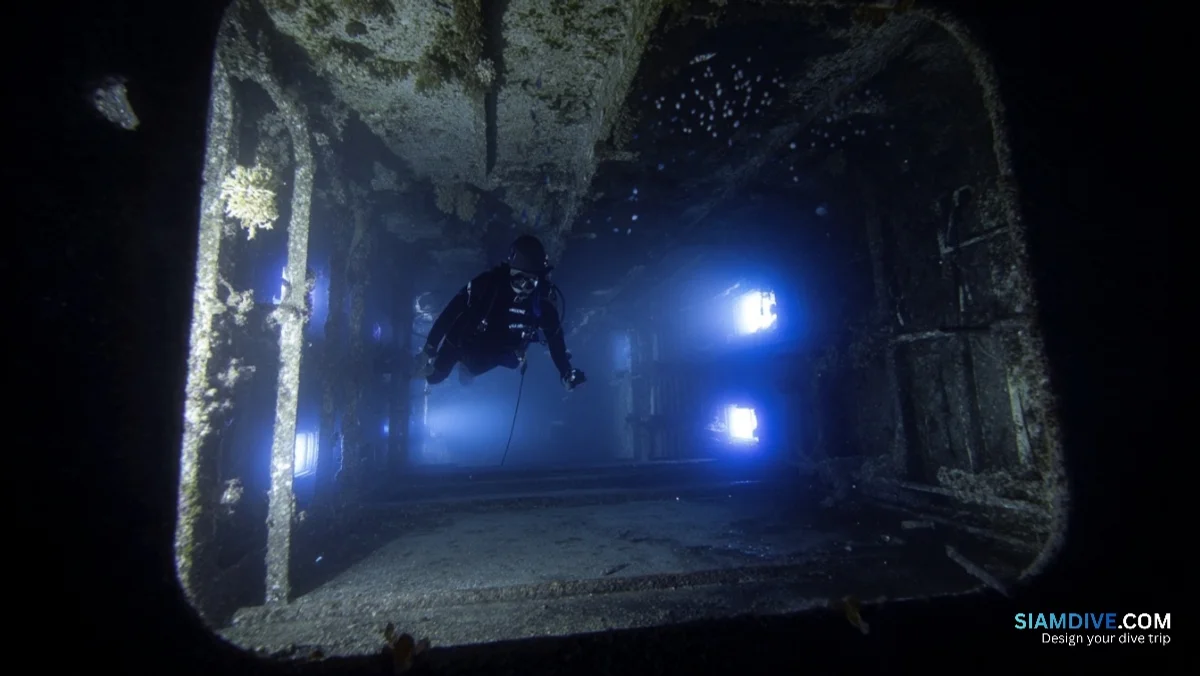
Sometime in late 2002, a crew of Thai Navy divers ran angle grinders along the hull plates of a retired WWII landing craft. They cut rectangular holes through the cargo deck, opened the engine room from two sides, and sliced access panels into compartments that had been sealed since the ship hauled troops across the Pacific in 1945. On 30 January 2003, HTMS Khram settled upright on sand at 26 metres, 300 metres east of Koh Phai — not as scrap, but as Pattaya's most carefully engineered penetration wreck.
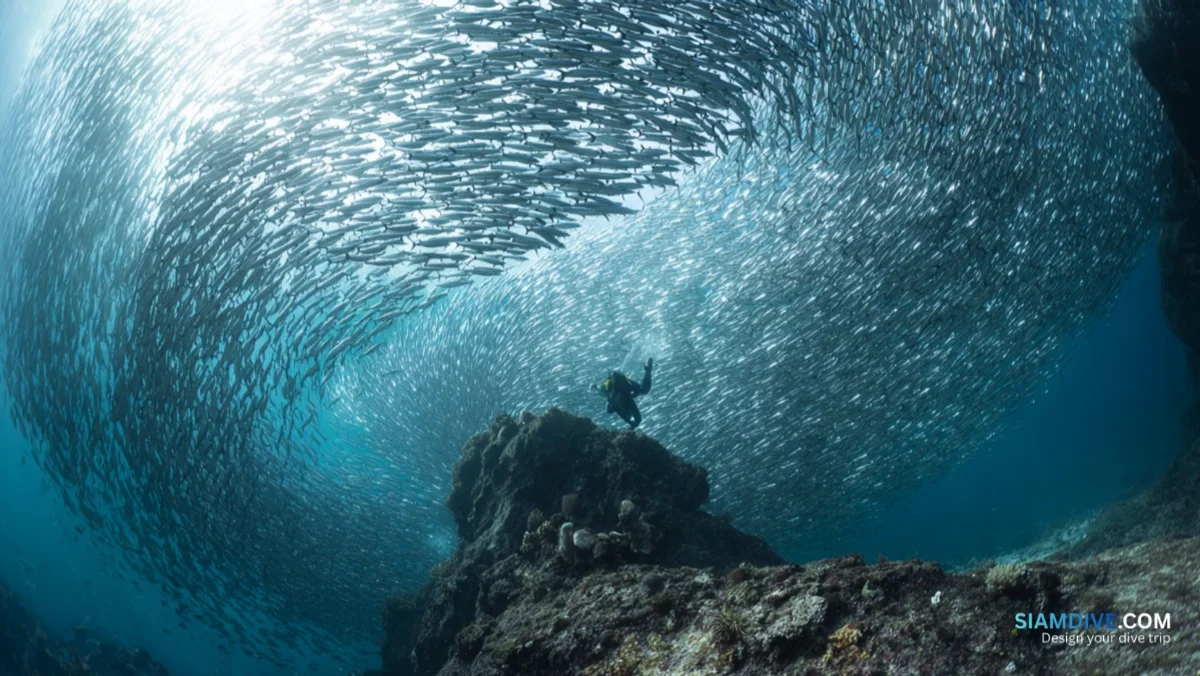
Most divers heading out of Bali Hai Pier know the name. Some confuse it with the bigger HTMS Kut. Almost nobody books it first. That pattern repeats trip after trip — and it is the reason the wreck stays quiet, the batfish stay tame, and the barracuda still circle the mast by the hundred.
From a Houston Shipyard to Koh Phai's Seabed
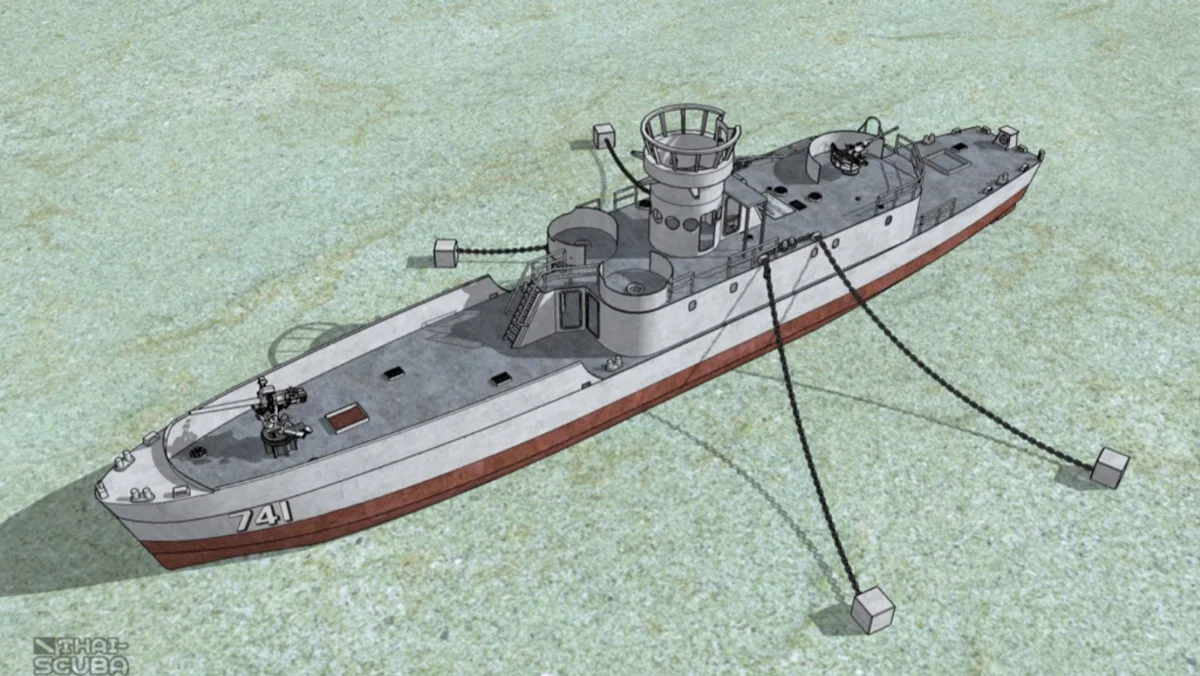
The hull that sits off Koh Phai started life on 27 January 1945 at Brown Shipbuilding Company in Houston, Texas. Designated USS LSM-469, she was one of 558 Landing Ship Medium vessels the US Navy built during World War II — flat-bottomed transports designed to run tanks and infantry straight onto a beach at 13 knots. The LSM-1 class measured 62 metres long, 10.5 metres across the beam, and displaced up to 1,095 tonnes fully loaded. She commissioned on 17 March 1945, served through the final months of the Pacific war, and decommissioned on 29 August 1946.
In May 1962, the ship transferred to the Royal Thai Navy under the US Military Assistance Program and became HTMS Khram, pennant number L-732. For four decades she served as a utility transport before the navy retired her. Rather than scrapping the hull, they chose a second career: artificial reef and diver training platform. The crew stripped her of oil, fuel, and armaments, then spent weeks cutting penetration access points through key bulkheads — a deliberate act of preparation that separates Khram from wrecks that sank by accident or with minimal prep.
She went down on 30 January 2003, settling upright in sand with her bow pointing roughly north. Pattaya's artificial reef programme has added several navy vessels since, but Khram was the first — and the most thoroughly prepared for recreational diving.
Three Pattaya Wrecks and Why Khram Wins the Torch Test
Three sunken warships within a 60-minute boat ride — and most divers head to the wrong one first.
- HTMS Mataphon — 30 metres long, resting at 18–23 metres. The shallowest of the three, suitable for confident Open Water divers. Limited penetration: the hull is compact, corridors are tight, and the navy did not cut access holes. Best as a second dive on a two-tank trip or a wreck-specialty checkout.
- HTMS Kut — 56 metres long, sitting at 28–31 metres. Deeper, darker, and more demanding. Complex interior routes attract tech divers, but depth pushes no-decompression bottom time down to 20 minutes on air. Penetration routes exist but run narrower and less clearly than Khram's.
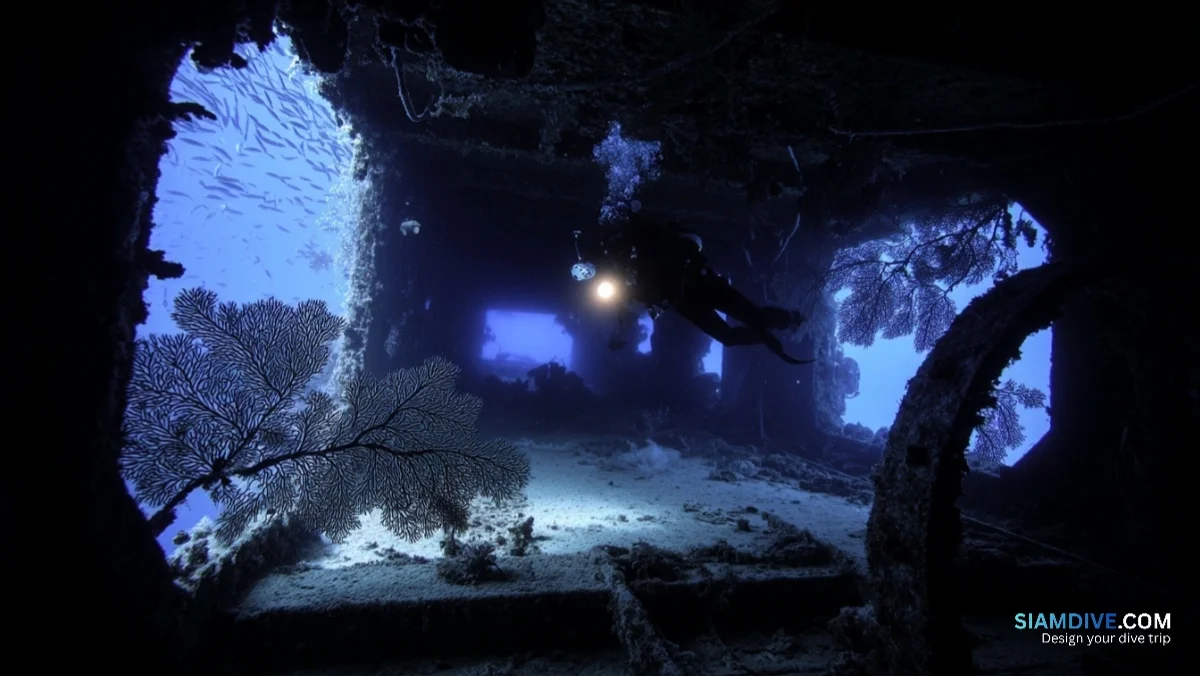
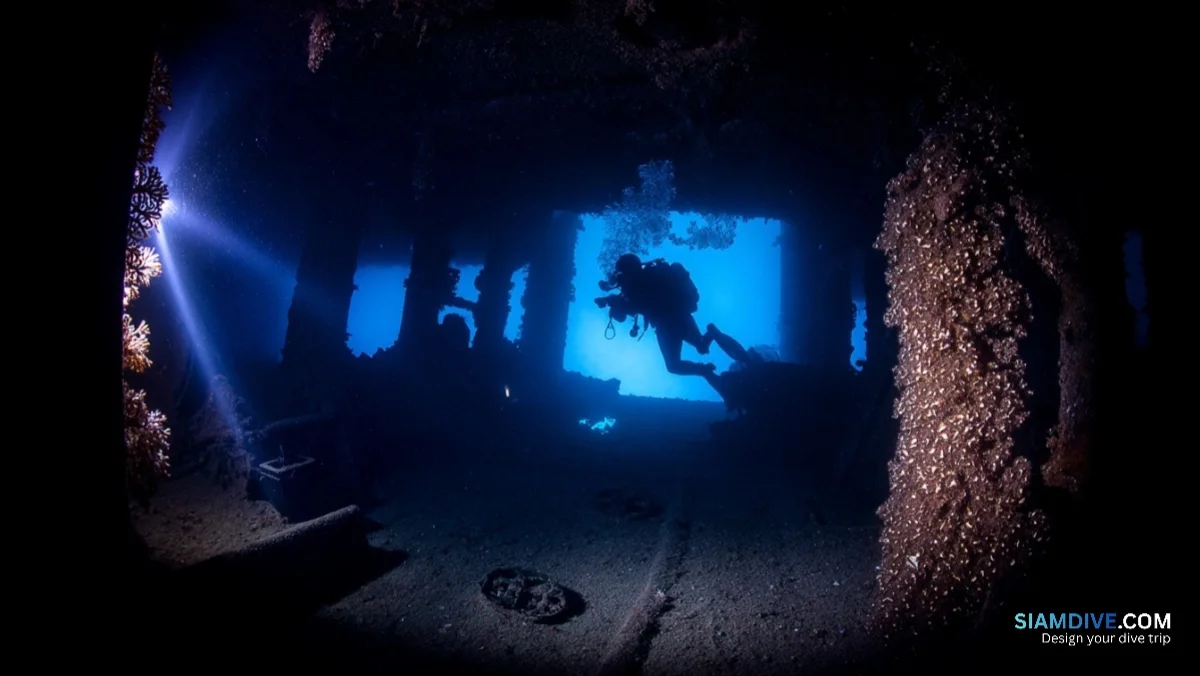
- HTMS Khram — 62 metres long, deck at 24 metres, seabed at 26–30 metres. The navy cut large rectangular openings through the cargo hold, engine room, and crew quarters. Light enters from multiple angles. A diver can swim through the engine room at 25 metres and exit on the opposite side without reversing — a luxury the other two wrecks do not offer.
The difference shows on the dive plan. On Khram, a team running air at 24 metres gets 30-plus minutes of no-decompression time — enough to circle the exterior, enter the cargo hold, pass through the engine room, and surface with reserve. On Kut, the same team at 30 metres gets about 20 minutes and spends most of it on the outside.
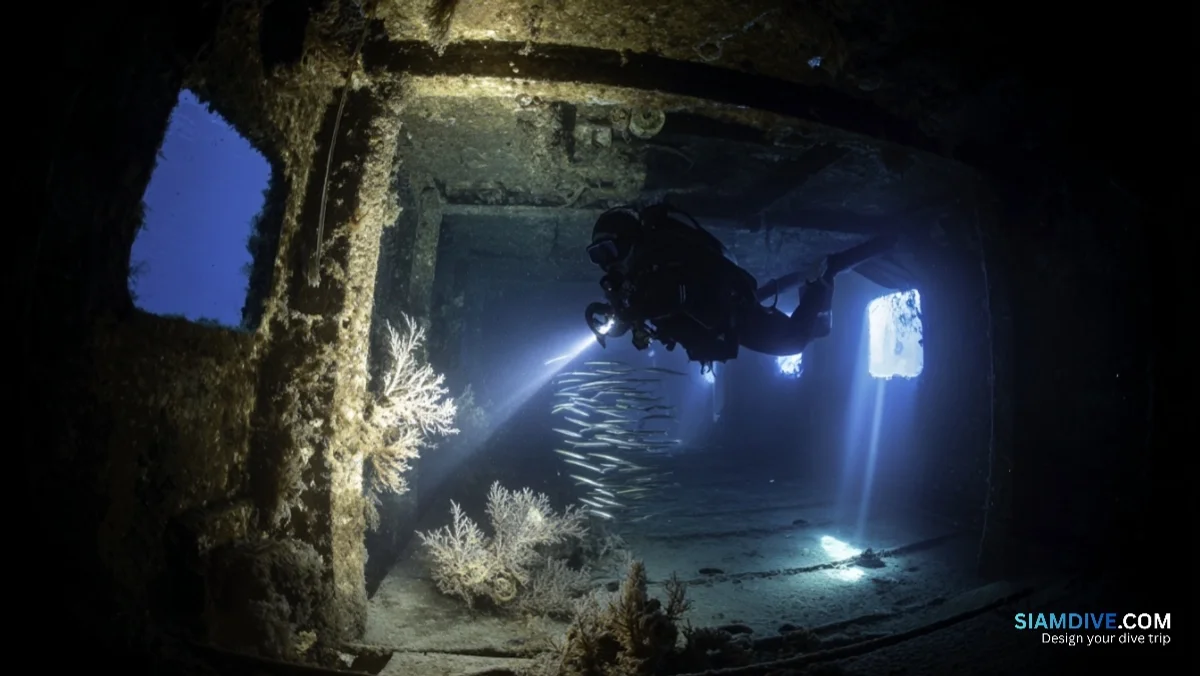
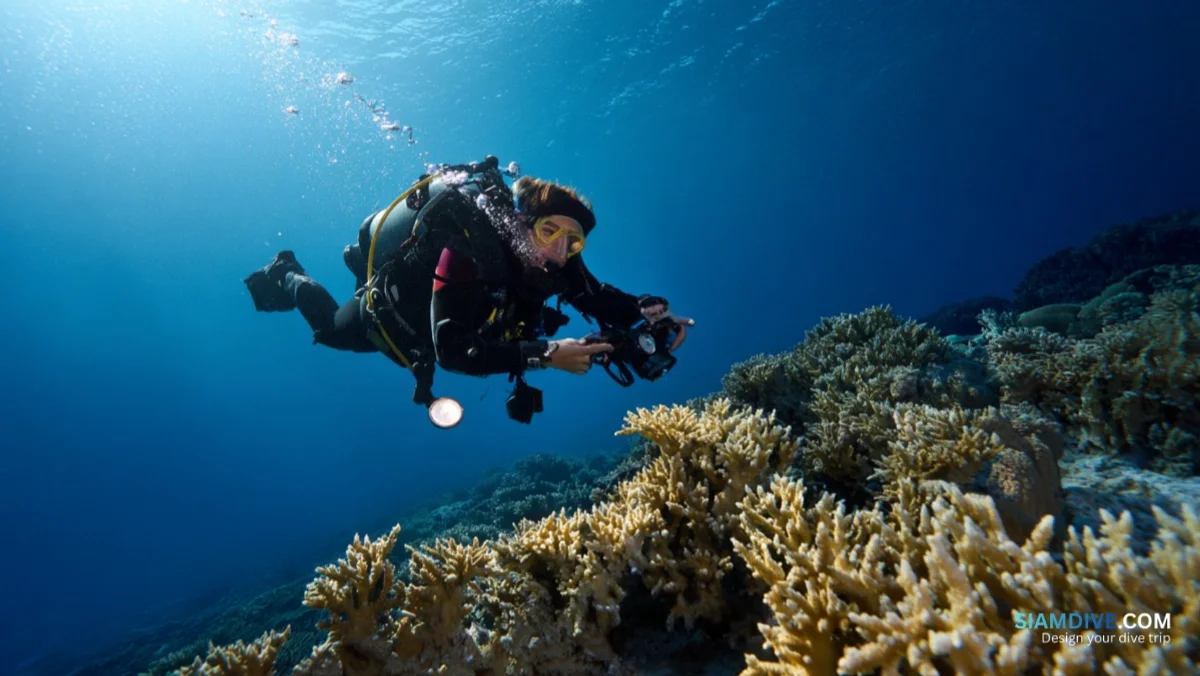
For underwater photographers, the through-and-through penetration routes matter even more. Backlit silhouettes frame against the cut openings. Light shafts angle through the cargo deck at mid-morning. Barracuda schools overhead become natural leading lines. These are shots that require a wreck designed for transit, not dead-end rooms.
What Lives Inside 23 Years of Cut Steel
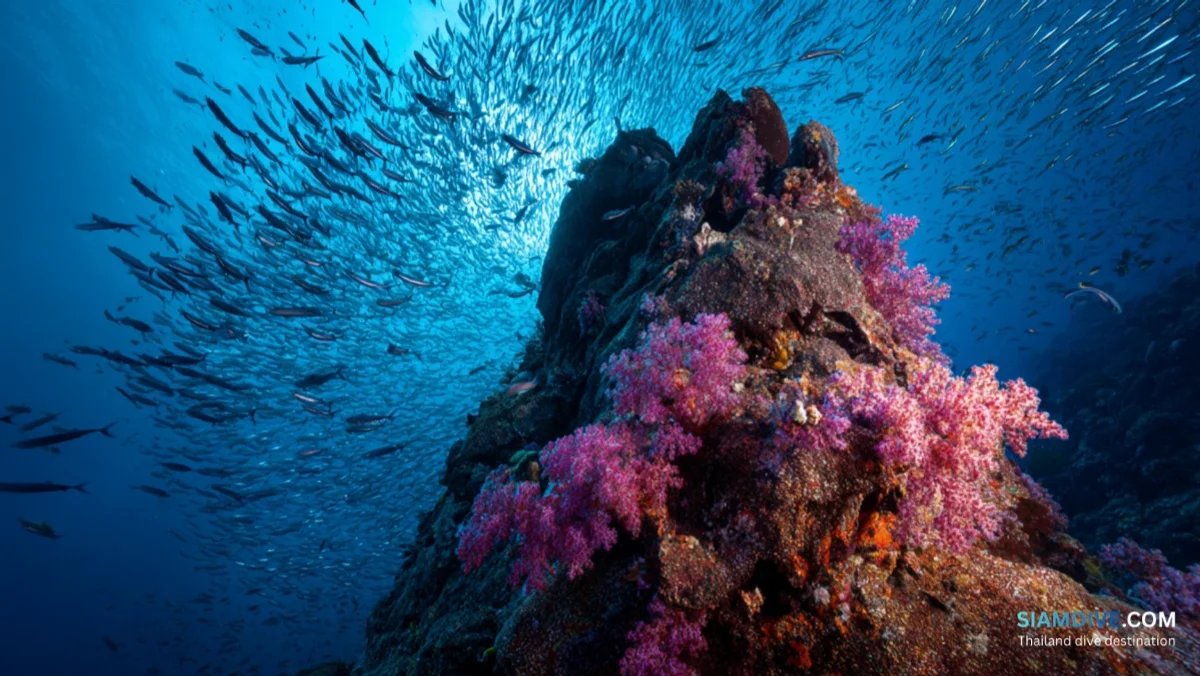
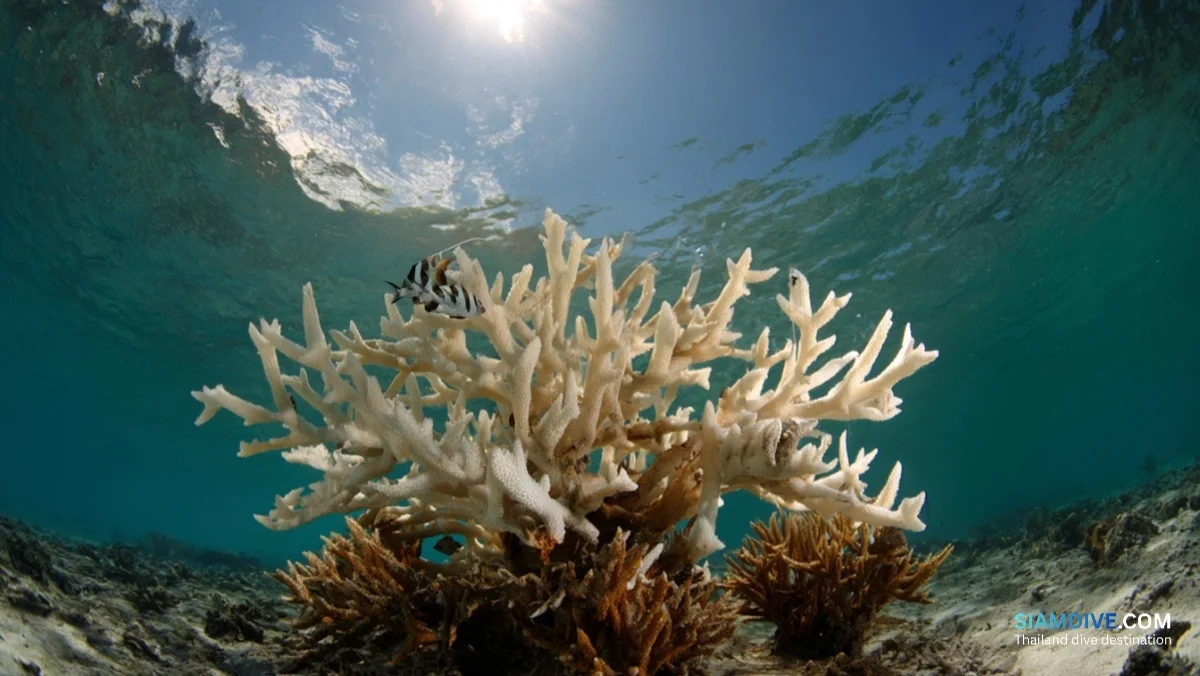
Steel in the Gulf of Thailand corrodes fast and colonises faster. Within three years of sinking, Khram's decks were already carpeted in soft corals, tube sponges, and encrusting algae. Hard corals followed by 2010, taking root on the railings, gun turret mounts, and exposed interior walls. Today the upper decks carry coral coverage thick enough to obscure the original steel underneath.
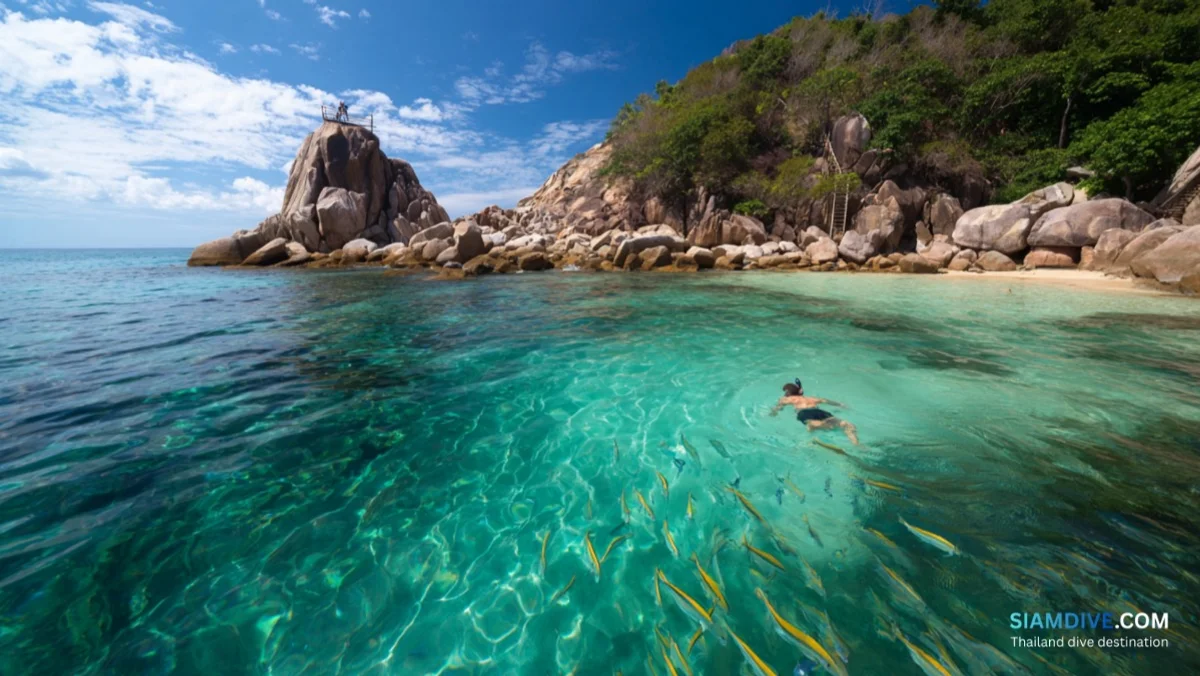
The protected waters around Koh Phai function as a de facto no-take zone — no commercial fishing, limited boat traffic outside dive operations. That protection has accelerated life on the wreck beyond what artificial reefs in busier waters typically achieve. Marine life on and around Khram now includes:
- Resident species — giant groupers under the bow overhang, moray eels threaded through engine room pipework, scorpionfish frozen on coral-crusted railings, and bamboo sharks resting in the sand beneath the stern
- Schooling pelagics — barracuda in columns of 50–100 fish circling the mast, fusilier schools sweeping around the upper deck, and batfish — sometimes 20 or more — hovering at eye level near the bridge
- Macro subjects — nudibranchs on sponge-covered hull plates, cleaner shrimp stationed in the penetration zones, and juvenile reef fish using the interior corridors as nursery habitat
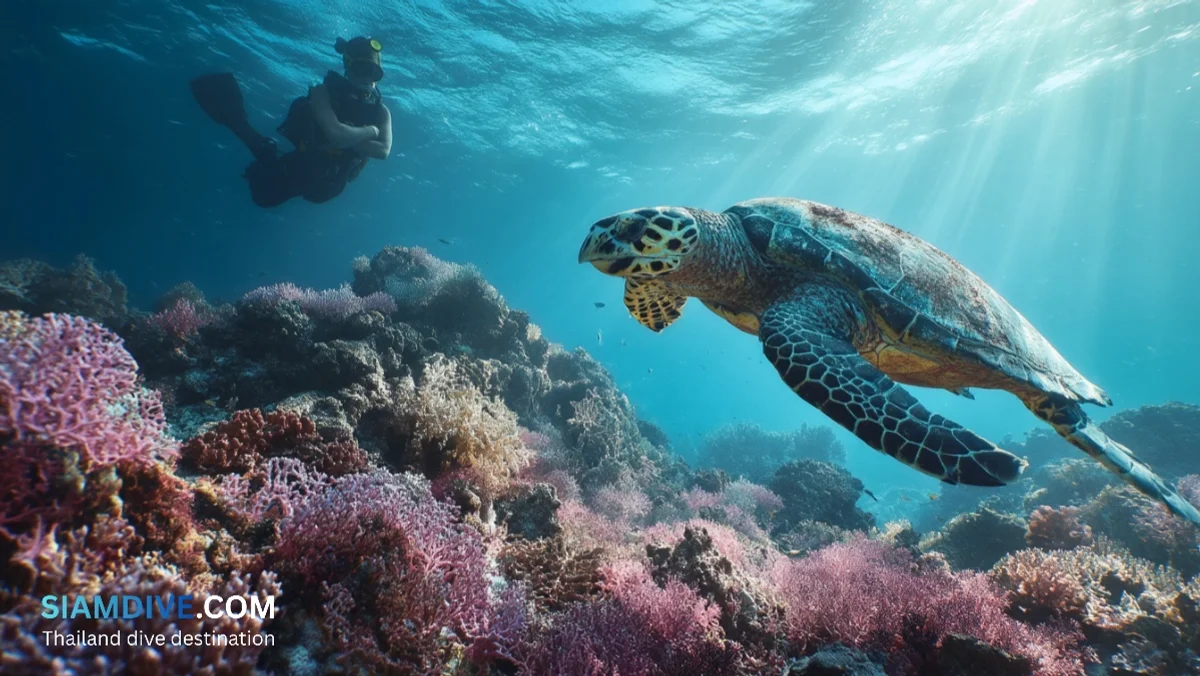
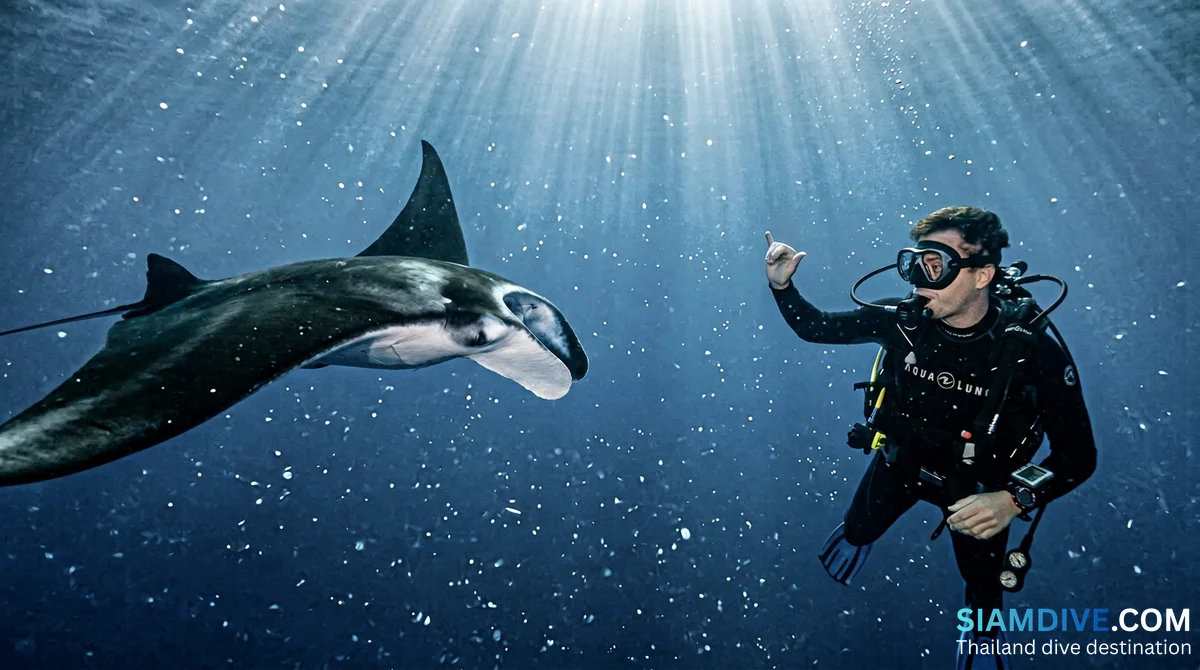
- Occasional visitors — hawksbill turtles grazing on sponges along the port side, blue-spotted stingrays on the sand at the base, and during clear-water days, cobia cruising past the stern
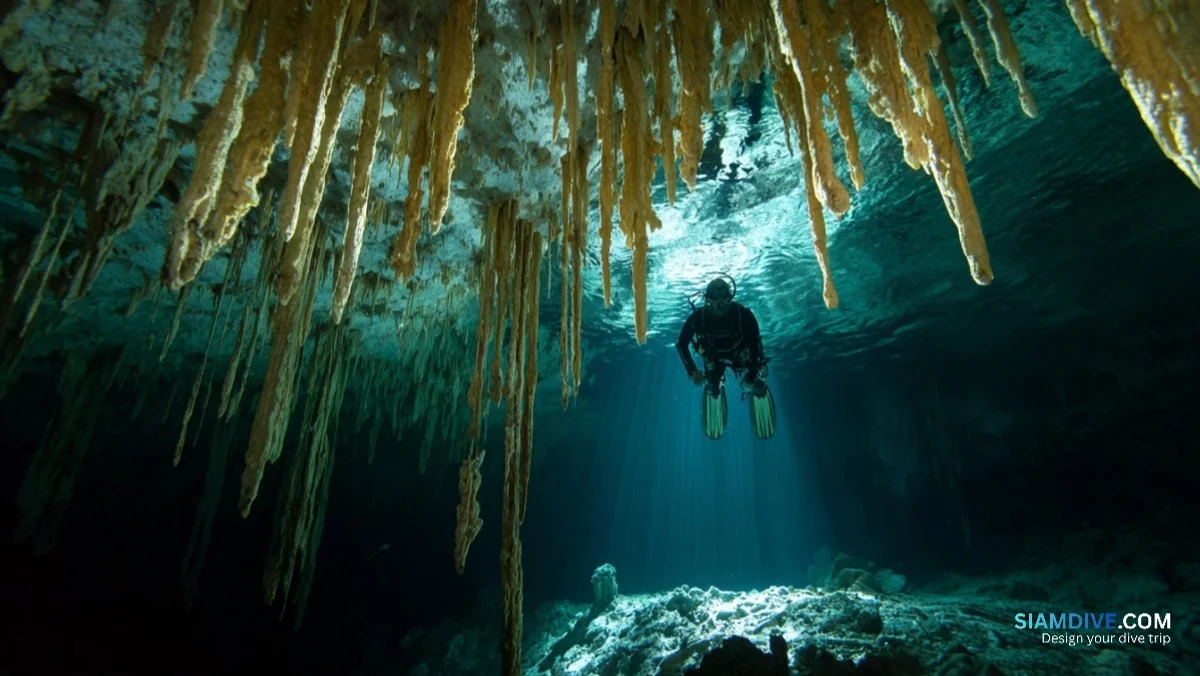
Inside the engine room at 25 metres, where the navy cut reinforced openings through the load deck, soft coral fans now grow from the machinery housings. Light enters from the access cuts above, striping the floor with blue-white shafts that shift with the surface swell. Tube sponges and fan corals frame the original valve wheels and pipe runs — details that reward a slow swim with a macro lens more than a fast pass with a wide-angle. It is one of the most atmospheric penetration dives in the Gulf, and one of the safest, because every corridor has at least two exits.
When the Gulf Clears and When It Doesn't
Some days the wreck materialises all at once — 62 metres of steel appearing from the blue at 15-metre visibility. Other days the bow emerges at arm's length. That is the Gulf of Thailand in a sentence.
Visibility at Khram runs between 3 and 15 metres across the year, with a realistic average of 5–8 metres on any given day. The sweet spot falls between November and March, when plankton density drops, thermoclines settle deeper, and the water can open to 15–20 metres on a clear morning. During this window the wreck reveals its full length from the sand, and wide-angle photographers get the shots that tight-visibility dives deny.
April through October is the wet season. Rain runoff from the mainland clouds the surface layer. Some days drop to 3 metres — enough to navigate the exterior by reel but not enough for comfortable photography. Yet the tradeoff is real: water temperature peaks at 30°C, the dive boats carry fewer passengers, and the marine life does not care about your camera. The barracuda still circle. The batfish still hover. And the engine room, shielded from the surface layer by three metres of steel, often holds better clarity than the open water above it.
Pattaya dive centres reporting in May 2026 describe water temperatures of 30–31°C and visibility swinging between 5 and 12 metres depending on the day. Surface chop occurs, but the wreck at 24 metres remains stable. For divers who care more about marine encounters than wide-angle landscapes, the quiet season delivers.
Two Hours from Bangkok for 2,500 Baht
The drive from Bangkok takes two hours. The boat takes another hour. For a WWII wreck with navy-cut penetration routes, that is remarkably short.
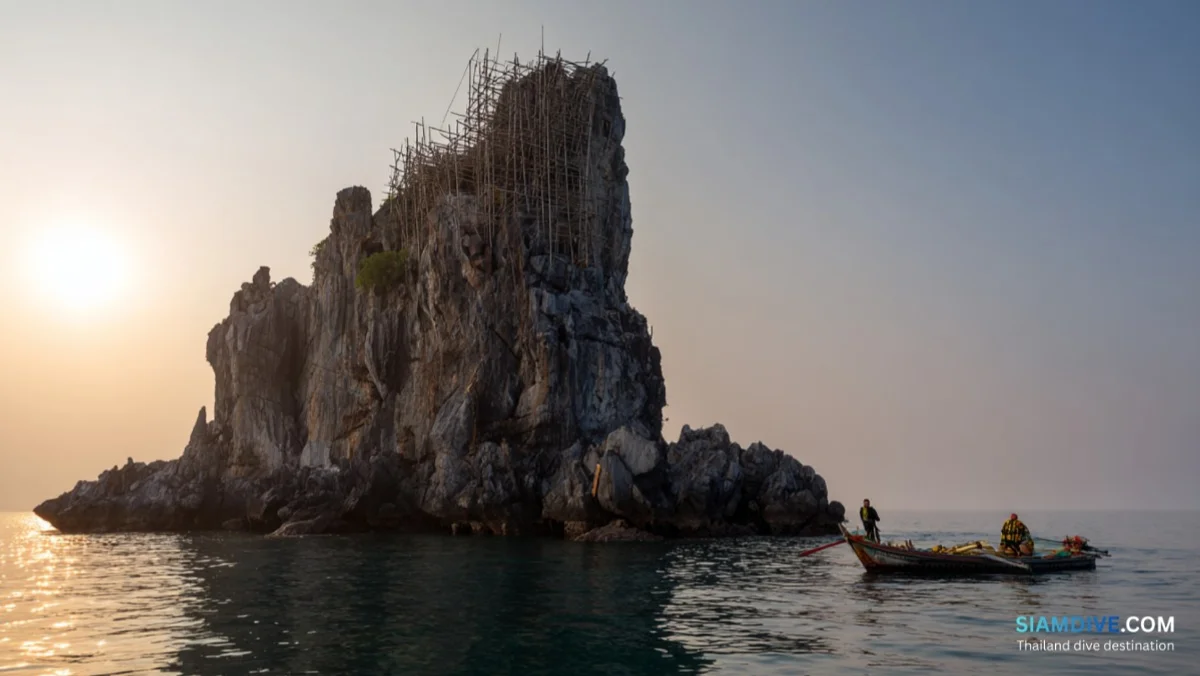
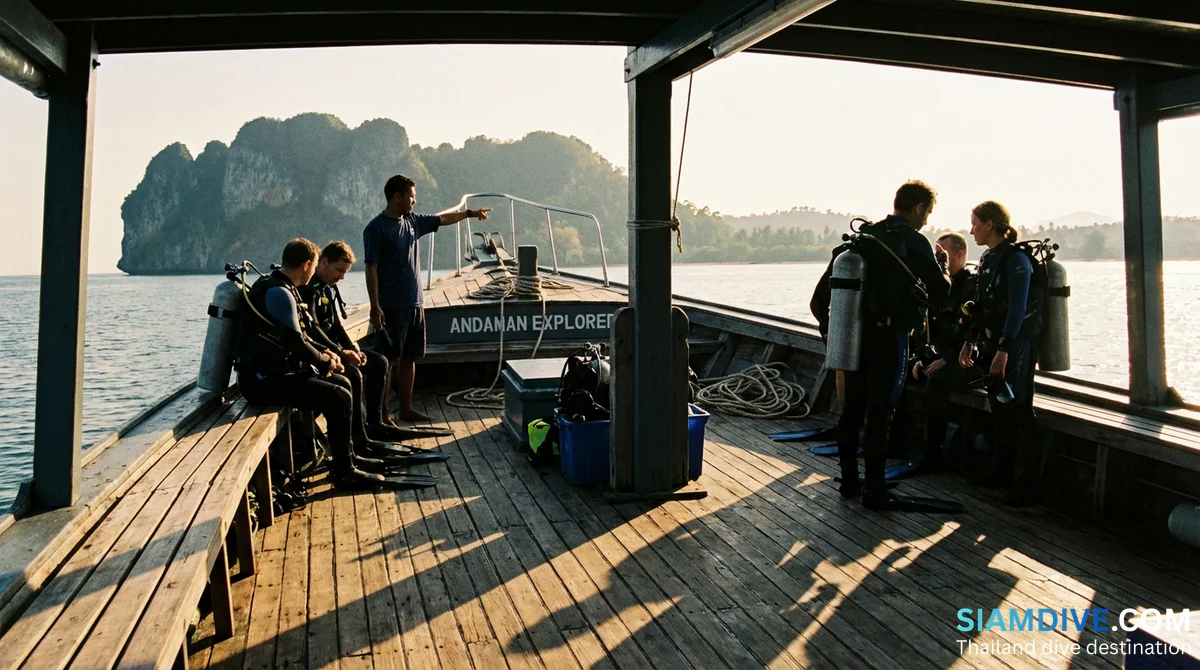
Koh Phai lies 21 kilometres from Bali Hai Pier — roughly 45 to 60 minutes on a standard dive boat, or 30 minutes by speedboat. Day trips from Bangkok follow a standard format. A typical two-dive trip runs between 2,500 and 4,000 baht per person, covering:
- Hotel transfer — pickup from Pattaya hotels between 07:00 and 08:00
- Two dives — usually one wreck and one reef at Koh Phai or a nearby island
- Full equipment rental — BCD, regulator, wetsuit, mask, fins, tank
- Lunch on the boat — served during the surface interval
- Divemaster or guide — included on most operations
Divers wanting both Khram and Kut on the same day can ask for a far-island wreck combo — some centres run back-to-back wreck dives on a single trip, though the deeper profile on Kut limits that second dive to roughly 20 minutes of bottom time. A better plan for most: pair Khram with a shallow reef dive at Koh Phai for the second tank, keeping the total day at a comfortable pace.
What Certification Gets You Through the Holes
Twenty-four metres to the deck. Fifteen to the top of the mast. The depth sits right on the edge of what recreational certification allows — and that edge matters.
The exterior of HTMS Khram is accessible to any certified diver comfortable at depth, but 24 metres exceeds the 18-metre Open Water ceiling. Advanced Open Water is the practical minimum, and most Pattaya dive centres require it before booking a Khram trip.
Penetration is a different conversation. The navy's cut openings make Khram's interior safer than most wrecks, but overhead environments still involve silt-out risk, restricted exits, and navigation by touch if visibility drops inside. PADI's Wreck Diver Specialty is the standard pathway, covering line management, gas planning, and emergency procedures for enclosed spaces. Several centres offer the course using Khram as the training wreck — a natural fit given its number of access points and forgiving layout.
Gear worth bringing beyond a standard recreational setup:
- Primary torch and backup — penetration zones lose ambient light within a few metres of the openings
- Reel or spool — line discipline matters even in a wreck with multiple exits
- Slate or wetnotes — mapping the interior on a first dive makes the second one better
- SMB — currents around Koh Phai can pick up, and surface traffic on busy days makes a delayed surface marker essential
Enriched air at 32% extends no-decompression time on the 24-metre deck from 30 to over 35 minutes — a meaningful gain for anyone planning to enter the engine room and still explore the bow section on the same dive. Technical diving opens the deeper portions of the hull below 30 metres, but the recreational zone covers the vast majority of the wreck's accessible space.