Koh Tao Diving Guide: Schools, Reefs, and the One Site Nobody Books
18 เมษายน 2569
A local-expert guide to Koh Tao diving: how piers dictate your dive day, which reefs belong on your plan, real 2026 prices, and the overlooked site even seasoned divers skip.
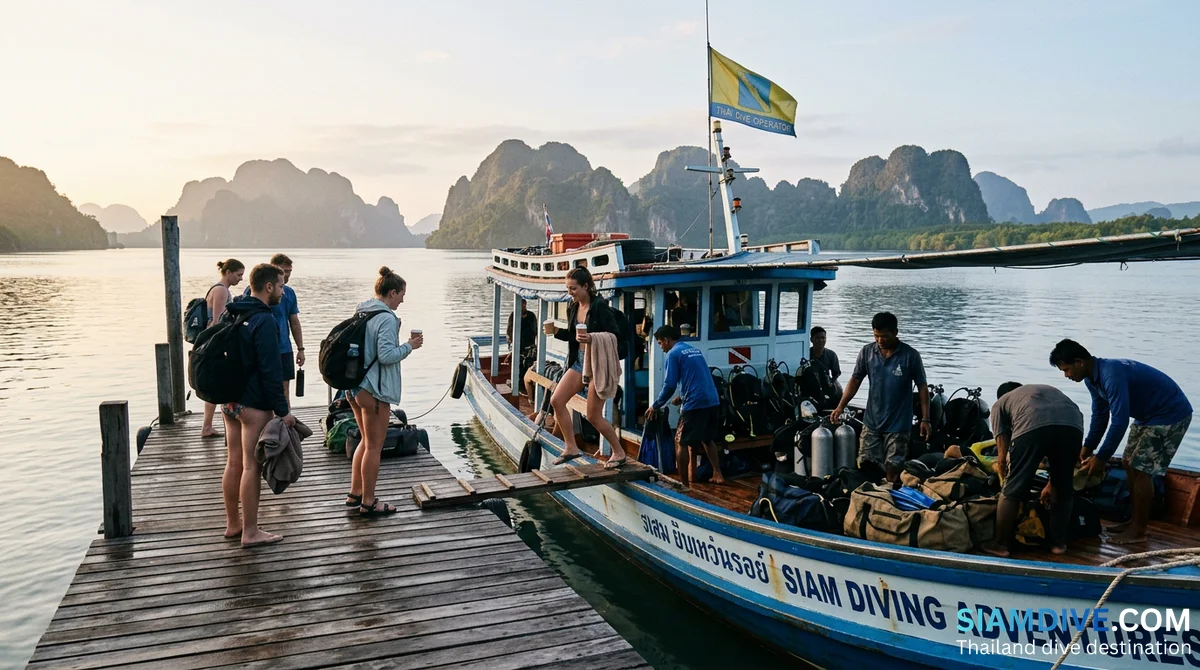
From Mae Haad Pier at 07:00, you can be sipping tea on the deck of a dive boat halfway to Chumphon Pinnacle before the first songthaew of the morning even fires up in Sairee. That is the trick most guides miss: Koh Tao is small, but the pier your boat leaves from decides which reefs you actually get to dive, how long you spend bouncing on the surface, and whether you finish the day with a cold beer or a stomach full of Dramamine.
This guide is organised the way locals plan a dive day — by departure point. We walk the three main launch zones, the reefs each one reaches efficiently, the schools clustered around each area, what a 2026 Open Water course really costs, and the one dive site that sits empty on most boat manifests even though it is arguably the most characterful reef on the island.
How the island is actually wired for diving
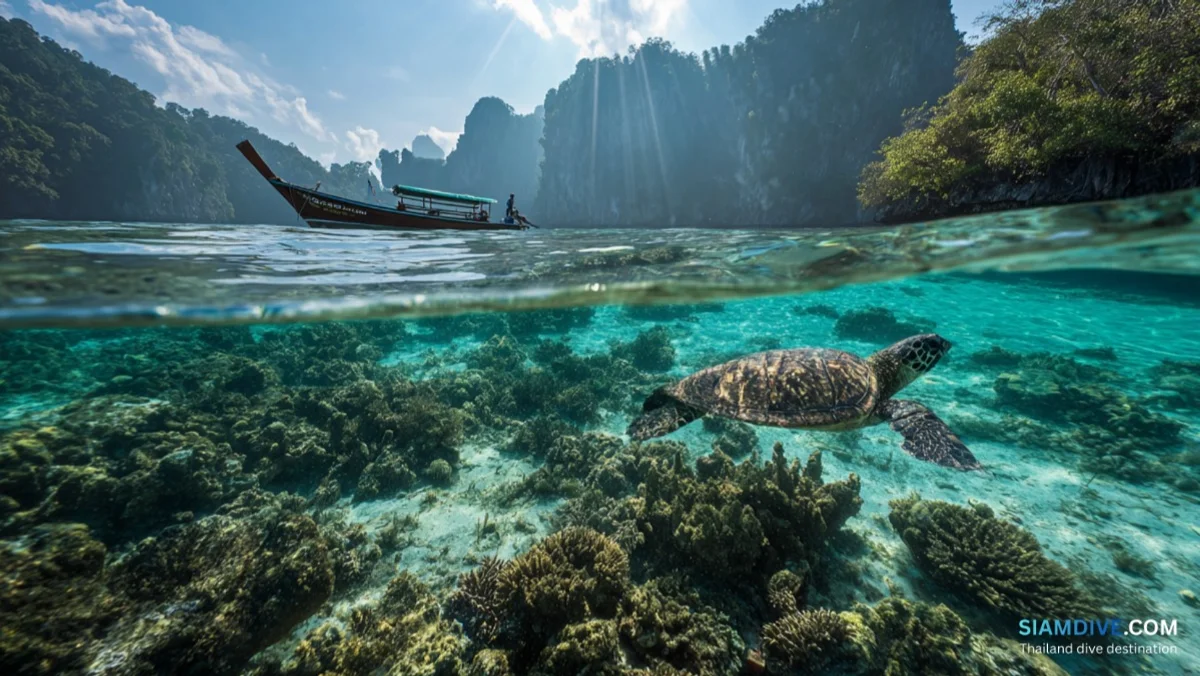
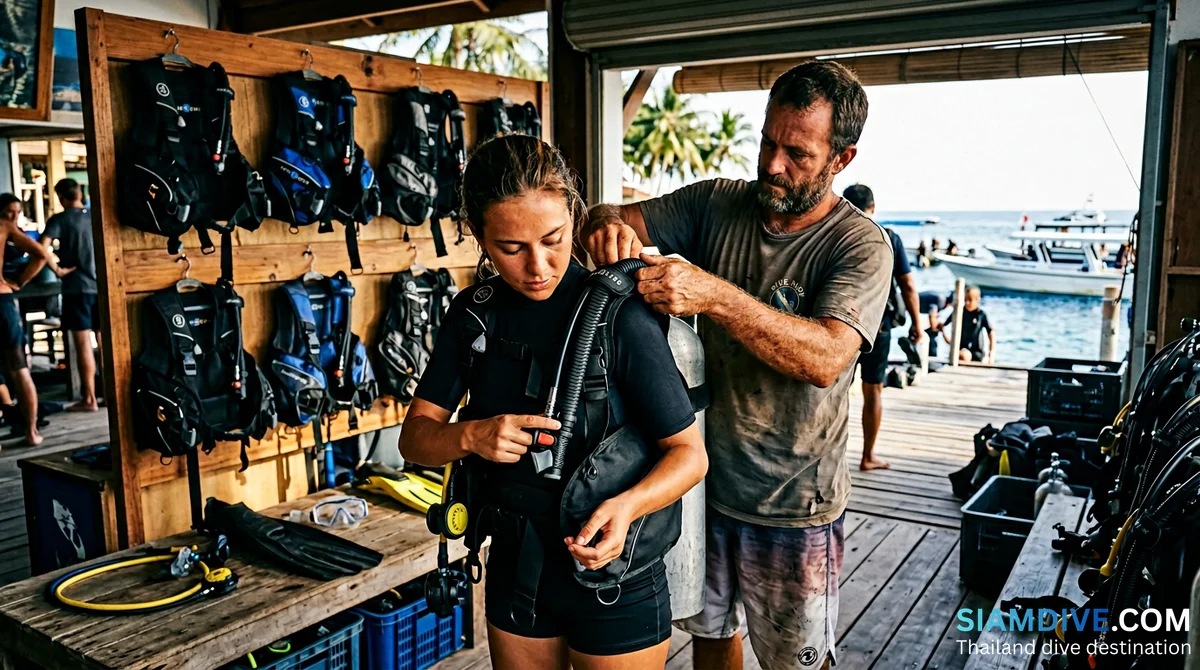
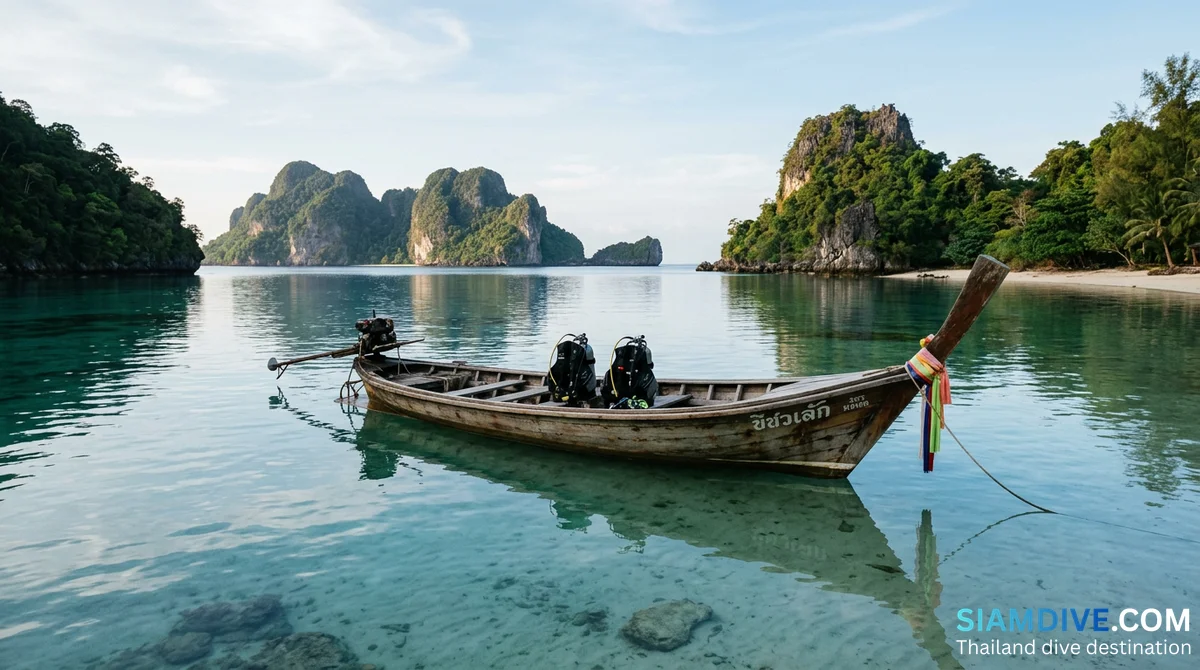
Nearly every dive boat on Koh Tao launches from one of three zones on the west and south coast. Mae Haad is the main ferry pier and also where most of the island's oldest dive centres run their boats from, because the deep-water berth handles real weather. Sairee Beach, two kilometres north of Mae Haad, launches most of its boats straight off the sand using longtail tenders — fine when the sea is flat, painful when the northeast monsoon rolls through. Chalok Baan Kao on the south coast runs the smaller, quieter fleet, and because it sits opposite the eastern sites, it is often the fastest route to places like Aow Leuk and Hin Pee Wee.
- Mae Haad — deep-water pier, year-round, closest to the northwest pinnacles and the Sail Rock crossing. Home to Crystal Dive, Davy Jones' Locker, Big Blue's boat operations and most technical diving shops.
- Sairee Beach — beach launch, biggest cluster of schools (Big Blue, Ban's, Sairee Cottage, New Heaven), closest to Japanese Gardens, Twins, and White Rock.
- Chalok Baan Kao — south bay, home to Black Turtle, Chalok Reef Divers and a handful of smaller operators. Shortest runs to HTMS Sattakut, Hin Pee Wee, Aow Leuk and Shark Island.
The northwest run — where most tanks get filled
Boats pointing their bows northwest out of Mae Haad or Sairee Beach are heading for the densest cluster of reefs on the island. This is where a newly certified diver will log most of their first 20 dives, and where the current boat traffic is heaviest.
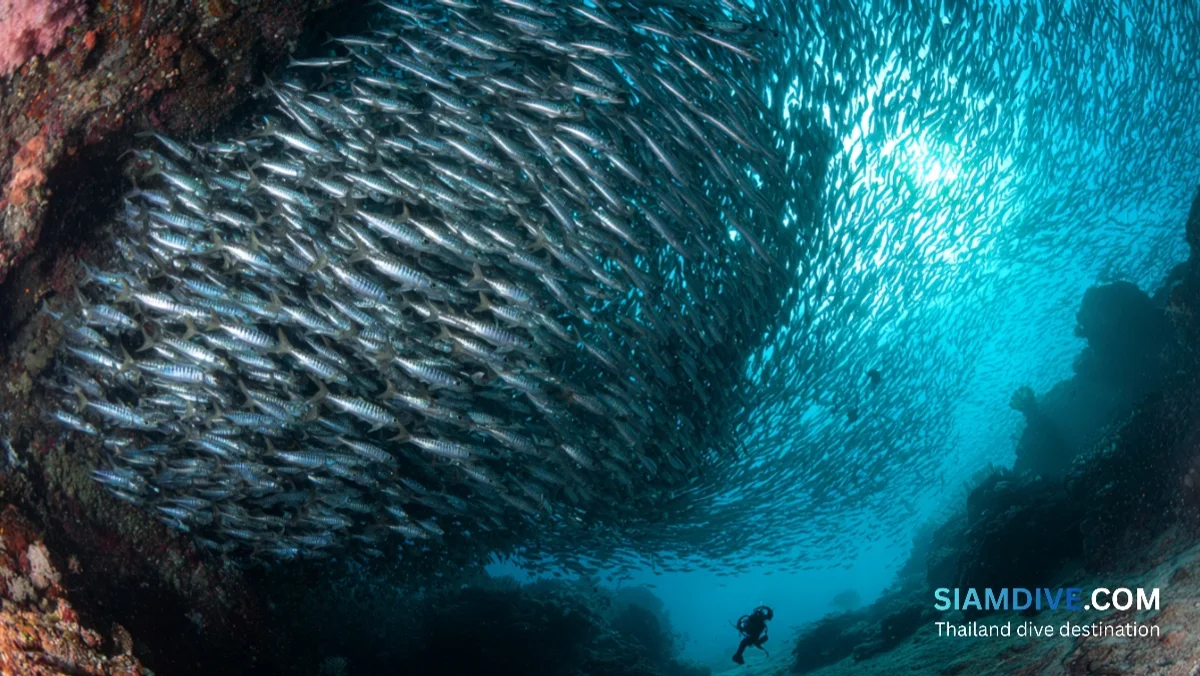
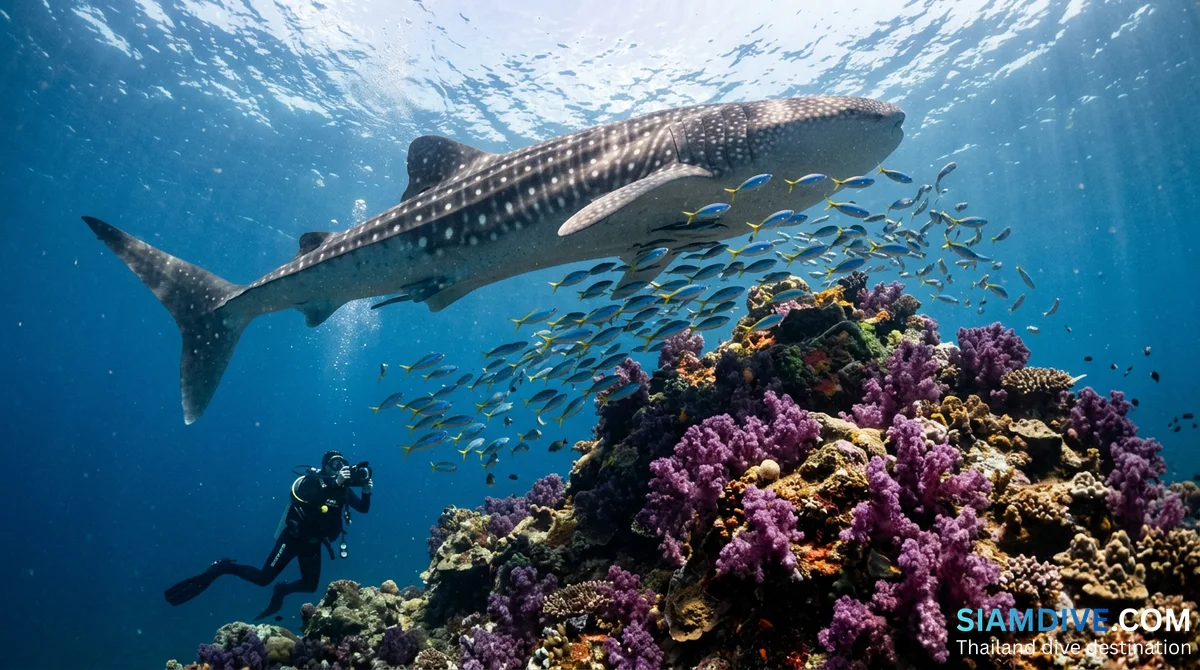
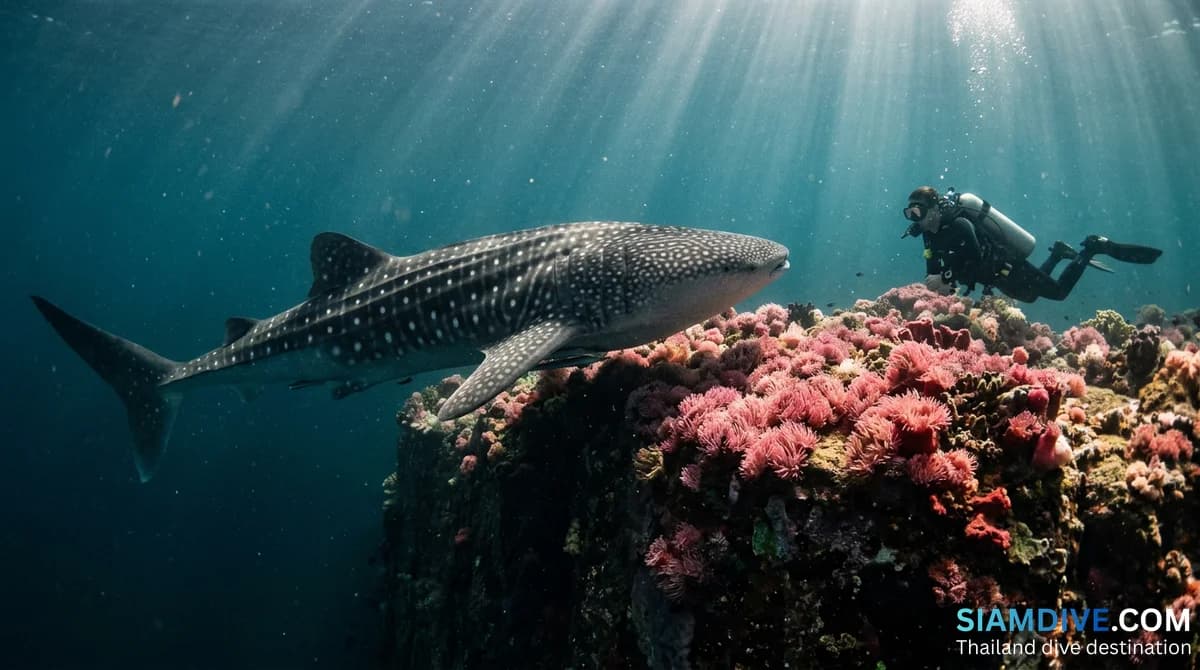
Chumphon Pinnacle sits roughly 12 kilometres northwest of Koh Tao and is the marquee site for the whole Gulf. The pinnacle starts at around 14 metres and falls past 40, covered in pink anemone and visited by massive schools of trevally, barracuda and — between March and May — whale sharks. Visibility usually runs 20 to 30 metres. Depth puts most of the best topography below the Open Water limit of 18 metres, so if you have only one certification card, book the Advanced first and save Chumphon for your fifth or sixth dive.
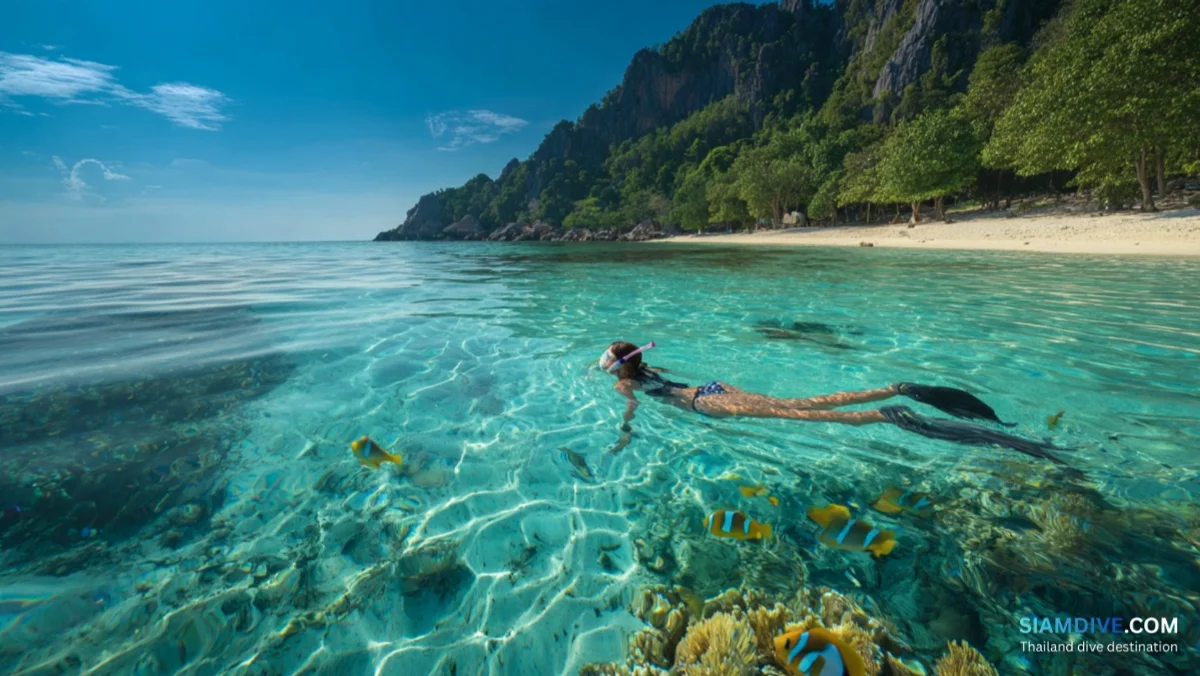
Green Rock is the one everyone remembers because it is the swim-through dive — a labyrinth of granite arches and tunnels where instructors love to drill buoyancy. Japanese Gardens off Koh Nang Yuan is the shallowest, most gentle reef on the rotation and is where almost every pool-to-open-water transition happens. White Rock sits straight off the west coast, tops out at around 6 metres, and runs down to ten or twelve — the island's default night dive because barracuda hunt the reef edge after dark.
| Site | Depth | Level | Why you go |
|---|---|---|---|
| Chumphon Pinnacle | 14–40 m | AOW+ | Whale sharks March–May, schooling pelagics |
| Green Rock | 5–20 m | OW+ | Swim-throughs, buoyancy practice |
| Japanese Gardens | 3–15 m | Discover+ | Easiest reef on the island, OW training |
| White Rock | 6–18 m | OW | Signature night dive, two full reef systems |
| Twins Pinnacles | 5–18 m | OW | Training pinnacle, morays and stingrays |
For a full site-by-site pass through this cluster, the individual guides to Green Rock, Japanese Gardens, and White Rock go deeper on entry points, currents and critter lists.
The southwest crossing — the long day out
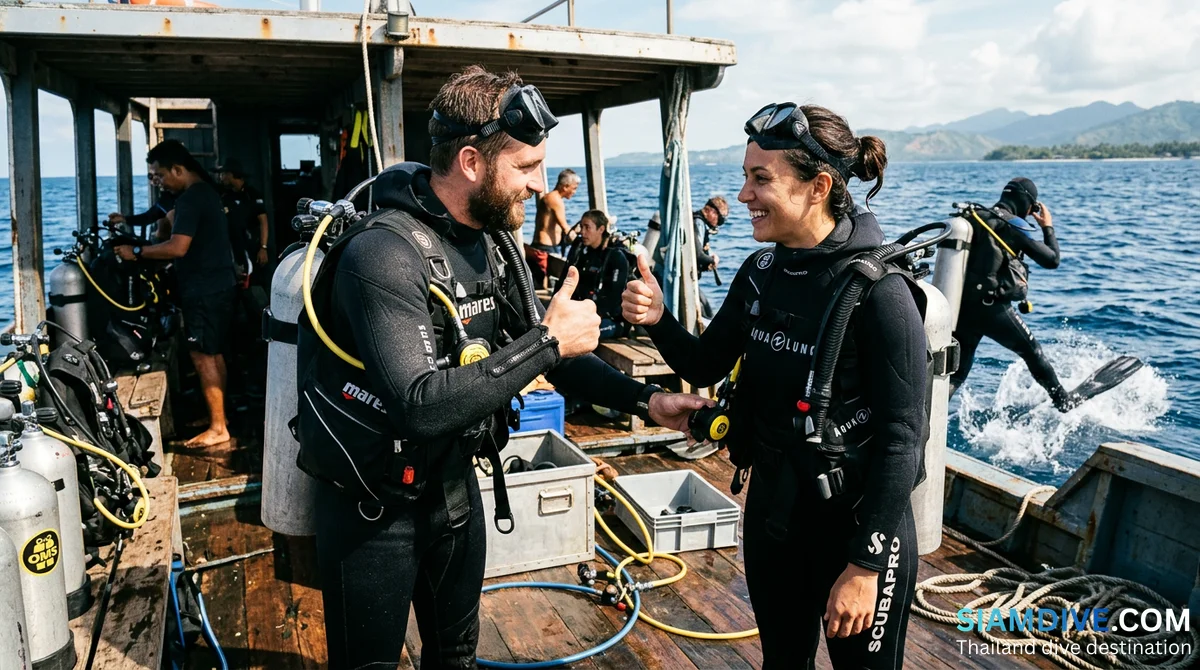
Boats heading southwest from Mae Haad are usually on a full-day itinerary to Sail Rock or Southwest Pinnacle, both of which sit far enough off Koh Tao that you should pack a real breakfast and something to read on the crossing.
Sail Rock is the regional showpiece — a single granite tower 15 metres above the surface and 40 metres below, almost exactly halfway between Koh Tao and Koh Phangan, about seven kilometres southwest of Koh Tao. Schools of chevron barracuda stack above the chimney, a vertical swim-through that runs from 18 metres up to roughly 6. In March, April and May the chances of encountering whale sharks here are nearly as good as at Chumphon.
Southwest Pinnacle is a cluster of granite towers rising from 30 metres to a shallowest point of roughly 5. It is one of the last sites on the island where sightings of big bull trevally, giant grouper and the occasional bull shark still happen with any regularity, and it rewards divers who stay motionless long enough for the reef to forget they are there.
- Plan for a 90-minute boat ride each way to Sail Rock.
- Southwest Pinnacle currents can run hard — ask your instructor for a briefing on the reef-hook rules that apply.
- Most shops only run these trips twice a week. Book before you arrive if the week is tight. Detailed notes live in the Southwest Pinnacle guide.
The south and east rotation — the quieter half of the island
From Chalok Baan Kao, boats point east and pick up the sites that form Koh Tao's quieter half. The star here is HTMS Sattakut, a 48-metre WWII-era infantry landing craft that Thailand sank in 2011 to create an artificial reef. She sits upright with her deck at 18 metres and her props at 30, and because she was prepared for wreck diving before scuttling, she has genuine, well-lit internal swim-throughs for Advanced divers with wreck training.
Just north of the wreck, Hin Pee Wee is a compact pinnacle covered in soft corals and usually worked as a second dive after Sattakut. Look for giant grouper tucked into the overhangs and scribbled filefish grazing the coral tops. Further round the east coast, Aow Leuk is the island's best shallow beginner bay; Shark Island delivers the longest, fastest drift the island offers when the current cooperates.
- HTMS Sattakut — 18–30 m, Advanced Open Water, wreck specialty strongly recommended for penetration.
- Aow Leuk — 4–15 m, perfect as a first real ocean dive after certification.
- Shark Island — 6–25 m, variable current, best dived on the flood tide.
- Hin Phae and Hin Wong Pinnacle — the two quiet granite pinnacles that most schools only visit on request.
- King Kong Pinnacle — the island's best-kept secret site when the boat traffic elsewhere is too much.
The one site nobody books — Laem Thian
Here is the site no shop puts on the whiteboard unless you ask. Laem Thian sits on the east coast, a 45-minute boat ride from Chalok or Mae Haad, and most operators will not run it on a normal fun-dive day because the logistics simply do not pay. You typically need to charter a private boat or join one of the handful of schools that include it in a multi-dive Advanced package.
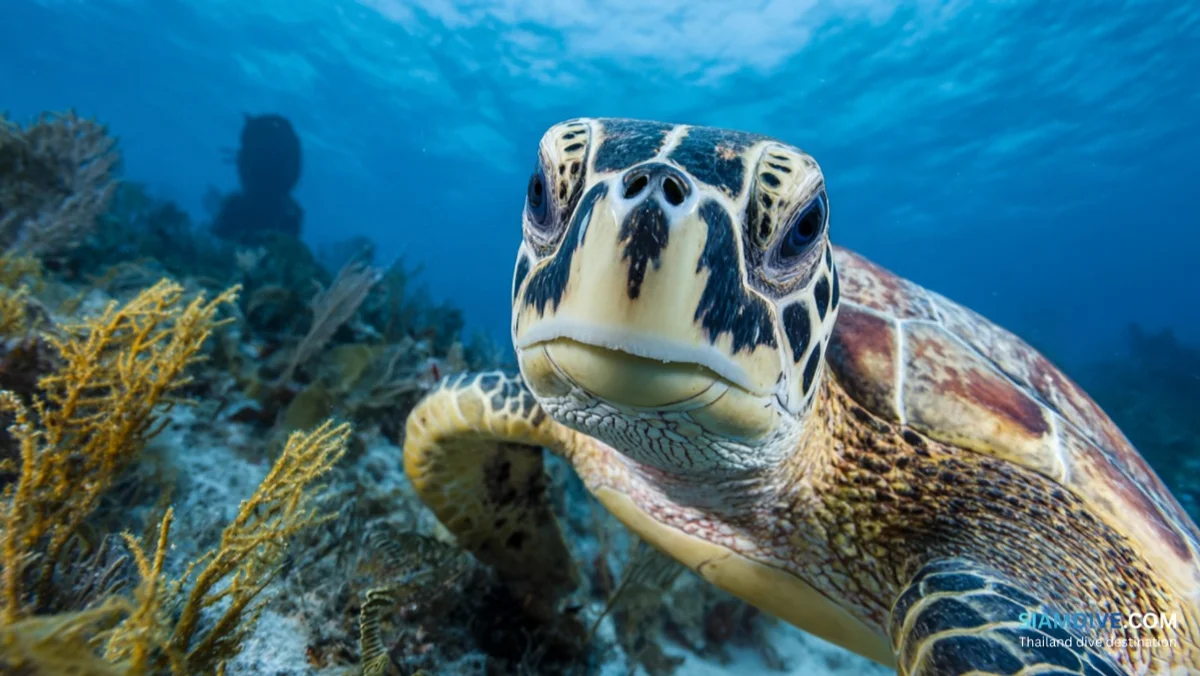
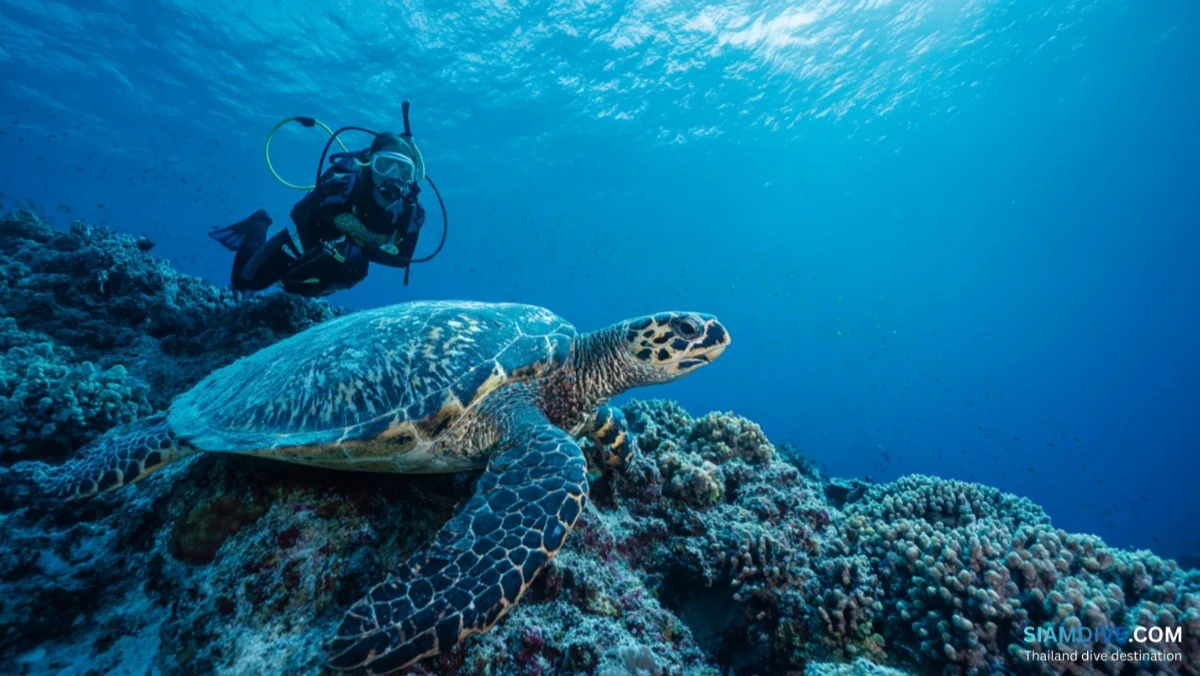
And yet Laem Thian holds the most characterful topography on the island. The main feature is the so-called Star Wars tunnel — a narrow slit in the rock wall that widens into a cavern big enough for two divers abreast, ending in a keyhole exit back to blue water. Humphead parrotfish cruise the outer wall. Jenkins whip rays glide across the sand. Turtles tuck under the coral ledges and juvenile barracuda school tightly in the lee of the wall.
Ask three instructors on Koh Tao for their single favourite personal dive site and at least one will say Laem Thian. They rarely get to dive it because no one pays. This is the exact site to book when you have already ticked Sail Rock, Chumphon, and Sattakut off the list and you want to know what the locals are quietly stacking their own logbooks with.
Picking a school — where the money actually goes
There are roughly fifty dive shops operating on Koh Tao. They cluster in Mae Haad and Sairee Beach, about two kilometres apart, with a smaller set in Chalok Baan Kao. The short version of how to pick one: shop for your instructor and your boat ratio, not your price.
| Course | Typical 2026 price | Budget shops | Premium shops |
|---|---|---|---|
| PADI Open Water | 11,000 THB | 6,500–7,500 THB | 12,000–14,000 THB |
| PADI Advanced Open Water | 9,500 THB | 7,000–8,500 THB | 10,500–12,000 THB |
| Rescue + EFR | 12,500 THB | 10,000 THB | 14,000 THB |
| Fun dive (single tank) | 1,000 THB | 800 THB | 1,300 THB |
| 10-dive package | 8,500 THB | 7,000 THB | 10,500 THB |
Budget shops cover every training standard the agency requires. Where they cut is instructor-to-student ratios, boat comfort, and the number of free fun dives thrown in after certification. Premium shops usually guarantee a four-to-one ratio or better, newer gear, an espresso machine, and small-group trips to the sites most beginners never see. For context on hidden fees that never show up on the price sign, see what an Open Water course actually costs. If you are still weighing whether agency matters at all, the comparison between PADI, SSI, NAUI and RAID settles the debate fairly quickly.
What April 2026 looks like underwater
Right now, visibility on the Koh Tao pinnacles is sitting near its annual peak at 20 to 30 metres. Water temperature hangs around 29 to 30 degrees — a 3 mm shortie is plenty for most divers and a rashguard is enough for those who run warm. The southwest wind is light, the seas are flat, and most shops are running both their Chumphon and Sail Rock itineraries daily instead of twice a week.
This is also peak whale shark season. Between late March and early May, plankton blooms around the pinnacles draw the animals in, with Chumphon, Southwest Pinnacle and Sail Rock all reporting sightings several times a week in a good year. In our experience, April delivers the single highest hit rate across a full Gulf season — so if whale sharks are the reason you flew here, try to dive at least three of the deep pinnacles before your no-fly window forces you onto a plane.
Costs, logistics, and the honest pre-trip checklist
- Ferry in: Lomprayah runs three daily catamarans from Chumphon to Mae Haad Pier, first boat 07:00, last boat 13:15. The fastest crossing is one hour 45 minutes. From Surat Thani a Lomprayah connection takes three to four hours total; budget travellers often take the Ko Jaroen overnight boat and skip a hotel night.
- Accommodation near pier: Sleeping in Mae Haad puts you closest to boats; Sairee has better food and nightlife; Chalok is quiet and suits early sleepers and Advanced students.
- Cash on hand: Dive shops take card, but almost every side-expense on the island — laundry, tuk-tuk, park fees — is cash. 3,000 THB in small notes is a safe float.
- Certification cards: Bring physical and digital copies. Some advanced shops will not run you on Sattakut with a logbook alone.
- Medical: Any yes on the PADI medical form requires a signed doctor's clearance. The island's one clinic can issue it for around 1,500 THB — do this the day you arrive, not the morning of your course.
- No-fly buffer: DAN guidance remains 18 hours after a single dive and 24 hours after multiple dives. Plan your ferry out accordingly.
If you want the practical, receipt-level version of a Koh Tao diving month, read our 30-day budget breakdown. For a trip-report flavour of a tight four-day itinerary focused on the deep pinnacles, our Labour Day weekend log shows how tightly this island can be dived when the weather holds. And if you are still choosing between Koh Tao and the Andaman coast, the full comparison of Phuket vs Koh Tao vs Khao Lak will answer the base-question before you book a flight.
Sources
- Koh Tao Complete Guide — 15 Best Dive Sites of Koh Tao in 2026
- Big Blue Diving — Top 10 Dive Sites on Koh Tao (2026)
- Sairee Cottage Diving — 26 Koh Tao Dive Sites Complete Guide
- Crystal Dive — Best Time to Dive Koh Tao, Season by Season
- Black Turtle Dive — HTMS Sattakut Wreck
- Funky Turtle — Laem Thian Dive Site
- Lomprayah — 2026 Timetable
- Nomadic Matt — Complete Guide to Diving in Koh Tao (2026)