Three Coasts in Seven Days: Our Thailand Dive Sampler Route
18 เมษายน 2569
Phuket to Koh Tao to Pattaya in a week: the three-coast Thailand dive sampler we ran last April, with real transfers, park fees and what showed up.
Last April we ran a route divers keep asking about but rarely commit to: seven days, three coasts, three different seas. We flew into Phuket on a Sunday night and surfaced back in Bangkok the following Saturday with an SSI Wreck card we hadn't planned on, a whale shark story we'd been chasing for years, and a receipt stack that's now the main reason we keep recommending this trip over any single-island option.
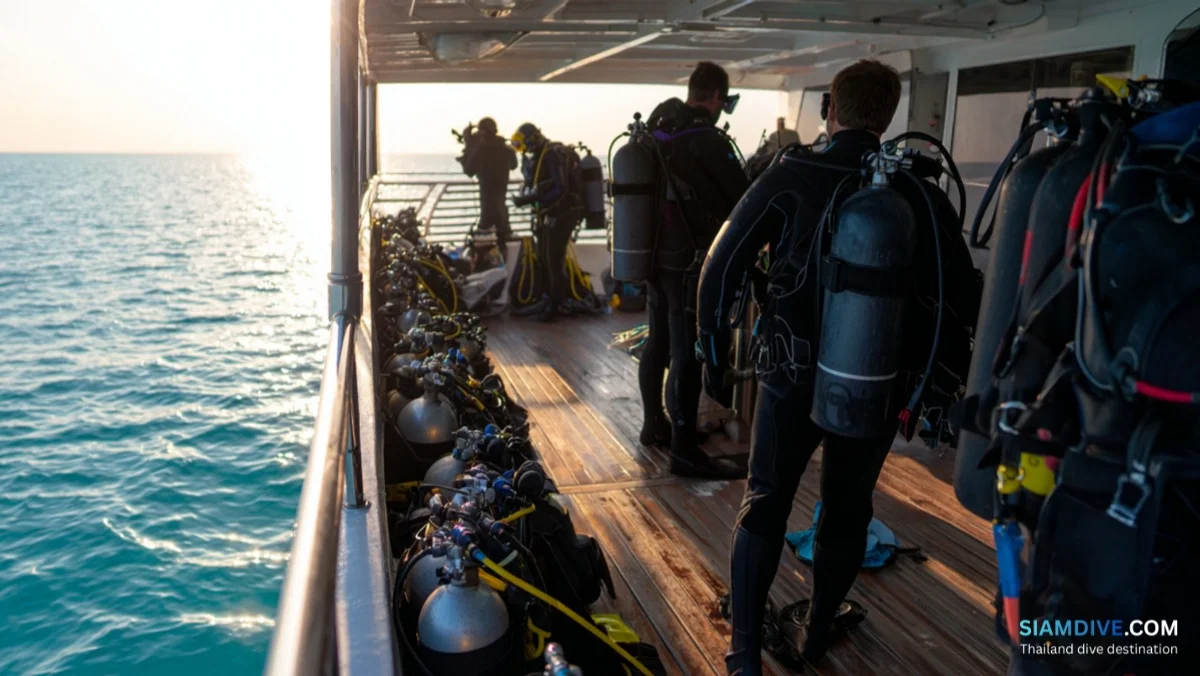
This wasn't a liveaboard. It wasn't a single-island commitment. It was a sampler — the South Andaman out of Phuket, the Gulf of Thailand off Koh Tao, and the Eastern Seaboard off Pattaya — bolted together with two short domestic hops and one catamaran transfer. If you've got a week, a certification in your wallet, and a refusal to pick between coasts, this is what the days actually look like and what each one actually costs.
The Shape of the Week
Three destinations, three very different diving styles, and one non-negotiable rule: you do your flight day in the middle, not at the end, so the final dive always lands on a coast with a fast road to an airport. Here's the skeleton we built everything else around.
| Day | Base | Coast | Feature sites |
|---|---|---|---|
| 1–3 | Phuket / Chalong | South Andaman | Racha Yai, Racha Noi, Shark Point, King Cruiser wreck |
| 4 | Transit | Phuket → Bangkok → Chumphon → Koh Tao | Flight + van + high-speed catamaran |
| 5–6 | Koh Tao | Gulf of Thailand | Sail Rock, Chumphon Pinnacle, HTMS Sattakut wreck |
| 7 | Pattaya / Jomtien | Eastern Seaboard | HTMS Khram navy wreck, outer island cluster |
Days 1–3: Phuket, the Andaman Last Stand
April is the tail end of the prime Andaman season. The wind shifts in late April and the Similan liveaboards stop running around the 25th until November swings them back. We timed the trip for the first week of April deliberately. Visibility was still holding at 18–22 metres on the outer sites, water temperature was 29°C, and the day-trip shops hadn't yet started quoting monsoon discounts.
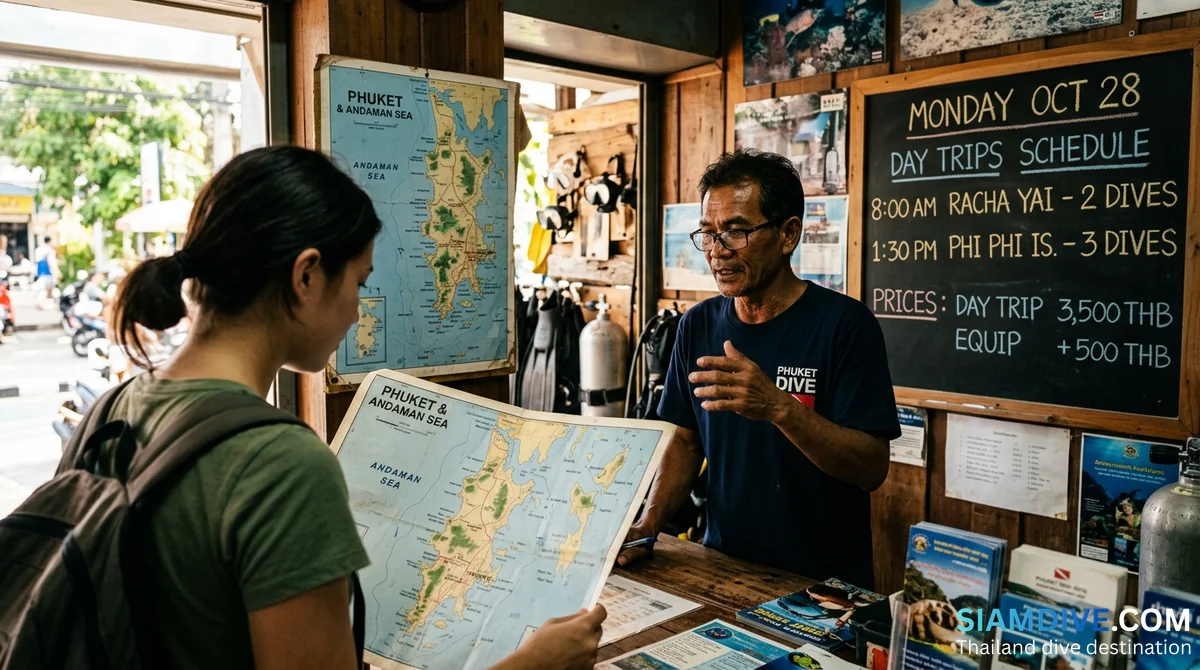
Base camp was Chalong Pier. Four shops on that pier run day trips every morning, and a fun dive day trip out of Phuket runs roughly 3,200–3,900 THB for two or three dives including tanks, guide, weights and lunch. Compared to Koh Tao that's aggressive pricing, but the sites are 45–75 minutes of steaming each way and the boats are bigger, so the per-tank logistics simply cost more.
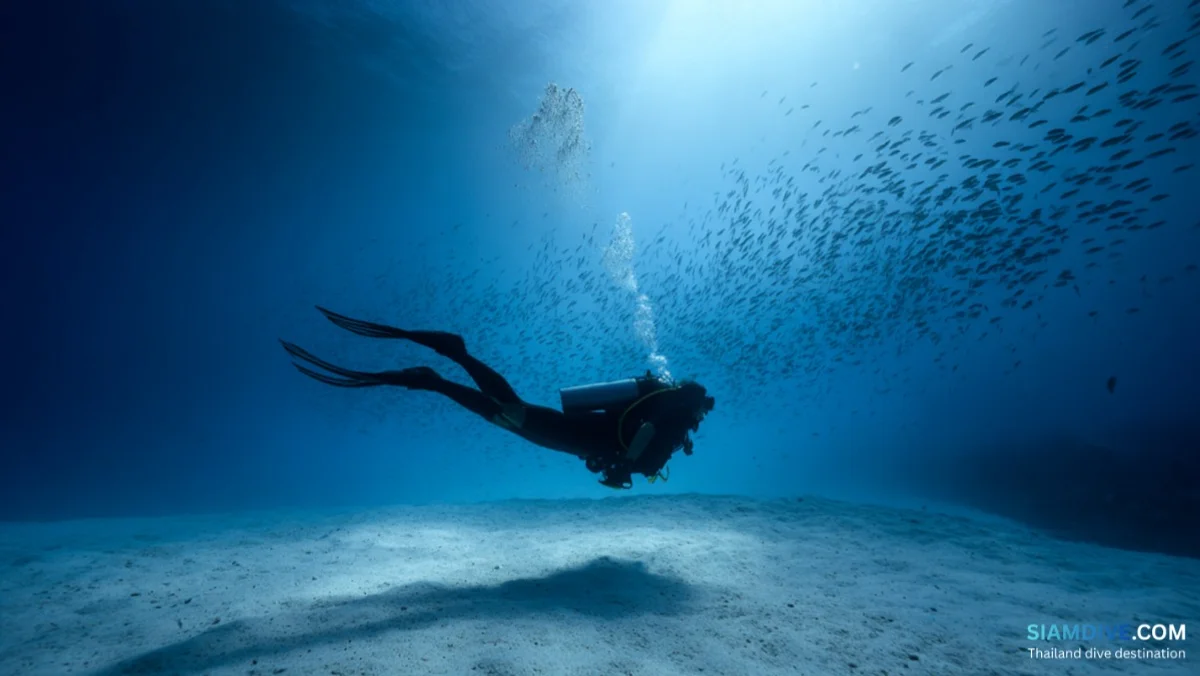
Day 1. 07:30 pickup for Racha Yai and Racha Noi. Two dives, both with viz above 20 metres. At Racha Noi's south tip a school of chevron barracuda did the standard slow carousel three metres off the wall, then a solo blacktip cruised through on the edge of visibility. No manta on that day — they show up at Racha Noi unannounced, not on demand, and the honest sighting rate is maybe one in eight trips in April.
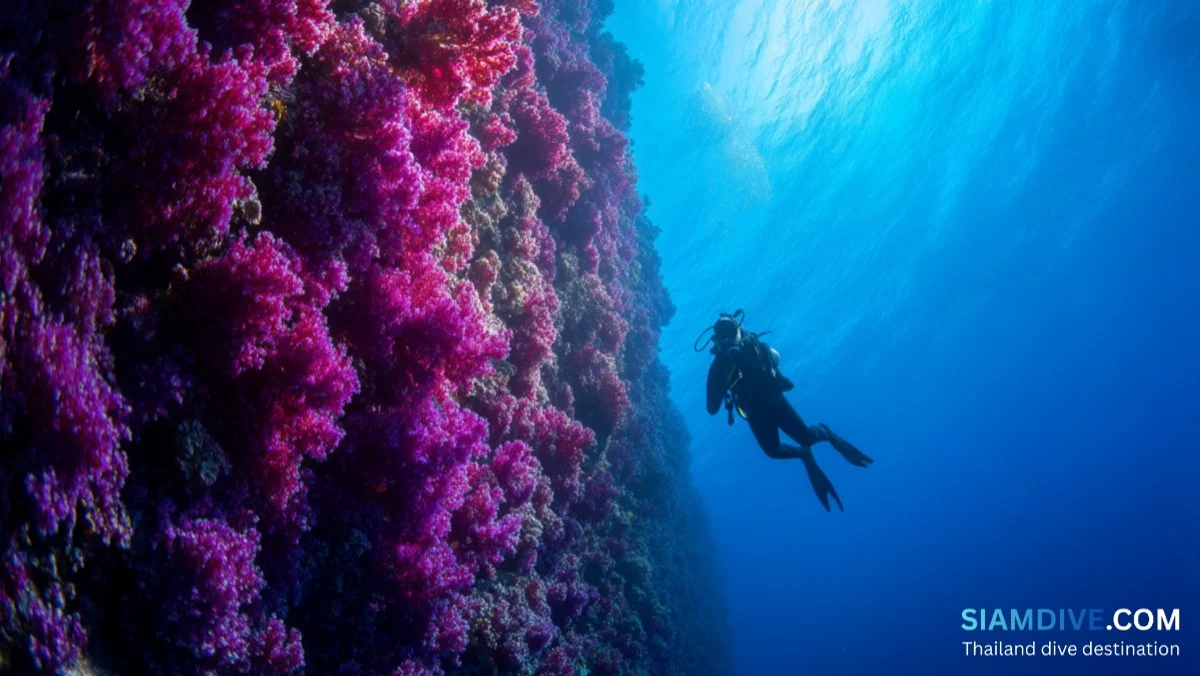
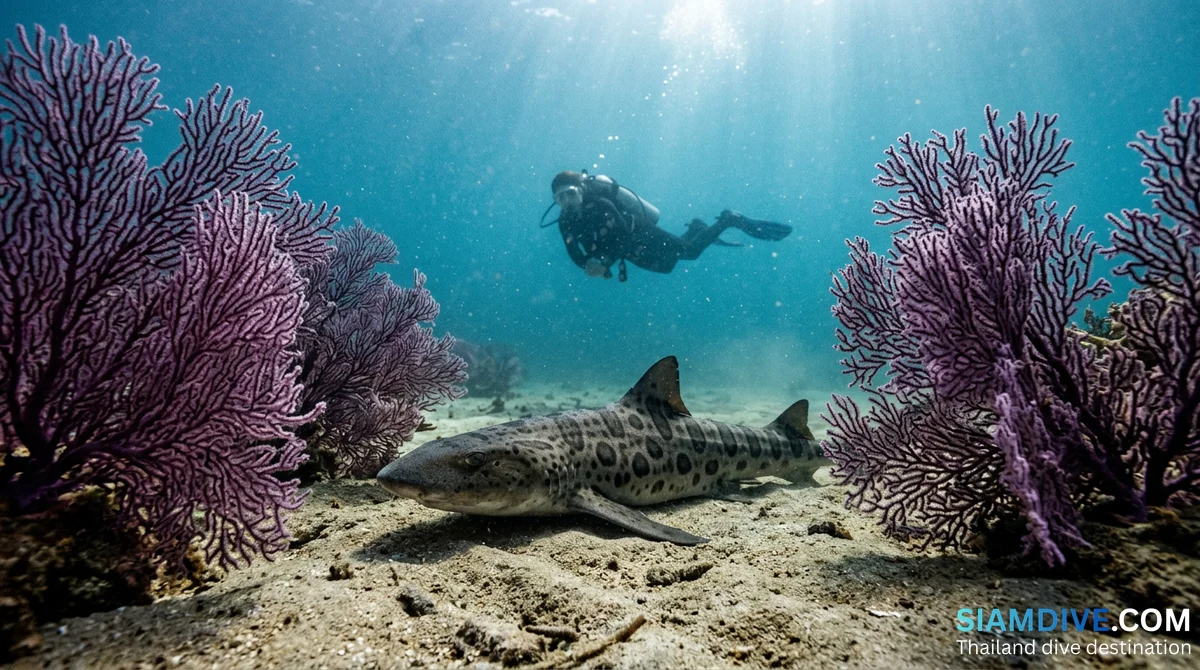
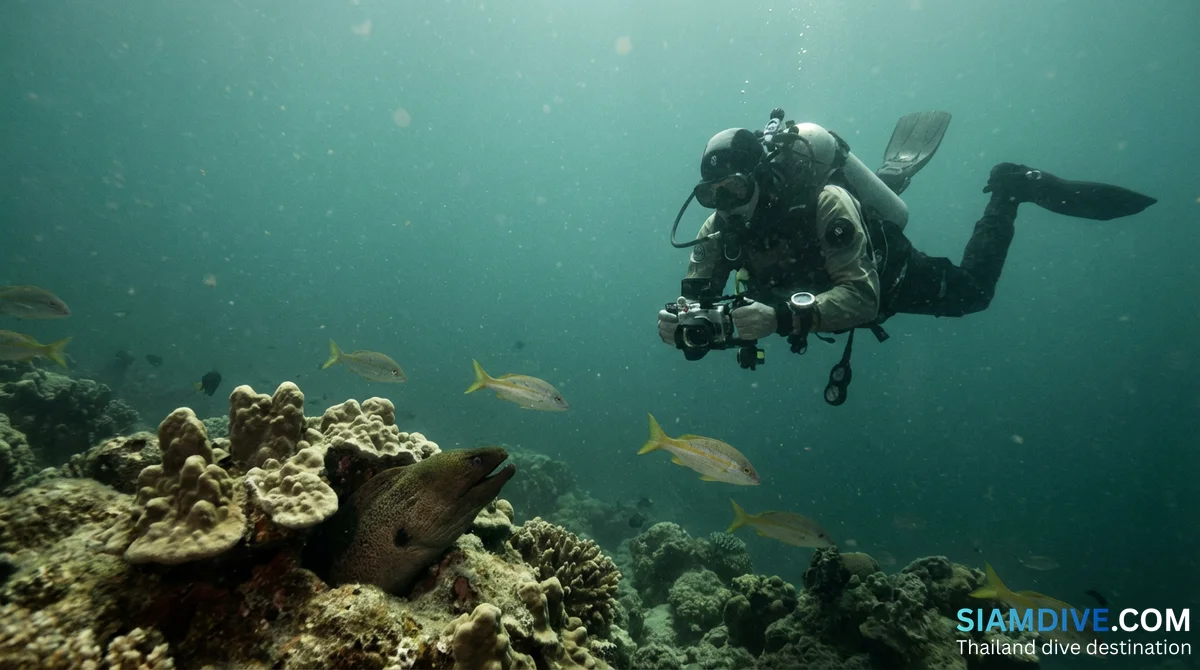
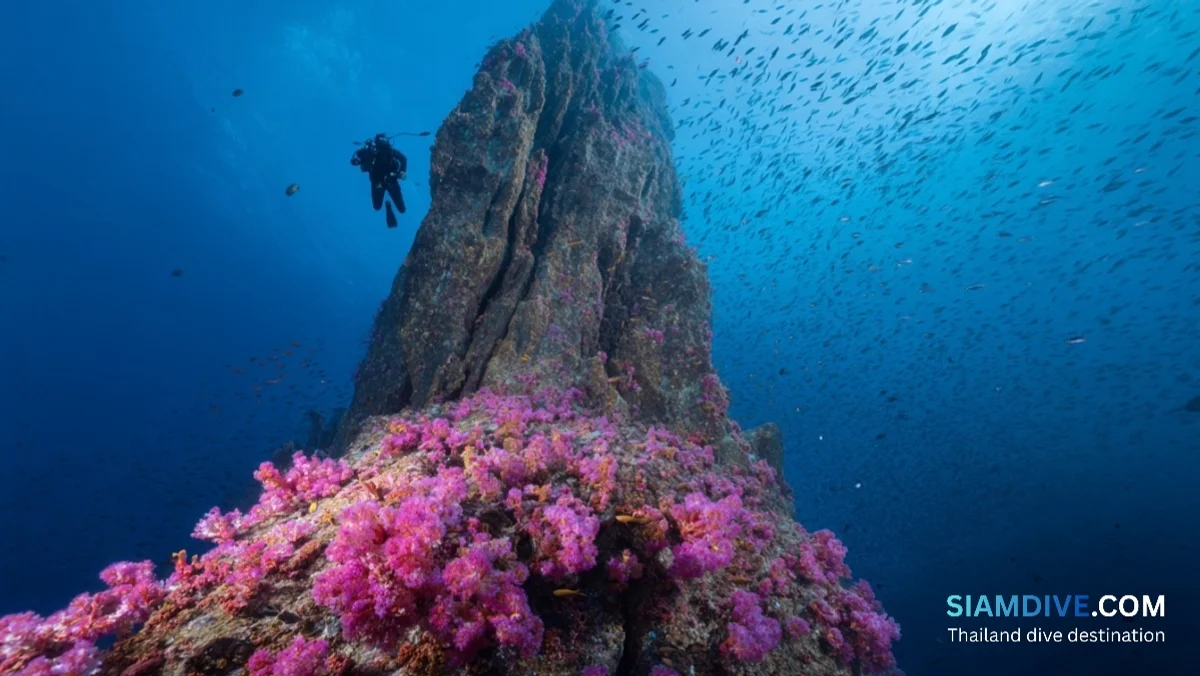
Day 2. Shark Point and Anemone Reef. Leopard sharks resting on sand at 18 metres, exactly where every operator promises they will be. What guides don't advertise: the current at Shark Point flipped mid-dive and the back half of the profile was a drift along the purple soft coral. That's not a complaint — it's the reason this site keeps being worth the boat ride.
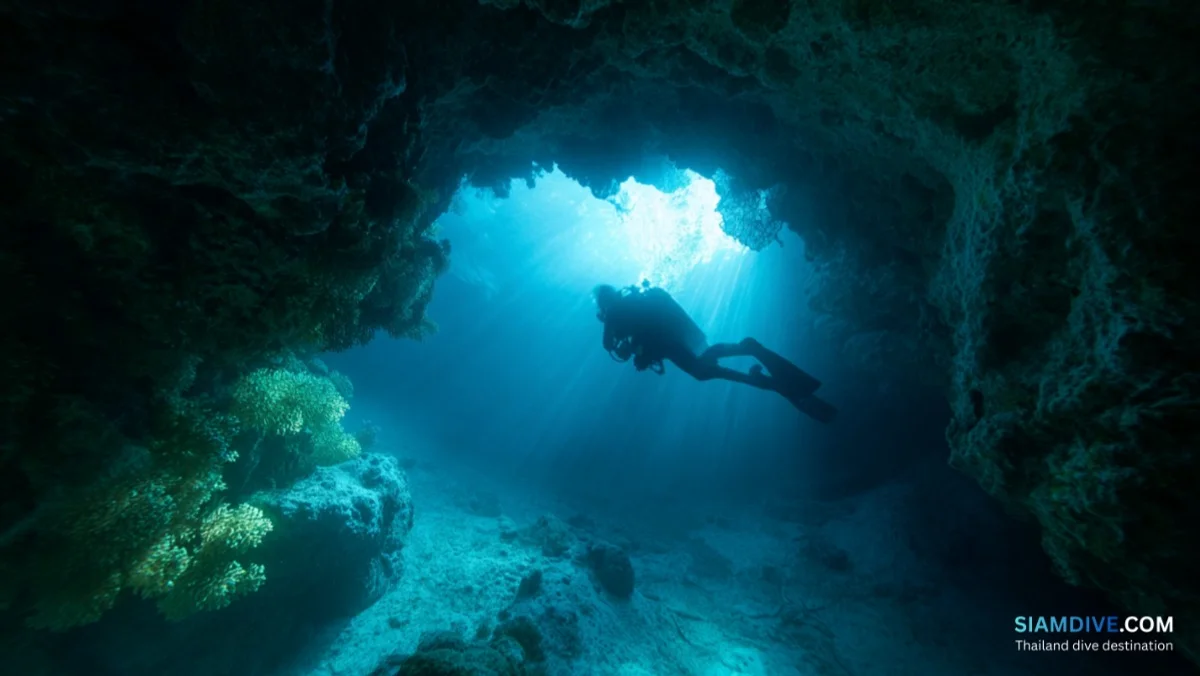
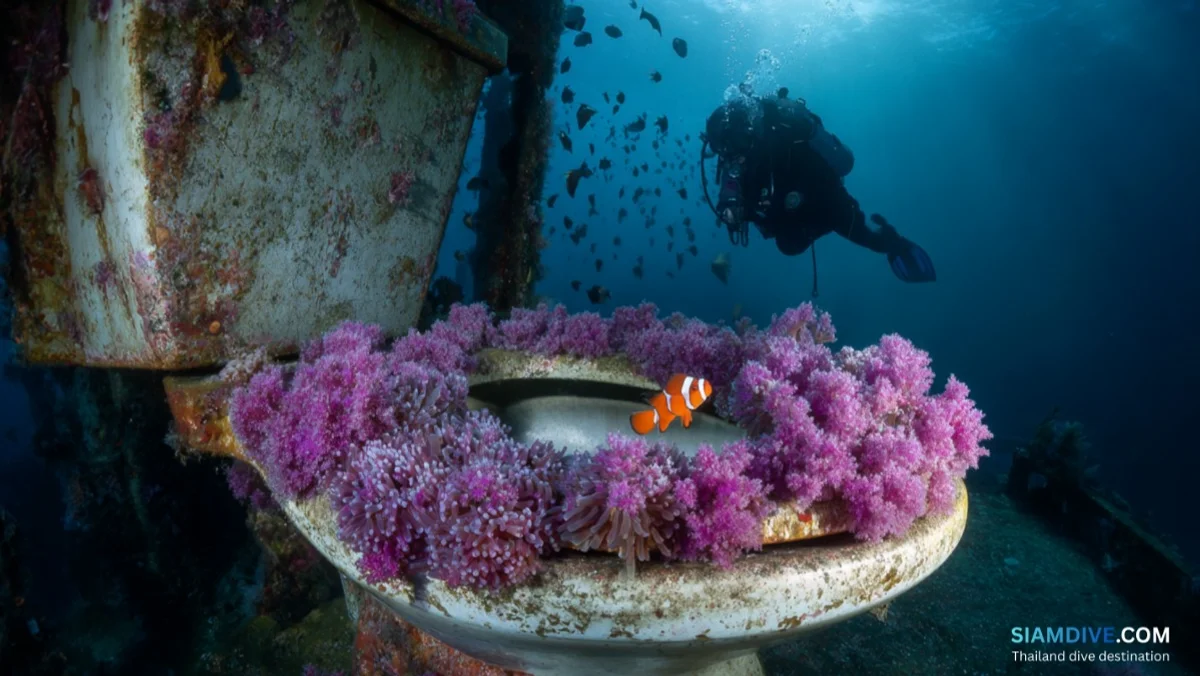
Day 3. The King Cruiser wreck. Sunk in 1997 after hitting Anemone Reef, this 85-metre car ferry sits upright in 30 metres of water with the top deck at 12 metres. We did two dives on her — one exterior swim-around, one penetration through the mid-level car deck with a wreck-certified guide. Fishing line is the hazard, not the structure: bring a line cutter, stay on the guide's shoulder, and don't kick up silt near the engine room. This is the dive that sold the week: a 90-minute boat ride, a full-ferry silhouette emerging from blue water at 18 metres, and a stillness inside the hull that changes the pace of the entire trip.
Day 4: the Transit That Looks Harder Than It Is
This is the day every Thailand sampler plan falls apart on paper. Phuket to Koh Tao direct does not exist. The actual route is HKT to BKK or DMK, then down to Chumphon, then Lomprayah high-speed catamaran across to Mae Haad Pier. We compressed it into a single day by flying Phuket to Bangkok first thing (Thai AirAsia, Bangkok Airways, Thai Vietjet, Nok Air and Thai Lion all fly the route, and a cheap economy ticket books around 2,800–3,500 THB at two weeks out), then shifting to a van southbound from Morchit to Chumphon, and catching the 13:00 Lomprayah from Lomprayah Pier.
Lomprayah runs the Chumphon to Koh Tao leg in about 1 hour 45 minutes. From October through May there are roughly 10 weekly crossings, with the first departure around 07:00 and the last around 13:15. We were on the 13:00 boat, on Mae Haad Pier by 15:00, and doing gear checks at the dive shop by 16:00. It's a long day. It's also the only day of the week without a dive — which is the point, because it gives you a built-in surface interval before the Gulf sites.
Days 5–6: Koh Tao, the Gulf Transition
Here is the inversion the Andaman-to-Gulf switch produces. You arrive expecting the same 25-metre visibility you had in Phuket, and Koh Tao in April gives you something different: plankton-rich water, 10–15 metre visibility on average, and the specific reason April is the month whale sharks show up at Sail Rock. The best Sail Rock whale shark window runs March through May, with a second shorter window October through early December. That plankton is not a bug; it is the feature.
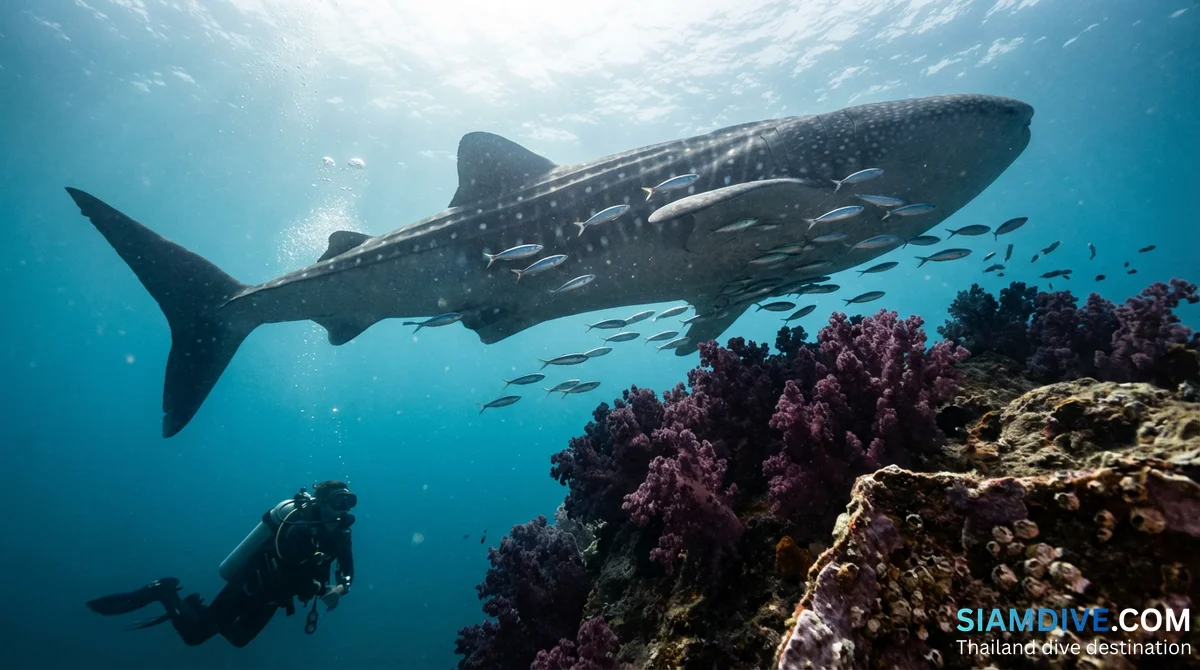
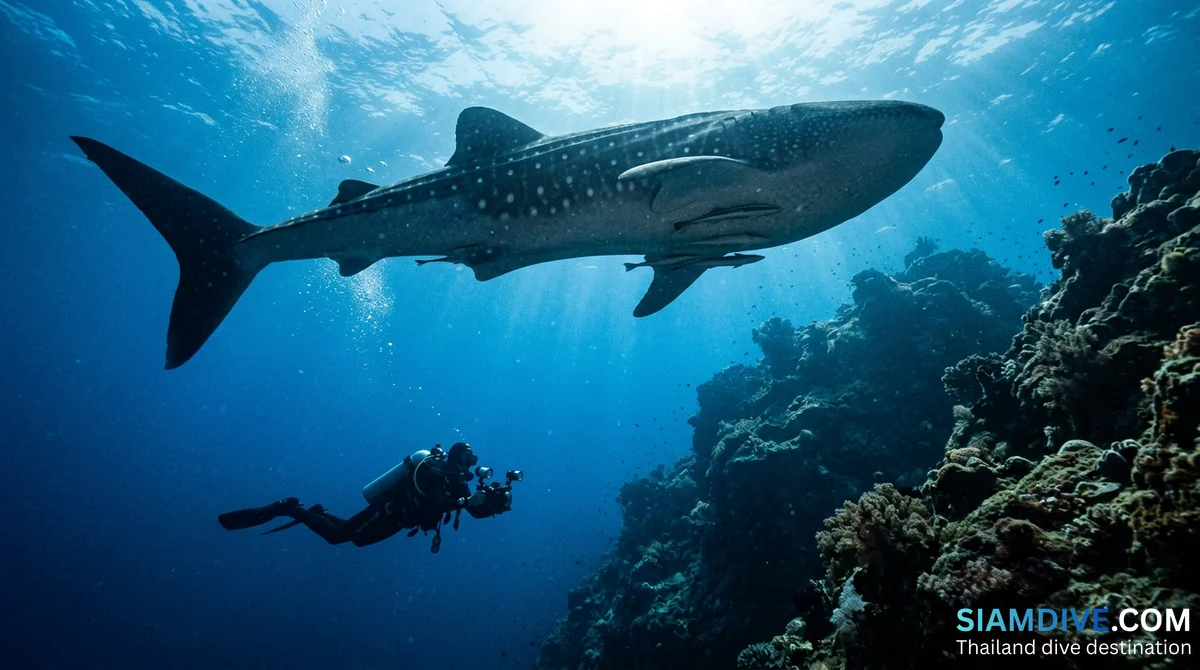
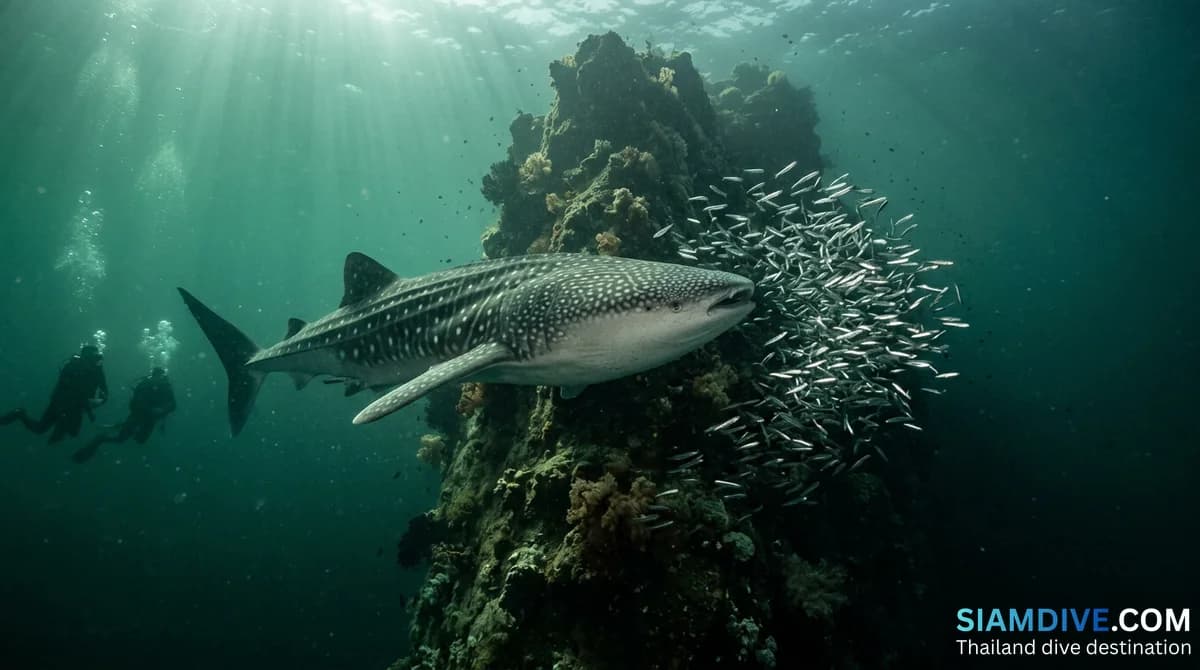
We saw one. Day 6, Sail Rock, second dive, 11:40 local time. A four-metre juvenile came up the pinnacle from the south face, circled the bait ball once, and disappeared into the green. The divemaster had been on Sail Rock every week since January without one — that's the honest distribution of this sighting, not the brochure version. Thailand whale shark encounters average roughly ten sightings across a six-month season at each hotspot, so showing up in April and putting time on the water is the only strategy that materially changes the odds.
Koh Tao fun diving is the cheapest scuba on the map. A two-tank day trip runs 2,000–2,500 THB, and some operators quote as low as 800–900 THB per single dive once you're certified, with lunch, taxi and guide included. That's roughly one-third of Phuket pricing, and the boat rides are 20–30 minutes instead of 45–75. The currency you pay back in exchange is visibility: 12 metres on a good April day is a fair trade for 900-baht dives.
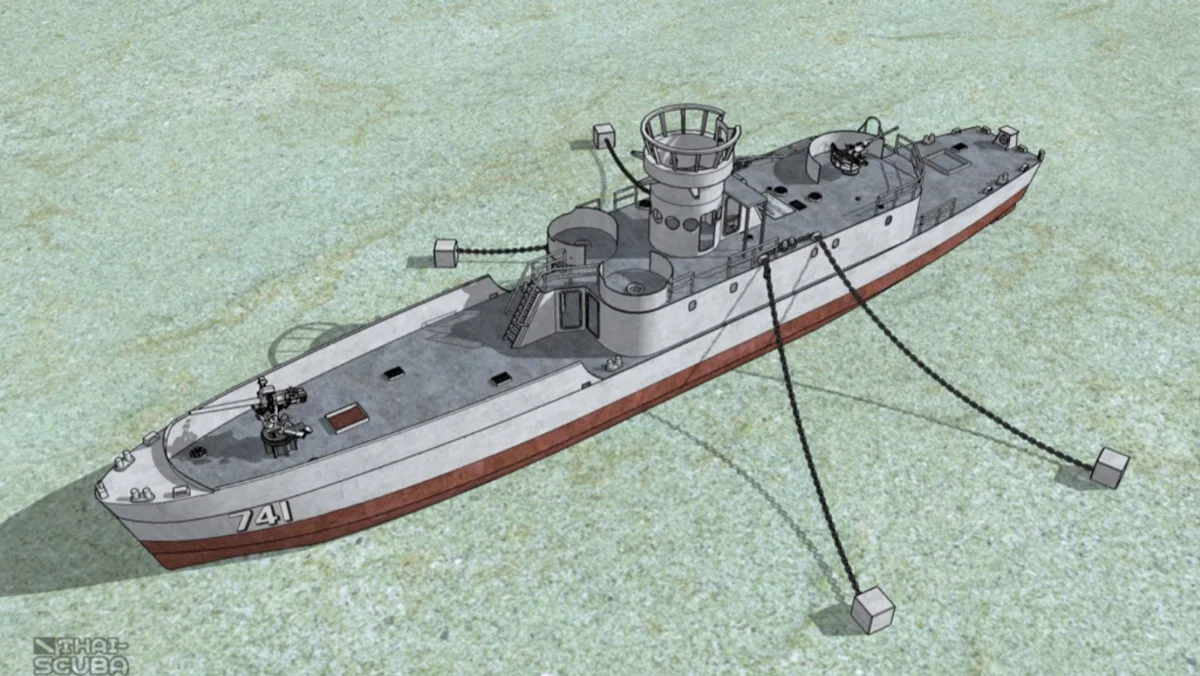
The other reason we came to Koh Tao specifically was the HTMS Sattakut. She is a 49-metre former US-built landing craft the Royal Thai Navy sank off Hin Pee Wee in 2011 as an artificial reef. She sits upright on sand with the top of the superstructure at 18 metres and the stern at 30–32 metres depending on tide. We booked her as the first dive of day 6 — a wreck-course review dive — and the two-gun silhouette at 20 metres is one of the Gulf's better photo sites. Seven metres wide, broad enough for two divers abreast in the cargo bay, and already growing enough soft coral on the bow rails that you can read the decade of growth by eye.
Day 7: Pattaya, the Eastern Seaboard Coda
Most divers skip Pattaya. We didn't, and the reason is the navy wreck cluster off the outer islands. The Royal Thai Navy has sunk three decommissioned warships off Pattaya as artificial reefs, with HTMS Khram being the most popular for recreational divers — 30 metres on sand, top deck around 20 metres. The coral growth on the superstructure is the honest draw; visibility is not, averaging 5–12 metres depending on river runoff and chop.
Pattaya also gives the week a gentle landing. The shops on Beach Road and in Jomtien run two-dive trips for 2,200–3,200 THB including gear and transfers, and the drive back to Bangkok Suvarnabhumi is 90 minutes on the motorway. We were on a morning flight the next day with time to spare for a proper no-fly surface interval.
What This Actually Costs
| Line item | Range (THB) | Notes |
|---|---|---|
| Phuket: 3 days fun diving (6 dives) | 9,600–11,700 | Chalong-based operators, tanks and lunch included |
| Koh Tao: 2 days fun diving (4 dives) | 4,000–5,000 | Includes one wreck dive on HTMS Sattakut |
| Pattaya: 1 day fun diving (2 dives) | 2,200–3,200 | Jomtien or Beach Road operators |
| Domestic flight Phuket → Bangkok | 2,800–3,500 | Two weeks out, economy, any of five carriers |
| Van BKK → Chumphon | 600–900 | Morchit or Ekkamai southbound terminals |
| Lomprayah ferry Chumphon → Koh Tao | 800–1,200 | 20 kg main bag included, 1h45m crossing |
| Accommodation (7 nights, mid-range) | 7,000–12,000 | Twin-share guesthouse or dive-hotel |
All-in for one diver, excluding international flights and souvenirs, the week lands in the 28,000–40,000 THB band — roughly 770–1,100 USD at April 2026 exchange rates. That is less than a comparable single-island Maldives trip and it gives you three separate dive ecosystems on one passport stamp.
What to Know Before You Book
- April timing is critical. The Similan marine park opens mid-October and closes mid-May, so the Similan liveaboard option is still alive in the first three weeks of April but closes around the 25th. We skipped Similan on this sampler because the flight-and-ferry day already cost us one dive day — but if you extend to nine days you can slot a two-night Similan trip before the Phuket block.
- Park fees are real money. The Similan National Park fee is 500 THB per adult per entry, plus a 200 THB per-day diver fee on top. Re-entry after leaving the park costs another 500 THB, which caught us out on an earlier trip. If you are doing a single-day Similan add-on, build a 700 THB line into the budget; for a multi-day liveaboard, 500 + 200 per diving day.
- Certification matters. The King Cruiser and HTMS Sattakut both want Advanced Open Water minimum because the interesting parts sit below 18 metres. If you only hold Open Water, book an AOW course on day 1 in Phuket and you will be certified in time for the Gulf wrecks on day 6.
- DAN's no-fly rule. The Divers Alert Network recommends 18 hours surface interval after a single dive and 24 hours after multi-day diving before any flight. We finished diving at 14:00 on day 7 and flew out the next morning at 09:00 — 19 hours, which is tight but within protocol for the multi-day case.
The Honest Debrief
Three coasts in seven days sounds like a stunt route, but it is genuinely the shortest way to understand why Thailand is two different diving countries on the same passport. The Andaman gives you the postcard water — 20-metre visibility, reef sharks on demand, sheer walls at Racha Noi. The Gulf gives you the plankton-soup pelagic gamble that occasionally pays off in whale shark. The Eastern Seaboard gives you navy wrecks and cheap logistics into Bangkok.
What we would do differently next April: add a ninth day for a Similan liveaboard before the Phuket block, or swap Pattaya for Khao Lak if we were going north rather than east. One thing we would not change — the Gulf days in the middle, with the whale shark odds peaking exactly when the Andaman side is winding down. That overlap is the real reason April is the one month this sampler works the way it worked for us.
If you are planning around a specific event or want to check what is running when you will be here, read our two-coast monsoon strategy for month-by-month coast calls, the Phuket vs Koh Tao vs Khao Lak base comparison for picking a single base, and the Phuket diving calendar for when to book. For deeper wreck detail, the King Cruiser write-up and Pattaya navy wrecks guide go further than we could here.
Sources
- Big Blue Diving — Koh Tao fun dive pricing 2026
- Giant Stride Travel — Thailand scuba diving price guide
- Pattaya Pointer — Pattaya scuba diving guide 2026
- Thailand Liveaboards — Richelieu Rock whale shark timing
- Black Turtle Dive — HTMS Sattakut dive site specs
- Lomprayah — 2026 ferry timetable
- Go2Similan — Similan national park fees 2026