Thai Liveaboards at $125 a Night — and the Gap Is Closing
3 พฤษภาคม 2569
Thailand's Similan fleet still runs at half the nightly rate of Red Sea boats — but fuel surcharges and booming demand say it won't last.
A four-night Similan liveaboard berth books for less than a single night in a mid-range Maldives cabin. That is not a misprint. While Red Sea operators tacked fuel surcharges of $50 per trip onto invoices in April 2026 and Maldives boats crossed the €300-a-night mark years ago, Thailand's Andaman fleet still advertises bunks under $125 a night — four dives, three meals, and unlimited coffee included. The spread between Thai liveaboard pricing and the rest of the tropical dive world is wide, documented in published operator rates, and according to every market signal in early 2026, starting to narrow.
The Price Tag, Side by Side
Brochure language hides the real gap. Published 2026 rates from operators and booking platforms across three destinations lay it out in raw numbers:
- Thailand (Similan / Andaman) — $90–$170 per night. The Manta Queen budget fleet runs under $125. Mid-range boats like Sawasdee Fasai and Pawara sit at $140–$190 after early-bird discounts. Premium vessels push past $220.
- Red Sea (Egypt) — $130–$260 per night before extras. Budget boats start near $130. Mid-fleet operators cluster at $160–$200. Then add €280 in mandatory local fees for every one-week trip — payable in cash on arrival, invisible in the headline rate.
- Maldives — $220–$680 per night. The budget floor sits near €200 per day. A 2026 seven-night trip on a mid-range vessel lists at $3,865–$4,755 per person depending on cabin class.
After fees and surcharges, a four-night Thai safari at the budget tier costs roughly what two nights on a mid-range Red Sea boat cost. Three full Similan trips fit inside a single Maldives week at the same spend.
Three Forces Holding Thai Prices Down
The discount is structural, not accidental. Three factors keep Andaman fleet rates low, and none of them are vanishing overnight.
Fleet overcapacity. Thailand runs one of the densest liveaboard fleets per dive-site cluster in the diving world. The Manta Queen fleet alone fields seven boats carrying 16–24 guests each on near-identical Similan–Koh Bon–Richelieu itineraries. Add another dozen-plus operators out of Khao Lak and Phuket, and the result is fierce price competition crammed into a seven-month window from October to May. Every empty bunk is a write-off. Operators discount hard to fill cabins, especially late in the season when the park closure looms and cancellation rates climb.
Low operating base cost. Crew wages, provisioning, and port fees in Thailand sit well below Egyptian equivalents. A Thai cook provisioning three buffet meals a day from Khao Lak's morning market spends a fraction of what an Egyptian galley crew pays for imported produce through Hurghada's supply chain. Diesel — the biggest variable cost on any liveaboard — receives domestic-use subsidies for Thai marine operators, a policy cushion that blunts the full impact of global crude-price swings.
Short transit distances. Similan-bound boats leave Tab Lamu pier in Khao Lak and reach the first dive site in four to five hours. The entire Similan–Surin–Richelieu circuit fits inside a compact radius. Red Sea itineraries vary enormously: a Brothers Islands or Daedalus–Elphinstone route pushes deep into open water, burning substantially more fuel per nautical mile than any Andaman run. Shorter transits translate directly into lower per-night fuel cost, and operators pass the savings into the advertised rate.
Where the Red Sea Premium Comes From
Red Sea boats are not overcharging — the premium has receipts. Marine park access fees stack on top of every quoted trip price. Extra Divers lists local fees of €280 per person for all 2026 one-week tours — cash on site, separate invoice. That alone adds roughly $300 to every guest's total before the engines start.
Fuel exposure compounds the gap. Red Sea routes stretch further than Andaman circuits: a Brothers Islands trip covers more open water than a full Similan loop, and a Deep South expedition to St. John's Reef system pushes further still. In April 2026, the cost of running those routes climbed visibly. Blue Melody and Blue Horizon introduced a $8-per-night fuel surcharge effective April 11. Emperor Divers raised trip prices outright from April 10. The Red Sea Aggressor fleet added $50 per trip across all vessels. Entrada Travel Group rolled out a fuel recovery surcharge for every new booking from late March through September 2026.
No single increase is dramatic. Stacked together, a seven-night Red Sea trip that quoted $1,100 a year ago can now total $1,400–$1,500 after fees, surcharges, and on-site charges.
Fuel Surcharges Reach the Andaman — Gently
Thailand is not immune — but the numbers tell a different story. Deep Andaman Queen added 400 THB per night, roughly $11. Thailand Master introduced $15 per night from April 11, 2026. On Koh Tao, day-boat operators have been folding quiet fuel supplements into offshore trip pricing rather than raising the published headline rate.
Scale reveals the difference. A four-night Thai fuel surcharge totals $44–$60 per guest. A seven-night Red Sea package tacks on $350 or more once local fees and fuel recovery charges land on the final bill. Thailand's fleet absorbs fuel pressure from a lower baseline, over shorter distances, with domestic fuel policy absorbing part of the shock.
As of late April 2026, most Similan operators had closed bookings for the outgoing season — the national park shuts mid-May — and were listing early-bird rates for October 2026 within 5% of outgoing prices. Red Sea operators, by contrast, had already locked in higher base rates for the autumn season before the latest round of fuel surcharges was even announced.
What $125 a Night Actually Buys
The budget Manta Queen bracket is not a floating dormitory with a compressor. A typical four-day, four-night Similan itinerary at the sub-$125 tier delivers a surprisingly complete package:
- 14 dives over four full days — three day dives plus one night dive per diving day
- Marquee sites — Elephant Head Rock, Christmas Point, Koh Bon (manta cleaning station, peak season November–April), Koh Tachai, Richelieu Rock
- Full board — three buffet meals daily, unlimited fruit, snacks, water, tea, and coffee between dives
- Equipment — tanks and weights included; full BCD-and-regulator rental available at modest extra cost
- Park fees included — national park entry is built into the trip price, unlike Egypt's cash-on-arrival model
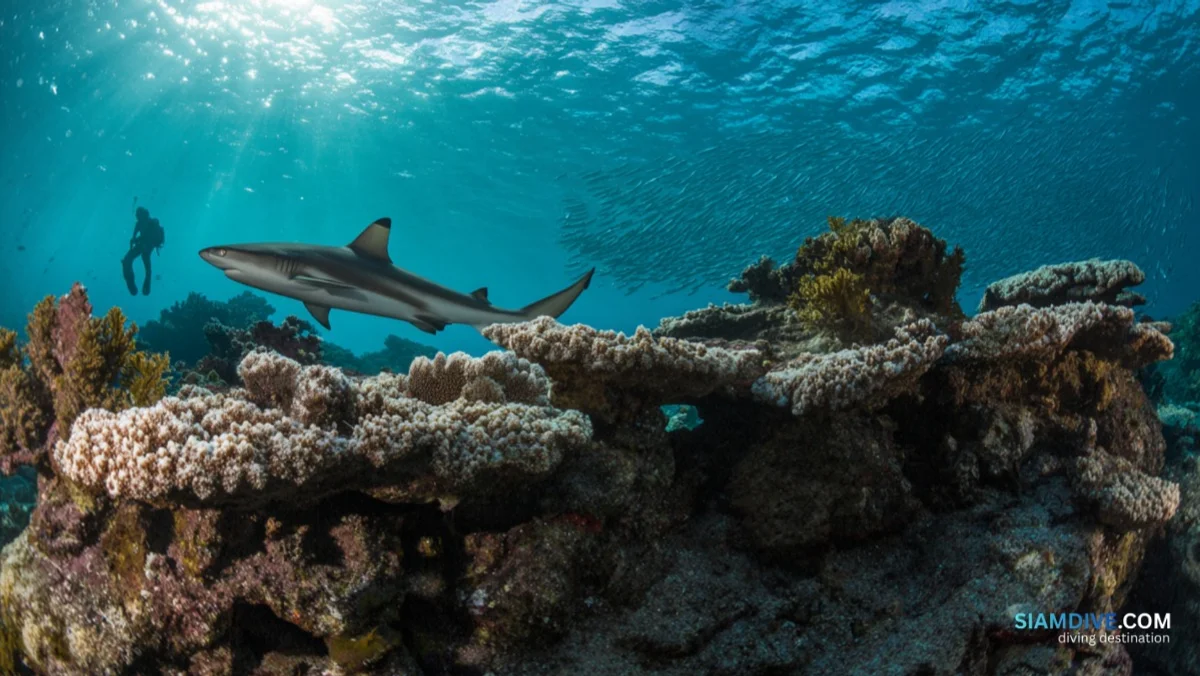
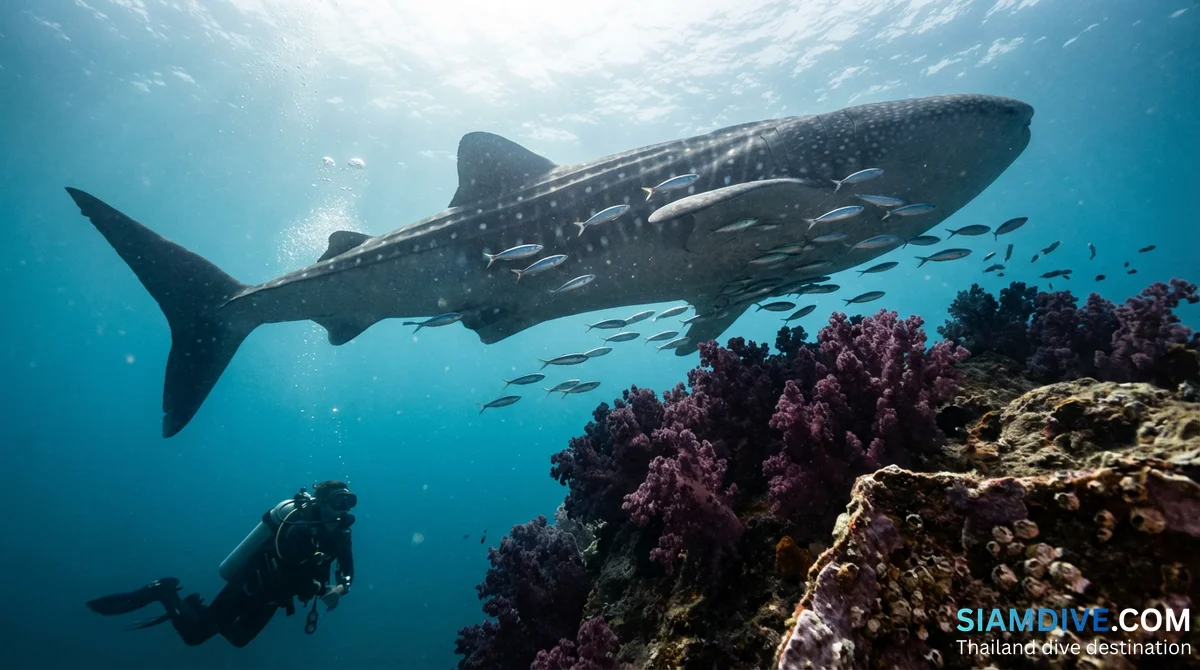
Visibility during peak months — January through April — regularly tops 25 metres. Water temperature holds at 27–29 °C year-round during the season. Manta ray encounters at Koh Bon's cleaning station run from November through April, with February and March as the sweet spot. Whale sharks cruise Richelieu Rock and Hin Muang's 60-metre purple wall with enough regularity that itineraries build around the possibility rather than treating it as luck.
A comparable Red Sea week delivers 12–18 dives and similar meal plans — solid value on its own merits — but after local fees of €280, fuel surcharges of $50–$56, and sometimes airport transfer charges on top, the all-in cost sits 30–50% above a Thai trip of the same tier. The marine life overlap is higher than most divers expect: both regions deliver pelagic encounters, healthy hard coral, and strong macro opportunities. What Thailand adds is a lower entry price for the same dive count and a park-fee model that does not ambush you on boarding day.
The Demand Signal That Could Close the Gap
Thailand ranked second in the world for PADI certifications in 2025 — roughly 8% of all certifications issued globally. More than 2.5 million divers have completed PADI training in the country over 25 years, and domestic uptake is accelerating: Thai nationals taking up scuba have grown 300% in recent years, shifting the customer base from almost entirely international to increasingly local.
In February 2026, the Tourism Authority of Thailand formalised a landmark partnership with PADI under the "Healing is the New Luxury" campaign, positioning the country as a wellness-led dive destination backed by nine accredited PADI Eco Centers and a planned global content initiative shot on Koh Tao. The message to international divers is unambiguous: Thailand wants more dive tourists, and it is spending real marketing money to get them.
More demand pushing into a fleet that only operates seven months a year, on a coastline with a finite number of mooring points, means pricing power gradually tilts toward operators. Early-bird discounts for the 2026–2027 season are already narrower than last year's. Several mid-range boats have dropped their lowest cabin category entirely, lifting the effective floor price without changing the published rate.
The Maldives trajectory is instructive: a destination once considered affordable for safari diving now charges two to four times the Thai nightly rate after years of demand growth against limited fleet expansion. Thailand's fleet is larger and more competitive, which slows the upward curve — but does not flatten it. Liveaboard economics follow the same gravity everywhere. Demand rises, supply lags, prices follow.
How to Time the Window
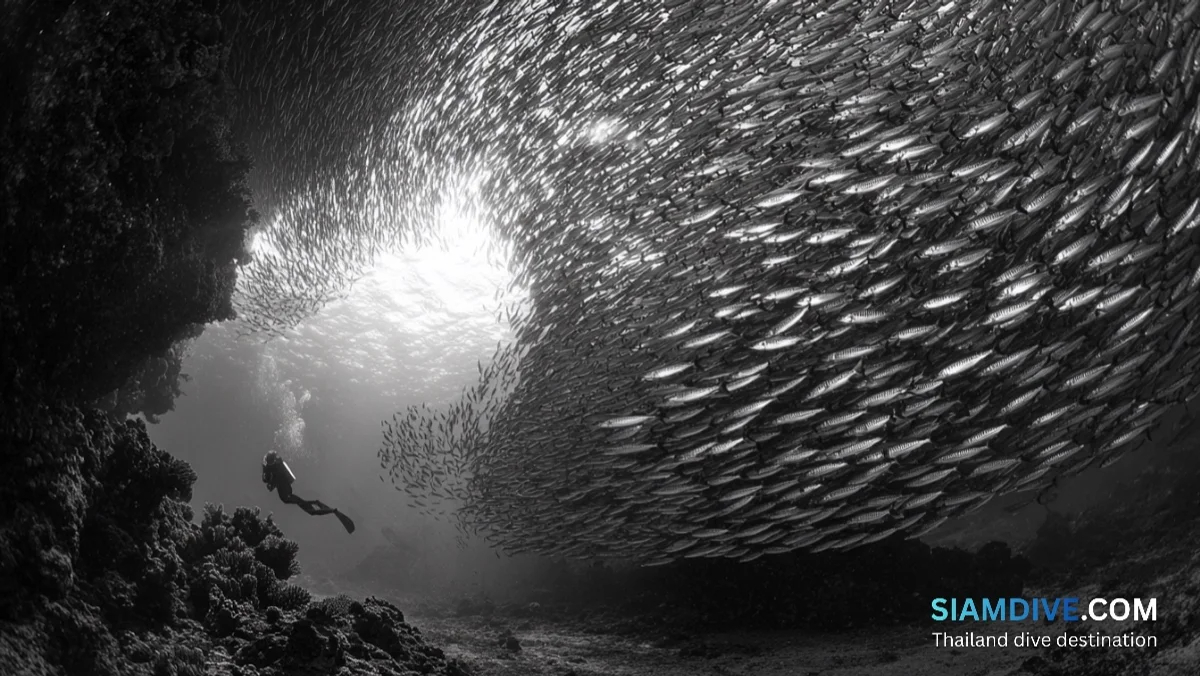
For divers weighing a liveaboard trip in the next 12–18 months, the maths still favour Thailand decisively. A complete Similan safari costs less than the surcharges and local fees alone on a premium Red Sea or Maldives itinerary. The diving matches any global top-tier list: Sail Rock's barracuda cylinders in the Gulf, Richelieu Rock's seahorse-dense soft coral in the Andaman, and manta encounters at Koh Bon that liveaboard veterans rank alongside the best in the Indian Ocean.
But the window is not open-ended. Fuel surcharges have arrived — modest on the Andaman, aggressive on the Red Sea. PADI certification growth feeds demand into a constrained seven-month season. The TAT partnership will channel marketing spend into dive tourism at a scale Thailand's industry has not seen before. Operators are trimming discounts and cutting bottom-tier cabins. None of this means Thai boats will charge Red Sea rates by October, but the post-pandemic flat-price era is ending.
The question for anyone watching the pricing sheets is not whether Thai liveaboard rates will climb. It is whether you book before or after they do. For first-time liveaboard divers weighing readiness, start with the fundamentals: the mistakes new divers make when nobody is watching and the three-second SMB mistake that catches even experienced divers on drift-heavy itineraries like the Andaman circuit.
Sources
- SCUBA News — 2026 Liveaboard Industry Update: Fuel Surcharges & Global Changes
- TAT — PADI Partnership Under Healing is the New Luxury Campaign
- Divezone — Thailand Liveaboard Diving Reviews 2026
- DeeperBlue — PADI & Thailand Tourism Authority Announce Partnership
- Extra Divers — Egypt Liveaboard Safaris & Local Fees 2026