27 Dolphins, One Cargo Plane, and a Cold War Ghost Story
14 พฤษภาคม 2569
In 2000, a Soviet trainer flew 27 war-trained dolphins to Iran. Twenty-six years later, they resurfaced — in a Pentagon briefing about kamikaze dolphins.
A Pentagon briefing room, early May 2026. A member of Congress asks US Defense Secretary Pete Hegseth whether Iran possesses "kamikaze dolphins." Hegseth pauses. "I cannot confirm or deny whether we have kamikaze dolphins," he says. "But I can confirm they don't." The room stirs with nervous laughter. General Dan Caine, chairman of the Joint Chiefs of Staff, weighs in — "sharks equipped with laser beams." The hearing moves on. But the question is not nearly as absurd as the laughter suggests.
Trace it back 26 years — past a Wall Street Journal headline, past a decade of intelligence speculation, past Russia's 2014 seizure of Crimea — and you reach a cargo plane lifting off from Sevastopol with 27 marine mammals in its hold, bound for the Persian Gulf. That flight is not fiction. What happened after it landed is the part nobody can confirm.
A Training Base at the Edge of Empire
Kazachya Bukhta sits on the southern tip of Sevastopol, where limestone bluffs drop into the Black Sea. In the early 1960s the Soviet Navy built a facility here that would stay classified for three decades. The compound held sea pens connected to open water by gated channels, veterinary labs, and training pools large enough for belugas. Its residents were bottlenose dolphins, harbour seals, belugas, and sea lions — animals selected for sonar capability, trainability, and willingness to work for herring.
The training was not for show. Dolphins learned to distinguish the propeller signatures of Soviet submarines from foreign ones — a task that artificial sonar still cannot replicate with the same speed or accuracy. Seals carried cameras and retrieval tools to depths of 120 metres, far past what human divers could manage without mixed gas. Some dolphins were fitted with harpoons on their rostrums to intercept enemy frogmen, or with hypodermic syringes loaded with pressurised carbon dioxide — devices lethal on contact underwater. Persistent but officially unconfirmed Soviet-era accounts describe animals trained to carry explosive charges against ship hulls.
The programme ran for the entire Cold War, a parallel arms race conducted in sea pens instead of missile silos. One beluga named Tichka escaped her pen twice, in 1991 and 1992, swimming the full width of the Black Sea to Turkey each time. Whether that counts as defection depends on how much agency you grant a whale.
"I Cannot Bear to See My Animals Starve"
When the Soviet Union dissolved in December 1991, the Sevastopol facility transferred to the Ukrainian Navy. The dolphins and their handlers inherited a state that could barely pay its soldiers, let alone maintain a classified marine mammal programme. Funding vanished. Equipment rusted in salt air. The animals' diet thinned to a fraction of what they required — a slow decline measured in kilograms of herring that never arrived.
Boris Zhurid had spent years running the programme. A former submarine officer with a medical background, he understood both the dolphins' physiology and their intelligence — the kind of cognitive depth that turns a handler into an advocate. By the late 1990s he faced a choice between watching his charges deteriorate and finding someone willing to pay for their care. "If I were a sadist, then I could have remained in Sevastopol," he told the Russian newspaper Komsomolskaya Pravda. "But I cannot bear to see my animals starve."
In 2000 he arranged a sale. Twenty-seven animals — bottlenose dolphins, porpoises, harbour seals, sea lions, and one beluga whale — were loaded onto a cargo aircraft at Sevastopol and flown to the Persian Gulf. The buyer was the Islamic Republic of Iran. The BBC reported the transfer that March. Ukrainian trainers accompanied the shipment to Kish Island, a free-trade zone in the northern Gulf, where they taught Iranian handlers how to maintain training routines and manage the animals in waters far warmer than the Black Sea.
Then the trainers flew home. The trail went cold.
Twenty-Six Years of Silence
Bottlenose dolphins live 40 to 50 years in managed care. An animal purchased at age eight in 2000 could still be alive in 2026, at 34 — middle-aged, not elderly. Whether any survive, and whether Iran maintained, expanded, or quietly dissolved the programme, remains publicly unknown.
Iranian generals have denied any operational use involving sea mines. Former President Hashemi Rafsanjani visited the Kish Island facility, but no open-source documentation reveals what the programme became. No satellite imagery of marine mammal pens at Iranian naval installations has surfaced — a notable gap, because at Sevastopol the evidence ran the other way entirely.
After Russia annexed Crimea in 2014, the old Soviet facility returned to Russian hands. Moscow restarted dolphin training, purchased five new bottlenose dolphins from a Moscow dolphinarium in 2016, and expanded the programme. By 2022, satellite photos published by USNI News showed dolphin pens at the entrance to the Sevastopol harbour — animals deployed to guard the naval base from Ukrainian underwater attacks. The programme Boris Zhurid abandoned had been rebuilt by a different country for a different war.
Iran's programme, if it still exists, has left no comparable trace. The silence is the point. In intelligence work, absence of evidence is not evidence of absence — but nor is it evidence of kamikaze dolphins. It is, however, enough to fuel a Wall Street Journal headline when the geopolitical temperature crosses a threshold.
The Strait Where Everything Converges
That threshold arrived on 28 February 2026. The United States and Israel launched Operation Epic Fury — coordinated strikes on Iranian military and nuclear facilities. Iran responded with missiles and drones, then escalated at sea. On 4 March the Islamic Revolutionary Guard Corps declared the Strait of Hormuz closed. Mines went into the water. Merchant vessels came under attack by fast boats, missiles, and drones. By late April, around 20,000 mariners and 2,000 ships were stranded in and around the Persian Gulf.
The numbers frame the desperation. The Strait is 33 kilometres wide at its narrowest. Roughly 20 per cent of the world's oil and liquefied natural gas transits through it each month — some 3,000 vessels before the crisis. Over 600 tankers sat inside the Strait with nowhere to go. On 13 April the US imposed a naval blockade on Iranian ports, creating what analysts called a dual blockade — Iran closing the Strait to the world, and the US closing Iran to the Strait.
On 30 April the Wall Street Journal reported that Iranian officials had discussed deploying "mine-carrying dolphins" against US warships. The story went global. Five days later Hegseth fielded the question that opens this article.
Berlin-based research fellow Hamidreza Azizi cut past the headline. Tehran, he argued, increasingly perceives the blockade as "a different form of war." When a state faces strangulation severe enough to strand 600 tankers in its own waters, even improbable capabilities enter the conversation — not because they work, but because floating the idea signals how far the government will go.
An American Mirror
The United States has run its own Marine Mammal Programme since 1959 — predating the Soviets. Based in San Diego, it maintains roughly 120 trained animals: bottlenose dolphins and California sea lions. The fiscal-year 2007 budget was US$14 million. Full-time veterinary and marine biology staff oversee training and care.
American dolphins have deployed to conflict zones across six decades. In Vietnam they guarded Cam Ranh Bay against enemy swimmers. In 1987–88 they cleared mines in the Persian Gulf during the Iran-Iraq tanker war. In 2003 they swept the Iraqi port of Umm Qasr ahead of coalition ground forces. Their biological sonar — each click train as individual as a human voice — locates objects buried in silt that mechanical systems miss entirely. The Navy's readiness target: 72 hours from San Diego pool to active conflict zone.
The line the Navy draws is between detection and destruction. American dolphins find mines. They mark them with acoustic transponders. They flag swimmer threats near warships. They do not, the Navy insists, carry explosives, attack ships, or run suicide missions.
The distinction is real but thinner than press releases suggest. A dolphin that marks a mine enables the detonation that follows. A dolphin that identifies a diver near a warship enables whatever response comes next. The distance between passive instrument and active participant narrows under scrutiny — and the programme remains classified enough that outside verification of its limits is scarce.
The Animal in the Middle
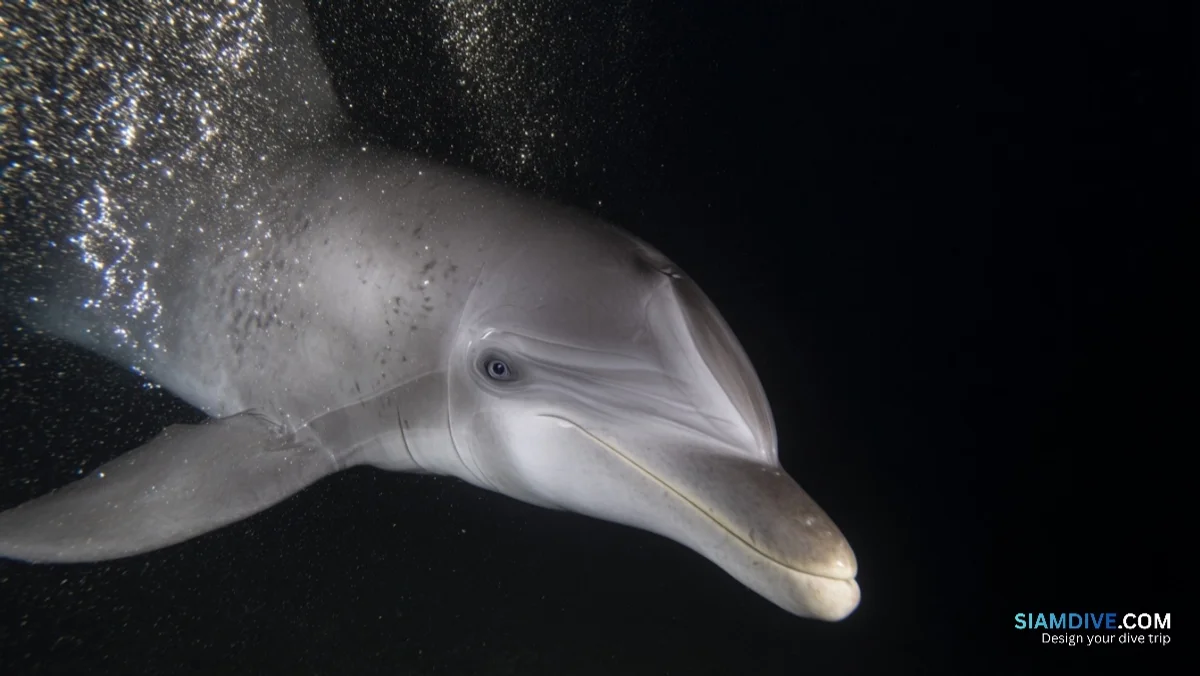
Strip the geopolitics away and what remains is an animal that shares more cognitive ground with humans than most species on Earth. Bottlenose dolphins recognise themselves in mirrors — a capacity documented only in great apes, elephants, and certain corvids. They call each other by individual signature whistles that function as names. They form alliances lasting decades. They grieve dead companions. They teach their young to use sponges as foraging tools — one of the clearest demonstrations of cultural transmission in any non-human species.
In May 2026, OIPA — the International Organisation for Animal Protection — called the military use of marine mammals "a violation of the fundamental principle that animals should never be transformed into tools of conflict." The organisation cited dolphins' "exceptional cognitive and emotional capacities" as grounds for special concern.
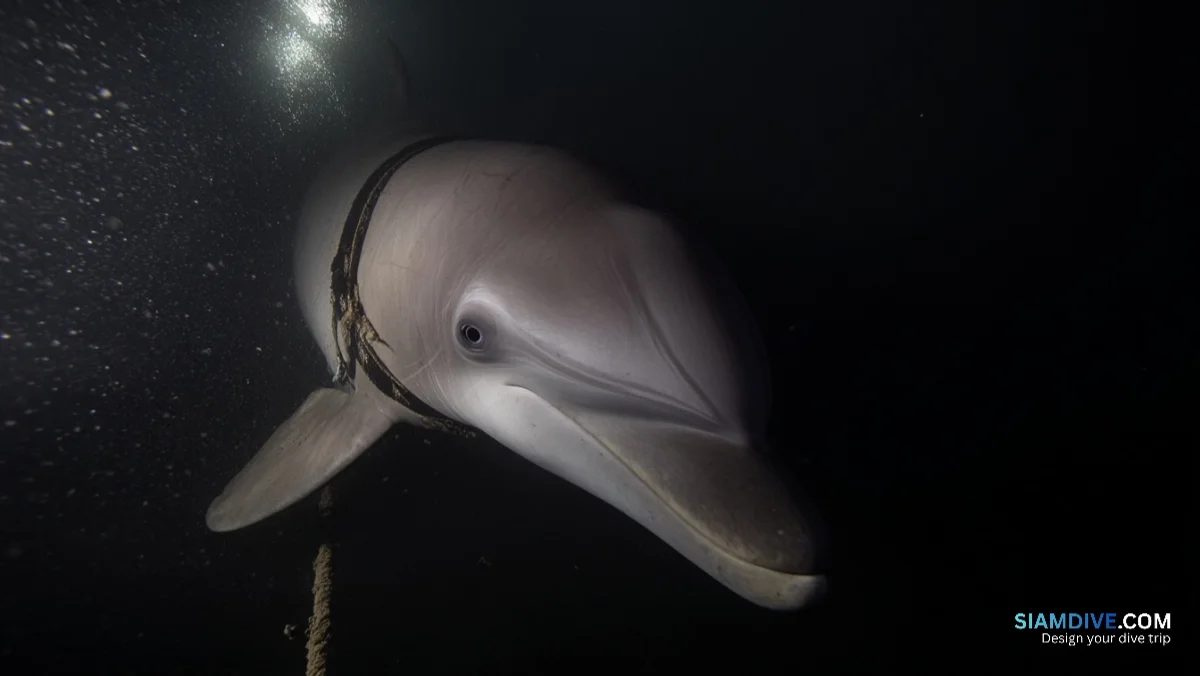
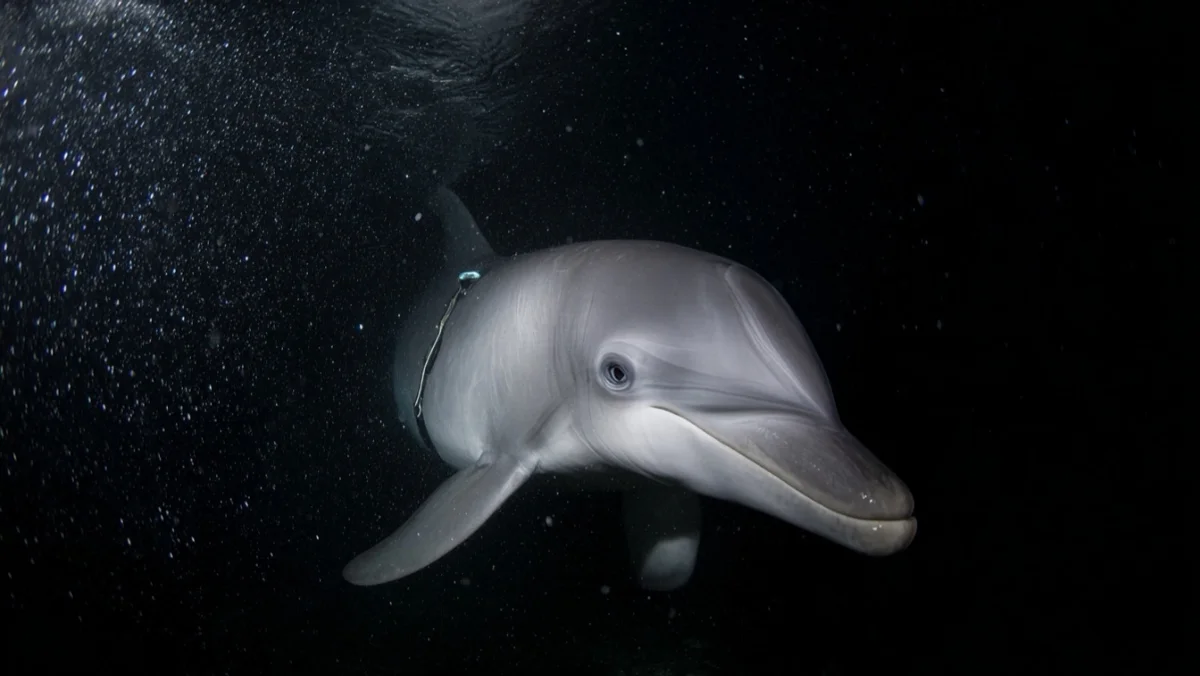
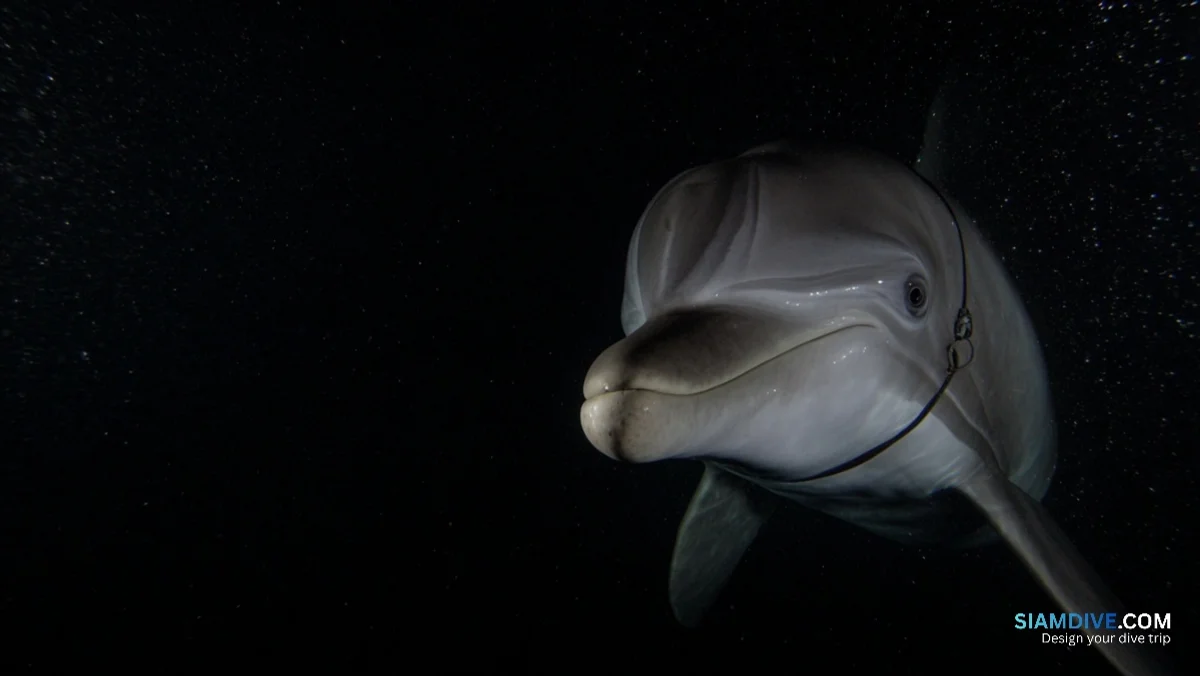
For anyone who has spent time underwater with wild dolphins — watched one tilt sideways to meet your eye, or circle back to inspect a camera with a curiosity that mirrors our own — the image of a harness and a mine occupies territory beyond policy. It sits where military capability collides with moral boundary, a line that humans have drawn, erased, and redrawn for as long as animals have been sent into wars they did not choose.
In 2019, Norwegian fishermen off the coast of Finnmark found a beluga whale wearing a harness labelled "Equipment of St. Petersburg." They named it Hvaldimir — a blend of hval (Norwegian for whale) and Vladimir. The animal still lives in Norwegian waters. It approaches boats, retrieves objects tossed into the sea, performs trained behaviours without reward — a ghost of a programme it escaped but cannot seem to leave behind.
Twenty-seven animals flew from Crimea to Iran a quarter-century ago. Their story has no confirmed ending. But every few years, when geopolitics and marine biology collide in a place nobody expected — a Pentagon briefing, a WSJ front page, a congressional hearing about kamikaze dolphins — those animals surface again. Not as dolphins. As questions nobody can quite answer.
Sources
- Wikipedia — Military marine mammal: programme history, capabilities, ethical concerns
- OIPA — Dolphins Used in Military Operations: ethical position (May 2026)
- USNI News — Satellite imagery confirming Russian Navy dolphin pens at Sevastopol (2022)
- US Navy NIWC Pacific — Marine Mammal Programme: official overview and mission