600 Species on One Slope — Why Anilao Owns the Nudibranch Count
17 พฤษภาคม 2569
An 18-day census logged 591 nudibranch species on Anilao's volcanic slopes — a fifth of known global diversity compressed into one Philippine coastline.
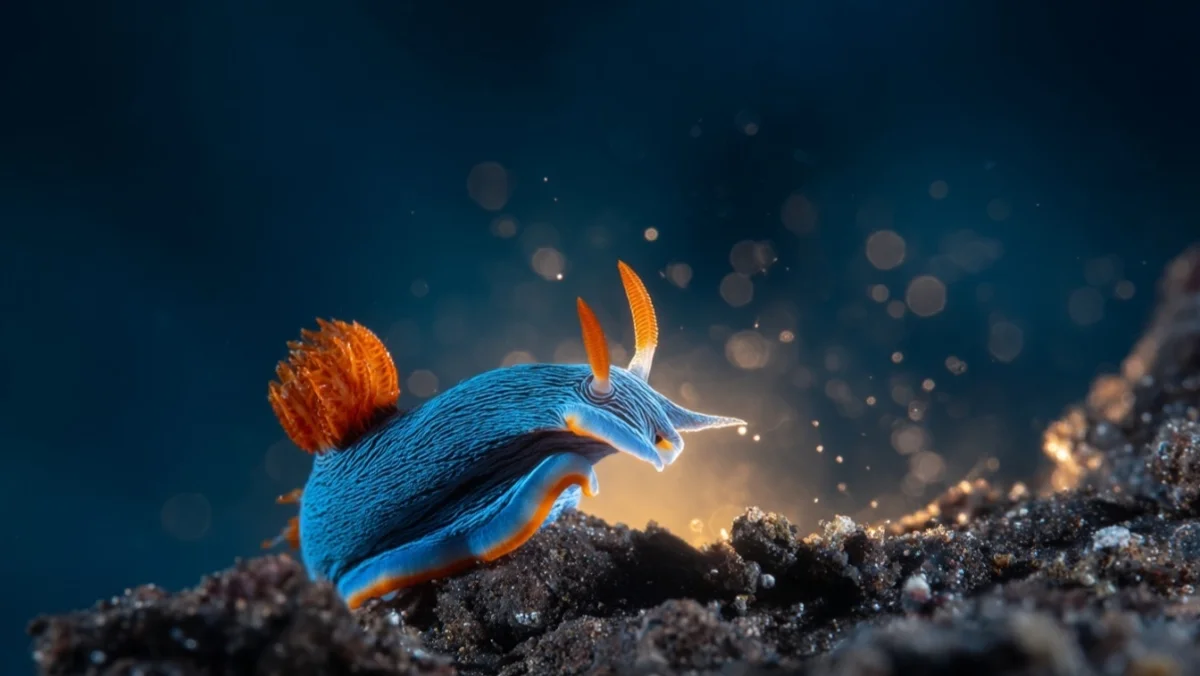
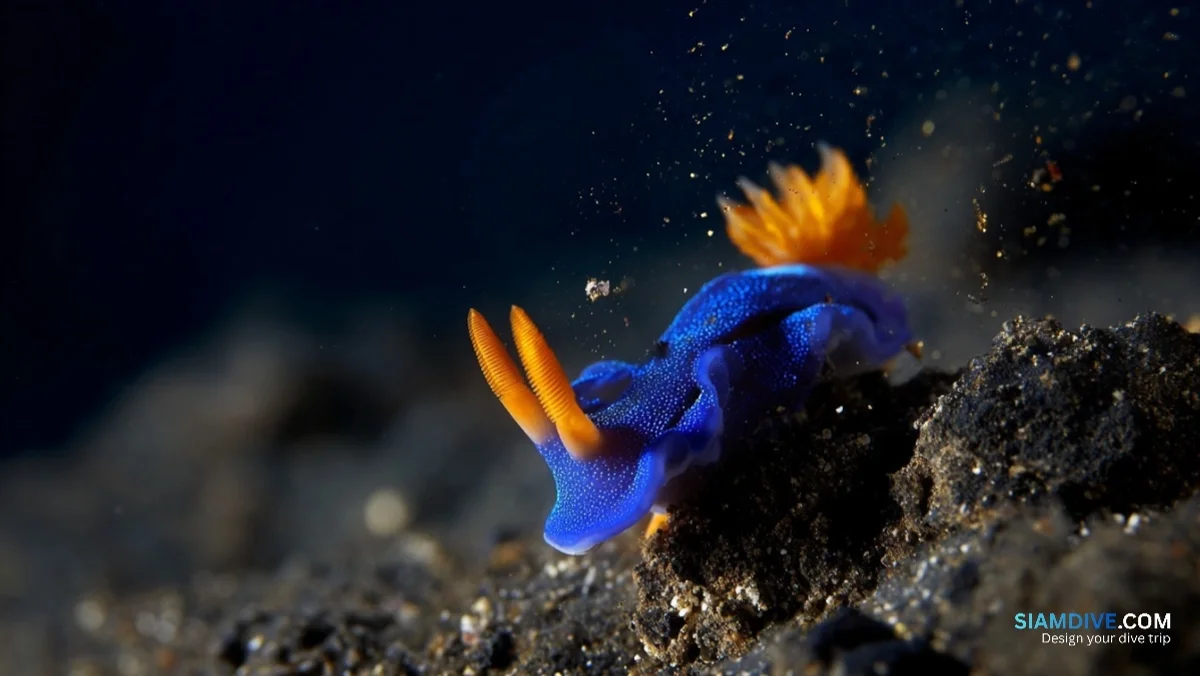
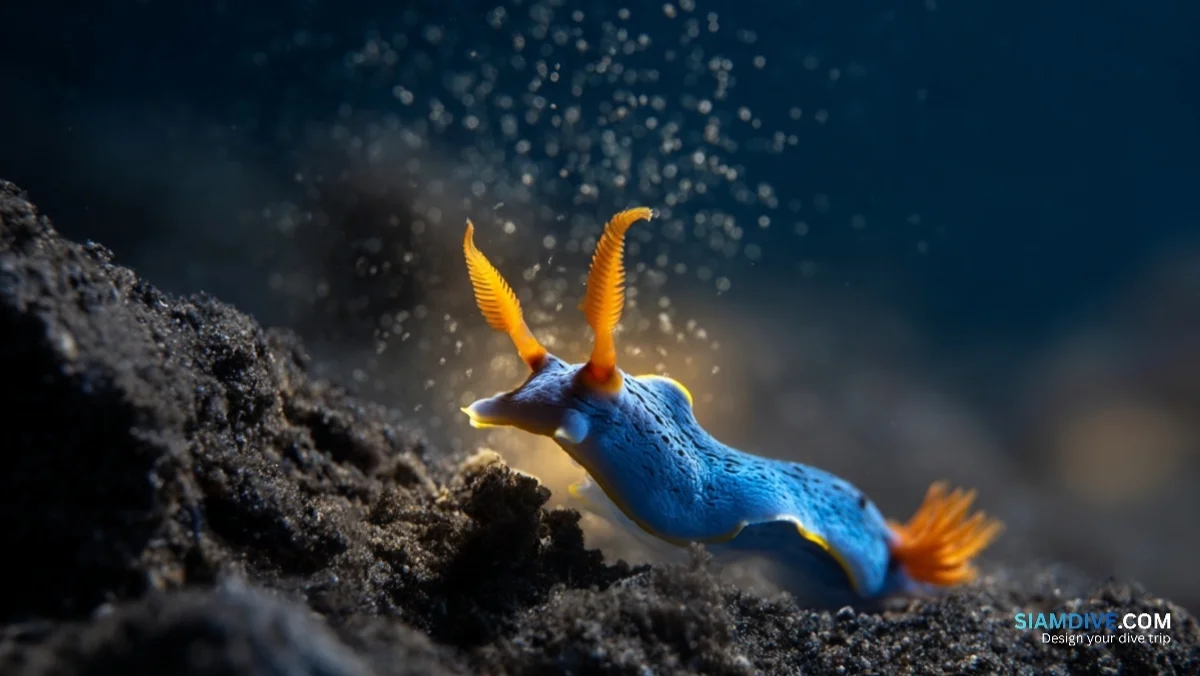
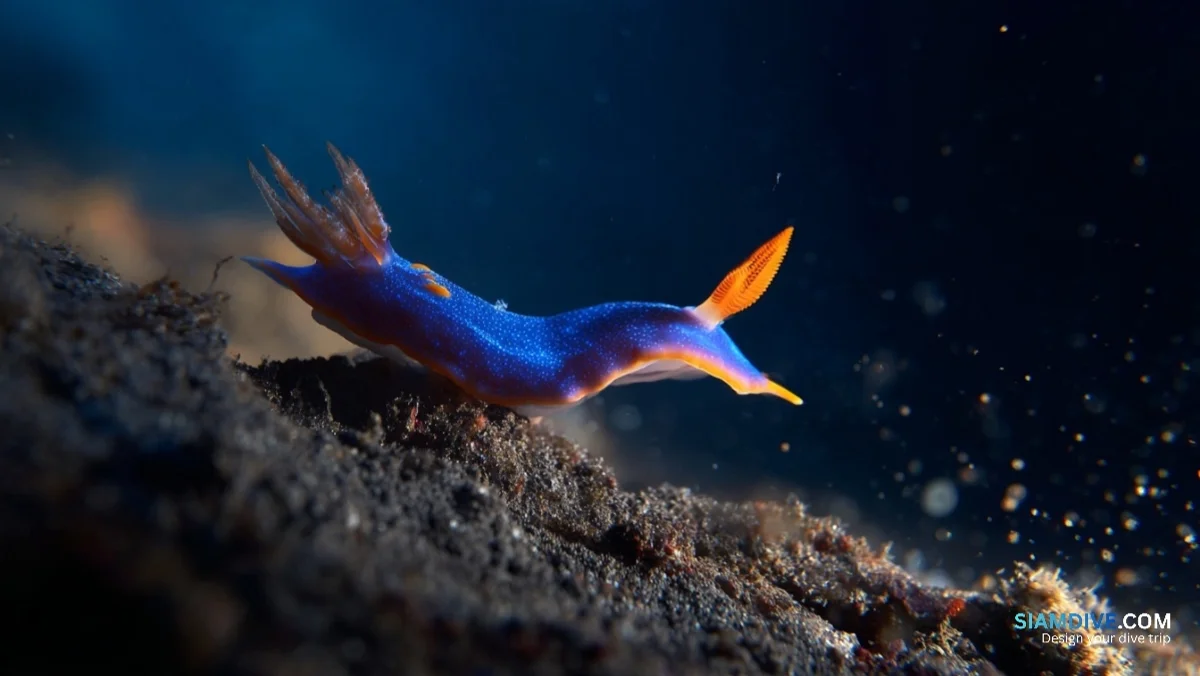
At six metres on a slope of black volcanic sand, a guide holds one finger over a rubble chip the size of a coin. Beneath it, a Shaun the Sheep nudibranch — barely eight millimetres, translucent white with black-tipped rhinophores — grazes on bryozoan crust. Three lens-lengths away, a Spanish dancer the size of a dinner plate unfurls in open water, pulsing red-orange against the dark. This is Anilao on any given Tuesday morning, and the range between those two animals is exactly why photographers treat the place like a second office.
The peninsula juts into the Verde Island Passage from Batangas province, 130 km south of Manila — close enough for a weekend trip, remote enough that the muck slopes remain undisturbed between dives. What distinguishes Anilao from other Philippine macro destinations is not simply species count but species density per accessible metre of coastline. You do not need a liveaboard, a domestic flight, or a six-hour ferry. You need a car, a resort with a banca, and a guide who knows which rubble patch holds what.
The Census That Changed the Conversation
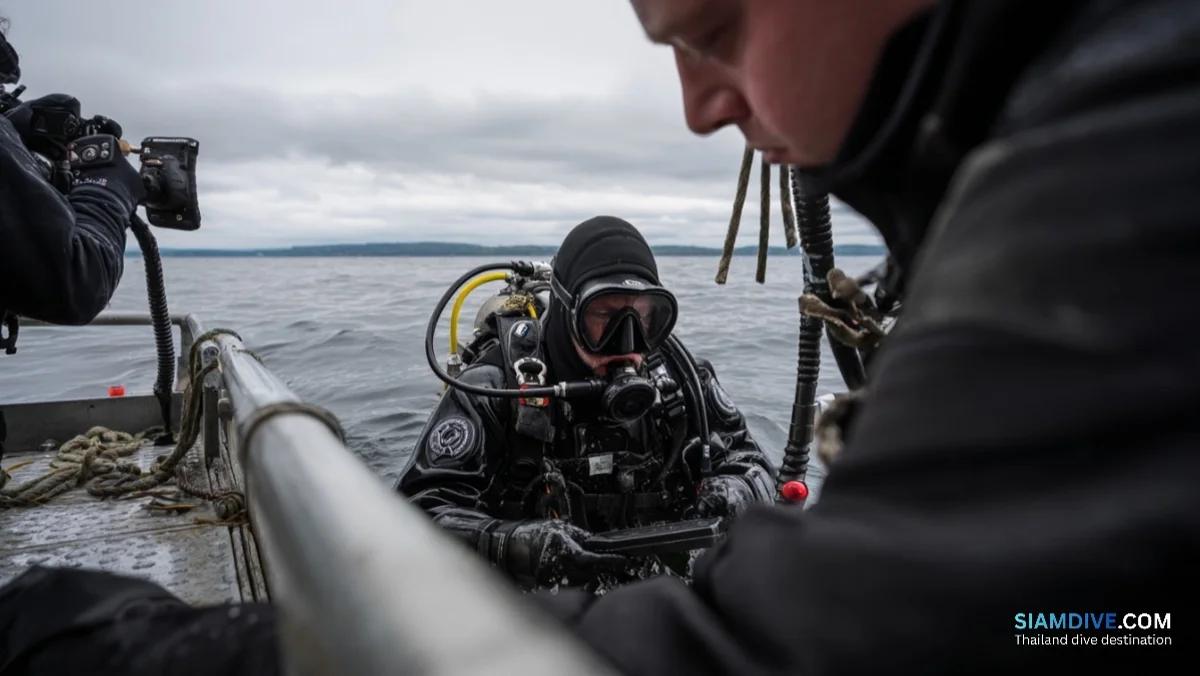
Numbers matter here more than most dive destinations because someone actually counted. During an 18-day census known locally as Slugfest, teams of four divers — guided by taxonomist Jim Anderson and marine biologist Dave Behrens — logged every confirmed species across multiple sites around the Anilao peninsula. The final tally: 591 distinct nudibranch species in 18 dive days. No other single-area census in the Indo-Pacific has matched that figure in a comparable timeframe.
Anderson's subsequent field guide, compiled over repeated visits, documents 751 species with multiple photographs per entry — suggesting that the 591 figure represents what focused teams find in under three weeks, not the ceiling. The broader estimate, cited by the WWF Coral Triangle programme, places more than 600 resident nudibranch species in Anilao's immediate waters against roughly 3,000 described globally. That ratio — one patch of Philippine coastline holding a fifth of known global diversity — is what earned the title Nudibranch Capital of the World.
Three species identified during the original Slugfest were new to science at the time of documentation. The discovery rate has slowed since, but visiting photographers still occasionally image animals that do not match existing references — a function of the sheer volume of substrate inspected daily across dozens of guided dives.
Five Sites, Five Kinds of Hunt
Anilao's strength is not one reef repeated across forty mooring pins. Each site selects for different hunting conditions, and a standard three-dive day can produce entirely separate species lists.
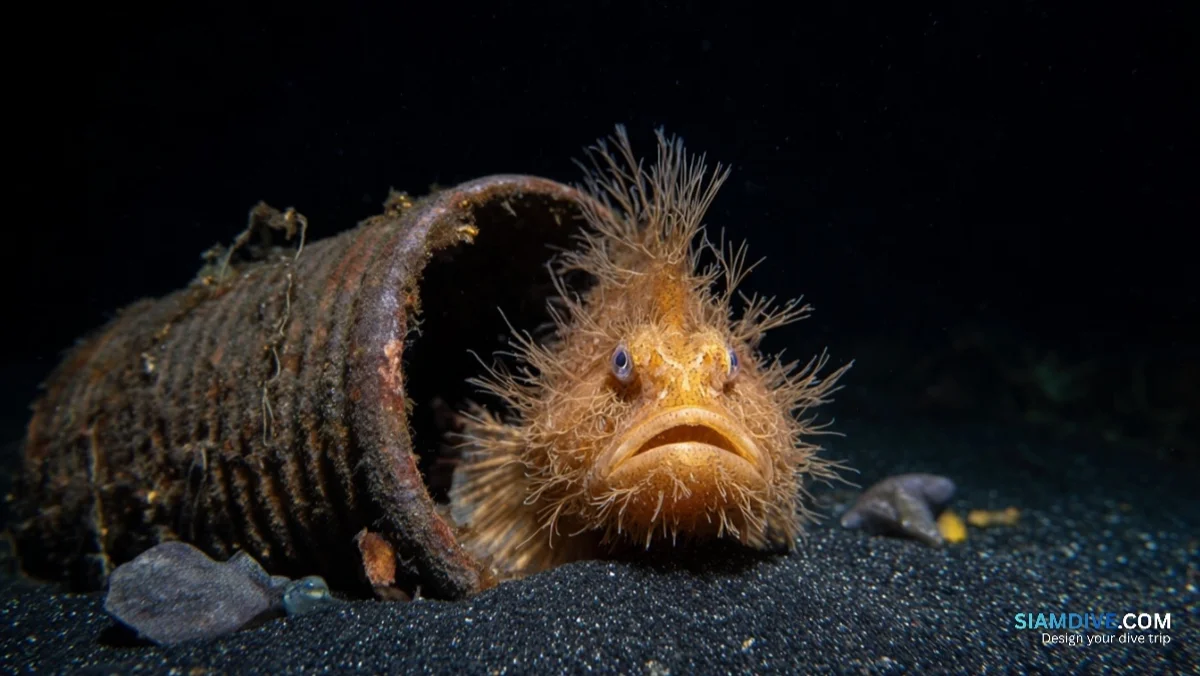
- Secret Bay — Black sand muck at 3–12 m. Night dives here produce blue-ringed octopus, flamboyant cuttlefish, and the small aeolid nudibranchs that feed on hydroids growing from discarded rope. The site opens at dusk and keeps guides busy past midnight.
- Koala (Critter Capital) — A sandy slope scattered with rubble and sea pens. Wonderpus, harlequin shrimp, and garden eel colonies share the terrain with chromodorid nudibranchs in full-spectrum colour.
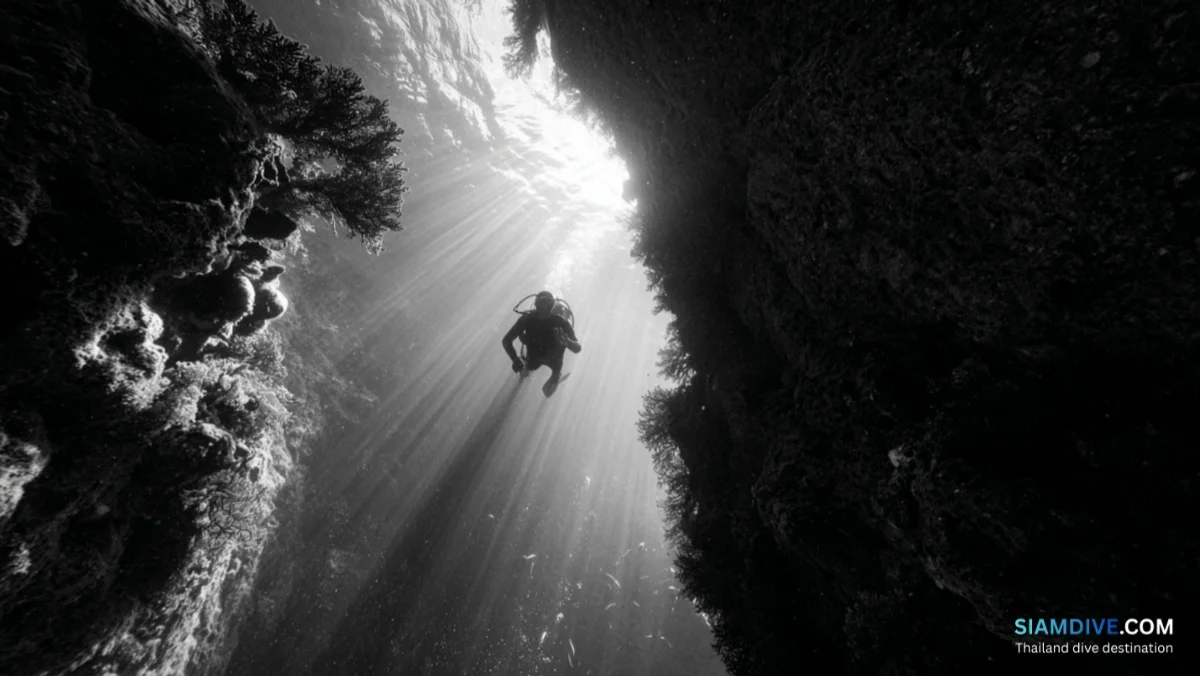
- Sepok Wall — Gorgonian fans and black coral trees to 40 m. The wall hosts larger dorids on sponge, while overhangs shelter Phyllidiidae species that feed in darkness and retreat by day.
- Dive & Trek — A deeper reef with whitetip reef sharks, eagle rays, and schooling jacks. Not a macro site in the traditional sense, but large Hexabranchus (Spanish dancers) cruise the reef edge at dusk, and phyllidia species cluster near cleaning stations.
- Ligpo Island — Depths of 10–30 m with both reef wall and rubble transition zones. Documented as one of the Slugfest's highest-yield sites, with 40+ species recorded on single dives during census conditions.
The distance between sites is short — five to twenty-five minutes by banca. That proximity allows guides to shift plans mid-morning based on tide, current direction, and which species a client has not yet photographed. A nudibranch checklist culture has emerged among regular visitors, some returning annually to add to personal tallies that run past 300.
The Verde Island Passage Factor
Anilao sits at the northern mouth of the Verde Island Passage — a 1.14-million-hectare strait that the California Academy of Sciences labelled the "Center of the Center of Marine Shorefish Biodiversity" after a 2006 expedition. More than 300 coral species anchor the passage, and surveys have documented nearly 60% of the world's known shorefish species within its boundaries. A seven-week NSF-funded expedition involving 50+ scientists yielded 400 marine species, including taxa new to science.
For nudibranchs specifically, this concentration of substrate diversity — hard coral, soft coral, sponge, hydroid, bryozoan, tunicates — creates feeding niches for specialists that elsewhere spread across hundreds of kilometres. Anilao compresses them onto a coastline you can drive in forty minutes. The upwelling currents that push nutrient-rich water through the passage sustain plankton loads that feed the filter-feeding organisms on which many nudibranch larvae settle. Remove the upwelling, and the density collapses — which is precisely what warming thermoclines in adjacent regions threaten to do.
A citizen science programme initiated by the California Academy and De La Salle University now trains local divers to monitor reef health and upload biodiversity data to a national database. The monitoring feeds directly into marine protected area decisions — and indirectly protects the substrate conditions that make nudibranch density possible in the first place.
Season, Conditions, and the Visibility Question
The dry season runs mid-November through mid-April — calm surfaces, minimal run-off, visibility stretching to 15–20 m on good days. January through March is the photographer's window: plankton blooms feed juvenile nudibranchs into visible size ranges while water clarity holds. Water temperature sits around 27–28 °C for most of the year, dipping to 25 °C in January–February when the northeast monsoon pushes cooler surface water across the strait.
Visibility is the variable that separates Anilao from Caribbean or Red Sea macro destinations. It ranges from 3 m on a bad tide to 20 m on a morning slack — sometimes within the same day. Muck sites like Secret Bay rarely exceed 8 m visibility. That sounds limiting until you realise that at macro magnification, the world beyond 50 centimetres is irrelevant. What matters is light control, not background clarity.
- Peak season
- Mid-November to mid-April (dry, calm, 15–20 m visibility on reefs)
- Water temperature
- 25–28 °C year-round (coolest Jan–Feb)
- Typical macro depth
- 5–18 m (safe profiles, long bottom times)
- Current
- Mild to negligible on most macro sites; stronger at Dive & Trek and Sombrero Island
What a Week Costs — and What It Includes
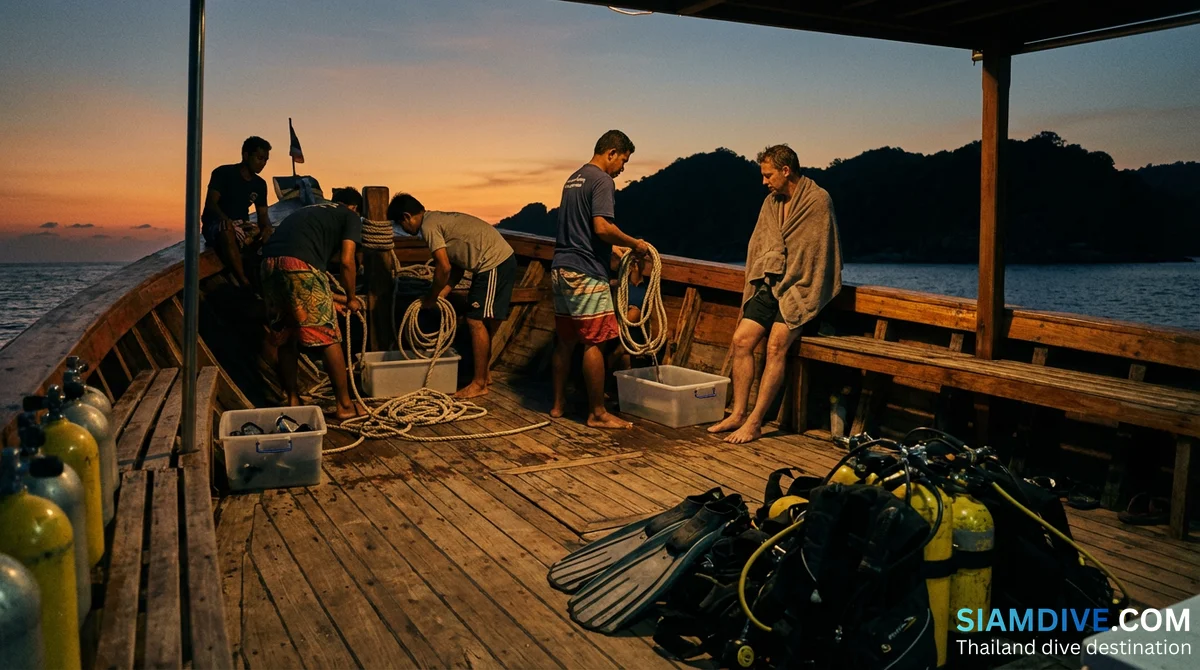
Anilao runs on a resort-based model. You book a room, and diving launches from the house reef or by banca (outrigger boat) to sites 5–25 minutes away. There is no town-centre strip of competing shops the way Koh Tao or Gili Trawangan operates — each resort controls its own boats and guides.
- Guided boat dives — PHP 1,750–3,450 per diver per dive depending on group size (solo diver pays premium, groups of 3–4 drop to the lower range)
- Extended-range sites — PHP 4,000 additional boat fee shared among divers for Ligpo Island, Devil Point, and Red Palm (further run)
- Environmental fee — PHP 200 per diver per day, paid to the municipal government
- OW certification — PHP 24,000–26,000 inclusive of gear and pool sessions
- Resort accommodation — PHP 3,000–12,000+ per night depending on room category and sea-view access
A realistic five-day, three-dives-per-day trip for a pair of divers — including accommodation, 15 boat dives, gear rental, and environmental fees — lands in the PHP 45,000–65,000 range per person (roughly USD 780–1,130 at May 2026 rates). That is competitive with Southeast Asian macro alternatives like Lembeh Strait, and substantially cheaper than Raja Ampat or Komodo liveaboards that offer comparable biodiversity but at three times the daily rate.
Lens Choice and Technique on the Slopes
Most productive Anilao dives happen between 5 and 18 metres — safe recreational profiles that allow 60–70 minute bottom times on a single tank. That luxury of time is what makes the species count possible: you are not fighting decompression obligations while searching rubble chips.
The standard rig is a 60 mm or 105 mm macro lens with a single strobe on a short arm. Snoots (focused light tubes) are increasingly common for isolating subjects against black backgrounds — a technique that underwater photographers have refined across Southeast Asian muck sites over the past decade. For nudibranchs under 10 mm, wet diopters (+10 or +15) stack onto the macro lens, turning the setup into a pseudo-microscope that resolves rhinophore texture at 1:1 magnification or beyond.
The guides make or break a nudibranch dive. Anilao's senior spotters — many of whom have worked the same slopes for 15+ years — carry slates pre-loaded with site-specific species lists. They know which rubble patch hosts which seasonal visitor, and they signal finds with tank-tap codes that indicate size and direction. Tipping culture is standard: PHP 300–500 per day for a spotter who delivers is considered baseline.
Buoyancy discipline matters more here than on wall dives. Hovering 30 centimetres above volcanic rubble without disturbing silt requires trim precision — one fin kick too low and the subject disappears behind a cloud that takes five minutes to settle. Experienced Anilao divers weight slightly heavy and control ascent with breath alone, keeping hands free for camera operation.
Night dives add a second dimension. Many aeolid nudibranchs — particularly the smaller Flabellina and Favorinus genera — emerge to feed only after dark, when the hydroids they eat extend polyps into the water column. A dedicated night schedule of two dives per week can add 30–50 species to a trip list that daytime diving alone would miss.
The 2025–2026 Picture
A ScubaBoard trip report from early 2025 noted that most reefs around Anilao appeared healthy, with coral cover intact on wall sites — though several shallower areas showed accumulated plastic debris on sandy substrates. Bluewater Dive Travel has scheduled dedicated macro photo workshops for Spring 2026, reflecting sustained international demand from the underwater photography community. The environmental fee structure remains unchanged at PHP 200/day, and resort operators report stable pricing through the 2025–2026 high season.
For context: Anilao sits 130 km south of Manila — a 2.5–3 hour drive that makes it the closest world-class macro destination to a major international airport in Southeast Asia. Weekend trips from Manila are routine for local divers, and that accessibility keeps guide standards high through year-round volume rather than seasonal peaks alone. The combination of proximity, price, and a documented species count that no comparable destination has matched is what keeps the nudibranch capital designation intact — not marketing, but arithmetic.
Sources
- California Academy of Sciences — Verde Island Passage expedition and biodiversity findings
- WWF Coral Triangle Blog — Nudibranchs of Anilao, Batangas
- PADI — Diving in Mabini & Batangas site reference
- Divezone — Anilao Batangas dive site profiles and conditions
- Wikipedia — Verde Island Passage marine biodiversity data